
Classical Chinese Mahjong Strategy: Winning Tactics & Hand Building
Last updated: Nov 23, 2026
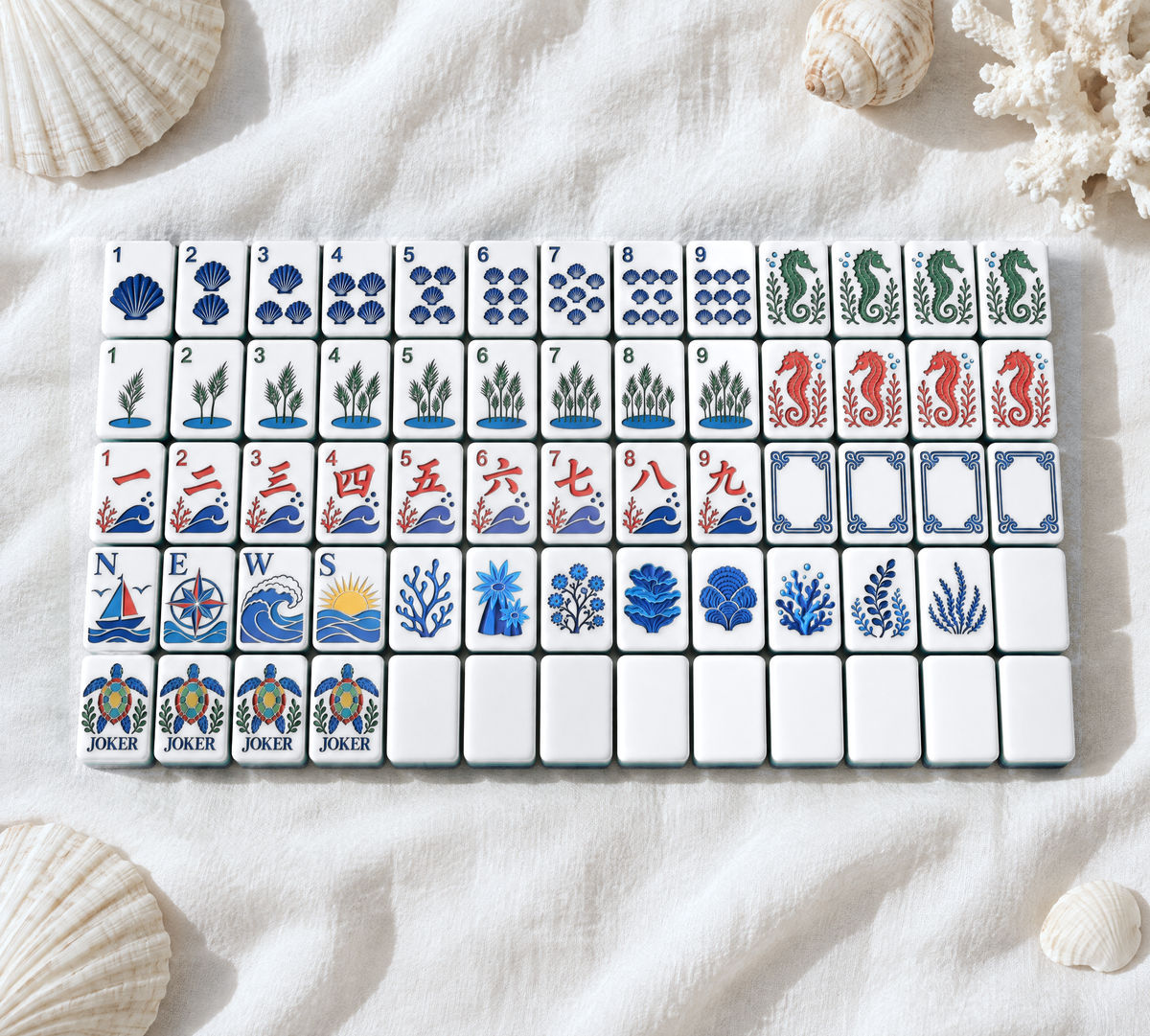
Classical Chinese mahjong strategy rests on three pillars: controlling which tiles stay in circulation, building flexible hand patterns simultaneously, and reading opponent discards to block or accelerate winning. Unlike American mahjong (which locks hands to a printed card and restricts chows), Chinese variants reward aggressive chow building—sequences of three consecutive numbers in one suit. Core tactics include discarding from the center of the number range (4s, 5s, 6s) to avoid feeding opponents, prioritizing "open" hands (melds exposed on the table), and tracking which tiles have been discarded to calculate remaining draws.
🀄 Shop best-selling mahjong sets →
How do I build a flexible hand in classical Chinese mahjong?
Flexibility means holding tiles that work toward multiple melds at once. In the early game (first 5–7 discards), keep pairs and potential chow sequences rather than committing to one pattern. For example, holding 3–4–5 Bams plus 4–5–6 Bams means your middle tiles serve two separate hands. Avoid keeping only honor tiles (winds, dragons) without number support; they're slow to complete. Discard the least connected tiles first—a 1 Bam surrounded by nothing beats a 4 Bam with four neighbors still in hand. Track your hand's "float"—the number of unused discards that could help you. If four 7 Dots have appeared, stop counting 6–7–8 sequences as viable. Mid-game (draws 8–12), you'll likely see which suit your table favors; concentrate there. Late game (final eight draws), commit fully to one hand shape and stop chasing second patterns.

What does "center-range discard" mean and why does it matter?
Discarding 4–5–6 and middle-honor tiles (East, South, or generic dragons) exposes fewer useful chow sequences to opponents. Tile 1 Bam (often marked with a bird) and 9 Bam can only start or end sequences; dropping them early telegraphs your strategy. Conversely, a 4 or 5 fits into eight or nine different chow possibilities—your opponent can't know which hand you're building. Mathematically, per standard Chinese mahjong frequency (36 tiles per suit, each number in four copies), middle tiles appear in roughly 60% of completed melds. Experienced players avoid the "suji" rule—never discard the tile directly next to a pair you hold—but in classical play, this is a guideline, not law. If you must discard, prefer 2s and 8s over 3–7 range. A single ill-timed discard of a 6 or 7 often costs a hand.
How do I read my opponents' hands from their discards?
Discard order reveals intention. If East player discards 1 Bam, then 9 Bam, they're avoiding Bam sequences and probably building chows in Craks or Dots. Count the discards by suit: if five Dots and three Craks have appeared after ten draws, Dots may be congested—others are likely working there. Watch what they pick back up: if someone grabs a 5 Crak from the discard pile, they needed it to complete or extend a pung (three identical) or chow. Honor tiles (winds, dragons) rarely go to waste; if three different Winds have been discarded, someone is likely holding the fourth with another meld. The player discarding fastest needs the fewest draws to win; the slowest is likely stuck. Never assume; track patterns across three or four hands. Classical strategy rewards patience: observe before committing your defensive discards.
🎁 See our most-loved mahjong sets & accessories →
Should I prioritize "open" (exposed) melds or a "closed" (concealed) hand?
Both have merit. An open hand (one or more exposed pungs, chows, or kongs on the table) signals your strategy but accelerates winning—every meld you reveal edges closer to the finish. Closed hands preserve mystery but require more draws to complete. In early-to-mid game, keep most melds concealed; this confuses opponents and lets you pivot if a suit dries up. In late game (last 8–10 draws), open at least one meld if you're close to winning—it speeds your draw and prevents you from "dead" (unable to improve). A hybrid approach works best: open one or two powerful melds while keeping your pair and critical chows hidden. If you have a pung of Dragons, expose it—opponents gain little from the information, and you free mental space to calculate remaining tiles. Conversely, if you hold a half-built chow (e.g., 4–5 Craks waiting for a 6), keep it closed until you draw the 6.
What's the math behind tracking remaining tiles?
Each number appears four times per suit; Mahstead players who practice with the best-selling sets count instinctively. If you've seen three 7 Dots discarded and none drawn to the table, one 7 Dot remains—either in the wall (un-dealt pile) or in an opponent's hand. This "count" informs your chow calculations. For instance, if you hold 6–7 Dots and need an 8 Dot to complete a chow, count all 8 Dots visible: if three are on the table and one was discarded, no 8 Dots remain—abandon that sequence. Honors (winds, dragons) follow the same rule: four copies each. Tracking doesn't guarantee a win, but it eliminates false hopes. Most intermediate players mentally track two or three key suits; experts track all three suits and all honors. In a 10-draw round, roughly 25–30 tiles have been revealed (discards + exposed melds); the remaining 88–93 stay hidden. This narrows odds significantly. Write down key tile counts on paper if your table permits—many classical clubs allow scorecards.
Strategy Phase | Primary Goal | Hand State | Discard Priority |
Early (draws 1–7) | Build flexibility | 90% concealed | Unconnected tiles, honor outliers |
Mid (draws 8–12) | Solidify one suit | 70% concealed, 1 meld open | Tiles from weak suits, duplicates |
Late (draws 13–final) | Close to win | 2–3 melds open | Only tiles that don't support winning meld |
✨ Find your Mahstead set — free US shipping →

How does position (East, South, West, North) affect strategy?
East player discards first but draws last in the current round—a slight disadvantage in early game. East also faces scrutiny; others watch your pattern closely. South, West, and North players draw before East and can react faster to their discards. Winning from East position (drawing the final tile yourself) earns higher points in many classical variants. Conversely, East seats pressure: if you discard a critical tile, three opponents see it before deciding their moves. North player draws last, seeing the most information before committing—a positional advantage. Rotate positions each hand or every two hands; over a night of play, you'll experience all four perspectives. Strategic veterans rarely play the same hand twice in the same position; they mentally "replay" their decisions from each seat to refine instinct.
What are common beginner mistakes in classical mahjong strategy?
Mistake 1: Holding too many tiles from one suit. Beginners often collect all three Bams in their hand, then run out of options in Craks and Dots. Distribute your hand: aim for 2–4 tiles per suit in early game. Mistake 2: Discarding only from one end (all 1s and 2s, or all 8s and 9s). This broadcasts your strategy. Rotate your discard logic. Mistake 3: Ignoring the discard pile. Reading opponent moves is as valuable as calculating your own draws. Spend mental effort on both. Mistake 4: Chasing "special" melds (quints, sextets, all-honors) too late. These hands are beautiful but rare; don't sacrifice a certain pung-chow win for a fantasy hand. Mistake 5: Playing the same hand every time. Adapt to the table's discard patterns. If Dots are flying, pivot to Craks.
What about defensive plays—how do I block opponents?
If you notice an opponent's pattern early, discard tiles they likely need. For example, if South keeps picking up 4s and 5s, stop discarding 3s and 6s (which complete their chows). This is called a "suji" or "pattern block." However, never sacrifice your own hand to block; blocking works best when you're not building a competing meld. Late game, if an opponent is close to winning, discard honor tiles (winds, dragons) they haven't shown; these rarely complete critical melds. Avoid discarding from the suit that's been open on the table—that player has a pattern there and may be near victory. If someone has two melds exposed and only one draw away from winning, discard the least useful tile in your hand (one with no neighbors) rather than a tile that might trigger their win. Defensive play shouldn't dominate your strategy, but allocating 10–15% mental effort to blocking late-game threats can swing tournaments.
How long does it take to master classical Chinese mahjong?
Most players reach playable skill (understanding all hand types, winning occasionally) in 20–30 hours of real games. Intermediate strength—reading hands, predicting opponent strategy, executing consistent blocked plays—takes 50–100 hours over 3–6 months of regular play. Mastery (winning 40%+ of games against mixed opponents, adapting instantly to table shifts) requires 200+ hours over 1–2 years. There's no shortcut; classical mahjong rewards observation and repetition. The variation between classical Chinese, Hong Kong, and Riichi rule sets means skills transfer partially—you'll learn Riichi faster after mastering classical, but don't assume they're identical. Weekly games with the same group accelerate learning; you'll anticipate each player's style within four sessions.
What equipment helps reinforce strategic thinking?
A quality mahjong set—like those from our best-selling collection—with clear tile markings lets you spot numbers instantly without squinting. Poor visibility wastes mental energy on reading tiles instead of strategy. Mahjong mats with dedicated discard zones organize the table so you can visually scan opponent melds and discards in one glance. Racks with pushers help you arrange tiles efficiently—a neat hand reduces mental load and frees focus for counting and anticipation. Paper scorecards (not equipment but helpful) let you log tile counts across rounds. Keeping notes after 4–5 hands reveals patterns in your play; you'll spot mistakes faster. None of these guarantee strategy improvements, but they remove friction so your mind focuses on tactics.
What to check before you buy a mahjong set for serious classical play
Tile contrast: Can you read numbers from across the table quickly? Acrylic or resin sets with clear printed marks work best.
Tile size: Smaller hands (or tables with 4+ players crowded together) benefit from compact sets; standard sizes suit home games.
Weight and feel: Lighter tiles let you draw faster in rapid-fire classical rounds; heavier tiles slow play (not ideal for competitive classical).
Spare tiles: A 160-tile set includes spares—useful if a tile breaks during months of regular play.
Carrying case: If you rotate between homes or a club, a durable bag or case prevents tile loss and damage.

FAQ
Is classical Chinese mahjong strategy the same as Hong Kong or Riichi mahjong?
No. Classical Chinese allows flexible hand patterns and slower play; Hong Kong mahjong prioritizes speed and bonus scoring; Riichi adds melds mid-hand and draws from a separate wall. Strategy overlaps (tile tracking, discard logic), but hand rankings, winning conditions, and positional advantage differ significantly. Start with one variant before mixing.
How important is luck versus strategy in classical mahjong?
Roughly 60% strategy, 40% luck. You can't control which tiles the wall holds, but you control which tiles you keep, discard, and expose. Over 10–20 games, strategic play outweighs luck; one-off games feel more random. This is why long sessions reveal true skill.
Can I use the same strategy in casual home games as in competitive club play?
Yes, but calibrate intensity. Casual games tolerate looser discard logic and slower reading; club tables punish mistakes harder. Start casual to build confidence, then scale strategy complexity as opponents improve. A good set and organized table help at both levels.
Should I memorize all possible hand types before playing classical mahjong?
No. Learn the five basic hand types (pung, chow, pair, kong, honor melds) first; memorize them over your first 10–15 games. Exotic hands (all-honors, all-terminals) come later. Over-preparing delays your first win and frustrates learning.
How do I know when to stop building one hand and pivot to another?
If you've seen three of the four tiles you need for a meld, abandon it after draw 8. If a suit has four discarded tiles (meaning zero remain), stop building there by draw 10. Adapt within the first half of the round; late pivots rarely succeed.
What's the most expensive mistake in classical mahjong strategy?
Discarding a winning tile (a tile that completes your hand) by accident. This ends your hand immediately and costs points. The second is ignoring an opponent's near-win and feeding them the tile they need. Both are learned through experience; write down mistakes after games and avoid them next time.


View More
View More
View More
