
Are expensive mahjong racks worth it? A player's guide to the cost
Last updated: Nov 23, 2026
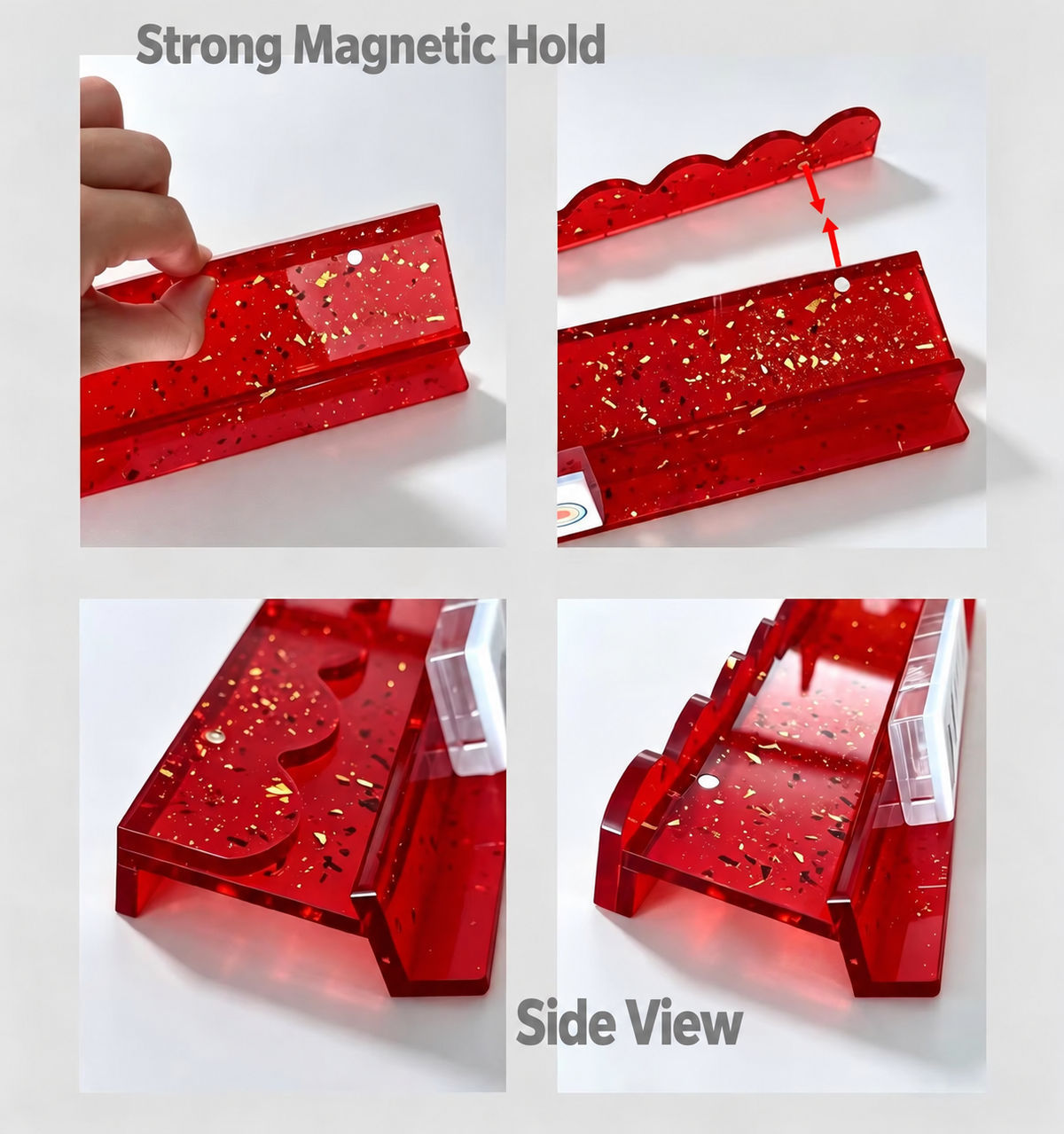
A mahjong rack holds 13 or 14 tiles at a comfortable angle while freeing both hands for play and melding. Entry-level racks cost less but often feel flimsy or collapse mid-game; mid-range racks (our most common choice at the table) balance durability, tile grip, and steady pushers. Premium racks justify their cost through better wood, smoother tile channels, and pusher mechanics that don't jam—especially if you host weekly games or play tournaments. Mahstead's mahjong racks with pushers come in several designs to match your skill level and table style. The answer: expensive racks are worth it if you play weekly or host, play faster hands, or dislike bending over the table; casual players may find mid-range adequate.
What exactly does a good rack do differently?
A quality rack prevents tiles from spilling, keeps the pusher aligned so you can slide tiles smoothly without fumbling, and holds tiles at a consistent height so you never crane your neck. Cheap racks wobble, their pushers jam halfway through, or tiles slip sideways when you lean on the table. We've all played with a rack that collapses after the opening hand—the frustration compounds over eight rounds. Better racks use denser wood (or reinforced composites), wider tile channels with felt or rubber grip, and ball-bearing or precision-cut pushers that move straight. You also spend less mental energy managing your rack and more on reading your opponents and tracking discards.

Who actually needs to spend more on a rack?
Weekly players and hosts benefit most from premium racks. If you play one Saturday afternoon a month, a standard mid-range rack works fine. If you host eight-person rotations twice a week or play in tournaments, a sturdier rack with a smooth pusher saves your wrists and keeps the game flowing. Newer players often benefit from slightly pricier racks because a rock-solid pusher gives you confidence; you're not fighting the equipment while learning hand patterns. Players with arthritis or hand fatigue need racks with pusher mechanics that require minimal force—this is a genuine medical reason to invest.
🀄 Shop best-selling mahjong sets →
Player profile | Ideal rack type | Frequency | Why it matters |
Casual (1× month) | Standard mid-range | Low durability demand | Pocket-friendly, acceptable performance |
Weekly host | Premium with smooth pusher | High use, reliability critical | Longevity and guest comfort |
Beginner (learning hand patterns) | Mid-to-premium with grip | Variable | Confidence-building, reduces frustration |
Tournament/faster play | Premium, precision pusher | Speed and accuracy matter | Smooth melding, no time wasted on equipment |
Arthritis or hand fatigue | Premium with low-friction pusher | Pain reduction | Medical benefit justifies cost |
What's the real cost difference between racks?
Budget racks run cheap but may need replacing in 1–2 years. Mid-range racks cost more upfront but often last 5+ years with care. Premium racks are the highest initial investment yet commonly last 10 years or longer. Calculate annual cost: a mid-range rack played 50 times per year costs far less per game than a cheap rack you replace twice. We track this at our table—the math always favors the mid-range or premium option if you play regularly. Consider also the intangible cost of a collapsed rack mid-game: you've paused play, frustrated your three opponents, and lost focus on the hand itself.

Which design features are worth the extra money?
Pusher mechanics: A pusher that sticks is the number one complaint. Premium racks use precision-cut slots or ball-bearing systems that glide smoothly every single time. Test this before buying if possible—push the sample model slowly, then quickly; it should feel effortless both ways.
Tile channel grip: Felt-lined or rubber-textured channels hold tiles firmly without chipping or scratching. Bare wood channels often let tiles slip, especially if your hands are warm or you play fast.
Frame stability: Reinforced corners and a wider base prevent the whole rack from tipping when you rest your arm on the table. Lightweight or hollow-frame racks tip too easily.
Weight distribution: A slightly heavier rack (within reason) stays put on the table edge. Featherweight racks are tempting but shift when you reach or push.
Aesthetics: Engraved names, custom finishes, or matching wood tones feel nicer and make your set memorable—this is worth the cost only if you host or enjoy the daily ritual of setup.
🎁 See our most-loved mahjong sets & accessories →
How do you know if a rack is overpriced or a genuine value?
Compare three things: build quality (is the wood dense or veneer?), pusher smoothness (can you operate it one-handed?), and warranty or return policy. Overpriced racks often feature flashy aesthetics with weak mechanics. Genuine value means solid pusher action, durable materials, and realistic pricing for what you're getting. Read actual player feedback where available—not star counts but specific comments like "pusher jams after six months" or "holds tiles perfectly for three years." Ask your mahjong friends about their racks; we often swap stories about what works. If a premium rack is three times the cost of mid-range, it should offer tangibly better pusher action and materials, not just a fancy color.
Our pick: the mahjong racks with pushers collection includes designs built for different play frequencies, from casual sets bundled with best-selling mahjong sets to premium standalone racks for hosts who want reliability week after week.
What to check before you buy
Pusher action: Does it move smoothly without sticking or rattling?
Tile grip: Will your tiles stay put when you reach across the table?
Frame flex: Push down gently on the frame; it should feel solid, not bouncy.
Height and angle: Does it feel comfortable for your posture (not too high, not too low)?
Material weight: Is it substantial enough to stay stable on a hard table surface?
Return or exchange policy: Can you send it back if the pusher fails early?
Compatibility: Check that it fits your tile size (standard American mahjong tiles are consistent, but measure if you're unsure).
Bundle vs. standalone: Does buying a rack bundled with a new mahjong set cost less than buying them separately?
✨ Find your Mahstead set — free US shipping →
FAQ
Will a cheap rack ruin my tiles?
Not immediately, but poor tile grip and a wobbly frame lead to dropped or chipped tiles over time. A quality rack prevents chips by holding tiles securely and keeping them level.
Can I use the same rack for Chinese or Hong Kong mahjong?
Yes, if the tile size matches. Standard American mahjong tiles are the same size as many Chinese sets. Always measure your tiles (typically about 1 inch × 0.75 inch) before ordering.
Does a higher price always mean a better pusher?
Not always. A mid-range rack from a reputable maker often has a better pusher than a pricier decorative rack. Test the pusher action yourself or read detailed player reviews.
How long do premium racks actually last?
With normal weekly play, 10+ years. Heavily used tournament racks (40+ games per week) may need pusher service or replacement after 5–8 years, but the frame typically lasts.
Are racks necessary, or can I just hold my tiles?
Racks are not mandatory, but they reduce hand fatigue, speed up melding, and improve your posture during long games. Most serious players use them for comfort and consistency.
Can I get an engraved rack?
Yes. Many players engrave racks with initials or names for home games. Check the mahjong racks collection for custom options or contact directly for special requests.
What's the difference between a rack with pushers and a rack without?
A pusher is a sliding mechanism that helps you move tiles forward one at a time during play. It's standard on quality racks and saves time and energy during fast-paced games.


View More
View More
View More
