
Chinese Mahjong vs Singapore Mahjong: Rules & Key Differences
Last updated: Nov 23, 2026
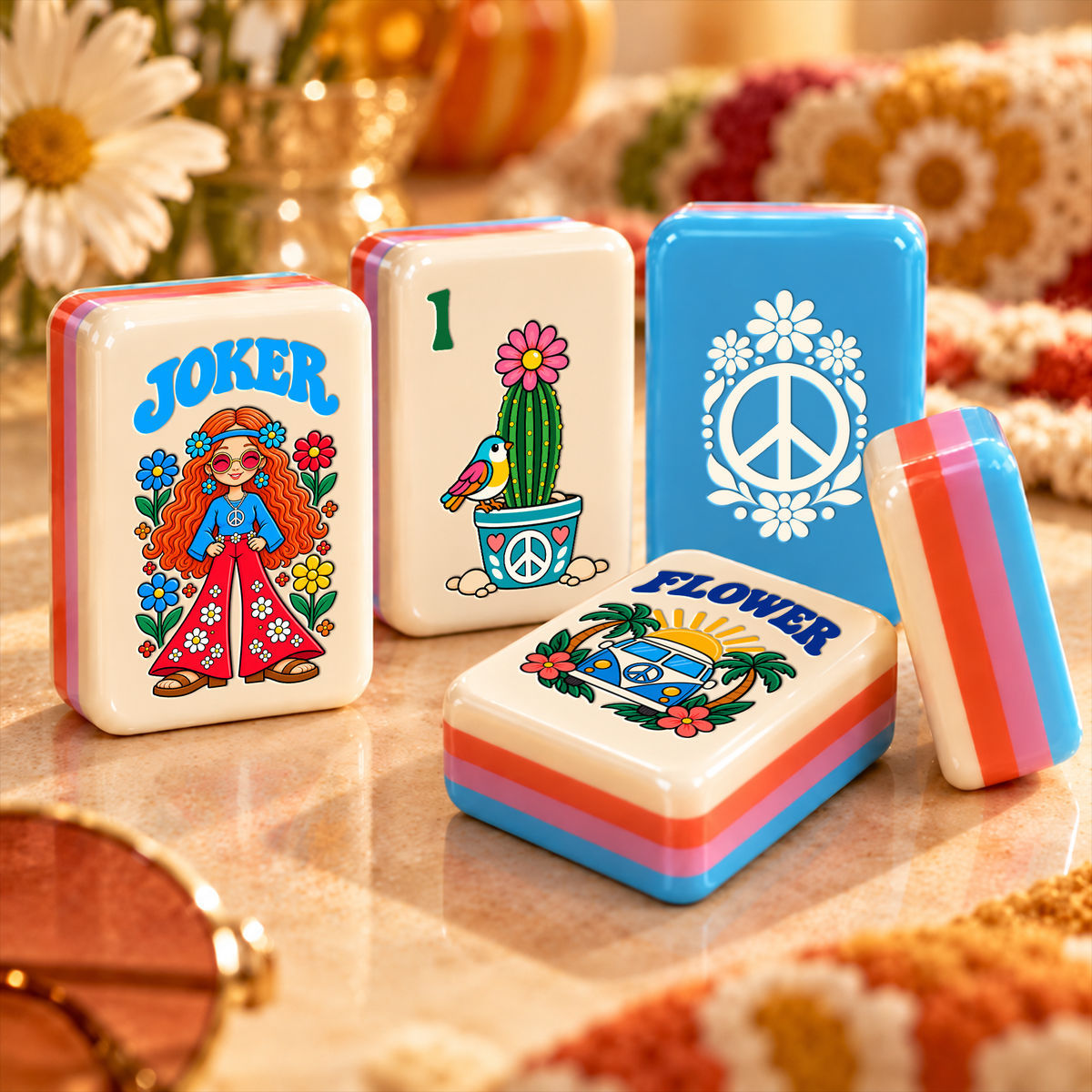
Chinese mahjong (the parent game) uses 144 tiles in four suits plus winds, dragons, flowers and seasons, played with strict hand patterns requiring sequences (chows) and sets (pungs, kongs). Singapore mahjong, developed by ethnic Chinese players in Singapore and Malaysia, dropped the seasons and flowers, leaving 136 tiles, relaxed chow rules, and introduced unique melds like special 2-4-6-8 and 1-1-1 patterns. Both allow calling exposed melds—a core mechanic absent in American mahjong. Scoring systems differ markedly: Chinese mahjong uses point multipliers and "fan" (winning pattern levels); Singapore uses simpler settlement rules. American mahjong, by contrast, uses 152 tiles fixed to an annual card, forbids all sequences, and allows only fixed-tile combinations from that year's National Mah Jongg League list. If you host games with mixed rule knowledge, one best-selling mahjong set with a clear rulebook is essential.
How many tiles does each variant use?
Chinese mahjong starts with 144 tiles: four suits (Bams, Craks, Dots, Characters) numbered 1–9 with four copies each (108 tiles), plus 16 winds (four each), 12 dragons (four each), eight flowers, and eight seasons. Singapore mahjong removed the seasons, dropping to 136 tiles; some regional rules drop flowers too, leaving 128 tiles. American mahjong uses 152 tiles: three suits only (no Characters), plus winds, dragons, flowers, and extra jokers—no seasons at all. The tile count alone shapes hand-building strategy: fewer tiles mean tighter melds.

What is a chow, and why does Singapore allow it differently?
A chow (or sequence) is three consecutive tiles in the same suit—for example, 4-5-6 Bams. In Chinese mahjong, chows are core: you build hands from combinations of chows and pungs (three identical tiles), and you can call a chow when another player discards the third tile you need. Singapore mahjong players also use chows, but many regional rules make them harder to call: some regions require the chow to be already partially exposed, or allow calling only from the player to your right (instead of any discarder). American mahjong forbids chows entirely—you cannot form or call a sequence of 1-2-3 or 4-5-6 of any suit. This single rule change forces American players to think in fixed pungs and kongs instead of flowing sequences.
How do winning hands differ?
Chinese mahjong awards a win only when your 14 tiles form a complete hand: one pair plus four melds (pungs, kongs, or chows). The hand must also contain a specific winning pattern—eyes, triple pung, all simples, or others—that increases your score via "fan" (pattern levels multiplied by base points). Singapore mahjong uses the same 1-pair-plus-four-melds structure but often simplifies the winning patterns: most games accept a win from any legal 14-tile combination without requiring a named pattern. American mahjong, by contrast, requires your 14 tiles to match one exact hand diagram from the current year's National Mah Jongg League card—not just any legal sequence of pungs and chows, but a specific published combination for that season. A hand valid in Chinese mahjong may be worthless in American play.
What's the core rule difference in how you expose tiles?
In Chinese and Singapore mahjong, when another player discards the tile you need to complete a pung, kong, or chow, you can claim that discard immediately, expose your meld, and set it on the table. This speeds play and adds decision-making drama: you must choose whether to call or wait. American mahjong players never call or expose melds during play—you draw from the wall, discard, and pass the turn. You can only show a completed hand to declare a win. This makes American mahjong quieter and more solitary: you build your hand face-down, hidden from the table, until you have exactly 14 tiles matching the card. The rhythm feels completely different.
How do the scoring and settlement systems work?
Chinese mahjong scores by combining base points with "fan" multipliers and "doubles" (competitive bonuses). A simple win might score 2 fan × 20 base points; a complex hand with all terminals might score 4 fan × 160 base points, multiplied by the wind of play and paid by all three losing players or split among them. Settlement is complex and requires a scoring guide. Singapore mahjong simplifies: you declare a win, all three losing players pay you a fixed amount per agreed difficulty (e.g., 1 point for a simple win, 2 for a concealed hand), or sometimes a winner-take-all style payment. American mahjong uses a points-card method: each hand on the card carries a point value (e.g., 30, 40, 50), and winners collect a fixed payment from each player proportional to that value, with doublings for discards or concealed melds. None of the three systems directly translates to the others, so switching variants means learning a new settlement math.

Why would a player choose one variant over another?
Chinese mahjong appeals to purists and tournament players who enjoy deep strategy: the 144-tile format, sequences, and multi-level fan system create endless hand possibilities and reward pattern recognition over luck. Singapore mahjong suits casual social play in its regions: lighter rules, simpler patterns, and faster settlement keep the game flowing. American mahjong, fixed to an annual card, appeals to players who value consistency and predictability—you know every valid hand before you sit down, and no house-rule debates arise. Hosting weekly games, we've found that rule clarity matters most: pick one variant, learn it well, and play with others who know it too. Switching between Chinese, Singapore, and American play on the same night is exhausting and breeds mistakes.
🀄 Shop best-selling mahjong sets →
Quick comparison: Chinese vs Singapore vs American
Feature | Chinese | Singapore | American |
Tile count | 144 | 136 (or 128) | 152 |
Suits | 4 (Bams, Craks, Dots, Characters) | 4 | 3 (Bams, Craks, Dots) |
Sequences allowed | Yes; call & expose | Yes; call & expose (regional rules) | No sequences at all |
Winning hand | 1 pair + 4 melds + named pattern | 1 pair + 4 melds (any legal combo) | 1 pair + 4 melds matching annual card |
Melds exposed during play | Yes | Yes | No; only at win |
Scoring method | Fan multipliers + base points | Fixed settlement per hand | Points card per year's NMJL |
Typical hand length | 5–10 minutes | 5–10 minutes | 3–8 minutes |
Chinese mahjong demands the most rules knowledge; Singapore offers a middle ground; American provides strict, transparent play.
What to check before you buy
Know your local rule set first. If your community plays Chinese mahjong, a 144-tile set with a rulebook in your language is essential. If you're learning Singapore mahjong, confirm which regional variation (Singapore, Malaysian, or Cantonese-influenced) your group follows, since rules drift by location. American mahjong players need a 152-tile set and the current year's National Mah Jongg League card—no substitutes work. Check that any set you buy includes clear instructions or links to a rulebook; many generic sets online omit this. At Mahstead, our travel-friendly mahjong bags and cases are built to protect sets from any variant—the tiles are the same size across systems, so storage fits all of them.
Verify tile size and material. Chinese and Singapore play often use acrylic or bamboo tiles slightly smaller than American sets. If you're switching between variants or hosting mixed groups, ensure your tiles are the same thickness and dimensions—mismatches create uneven stacks and draw errors. American acrylic sets are often labeled for their inch-to-tile ratio; check that before buying if you're sharing with Chinese or Singapore players.
Test your set's jokers and blanks. Chinese and Singapore mahjong don't use jokers or blank tiles. American mahjong uses exactly eight jokers in play and no blanks. If you buy a 160-tile acrylic set intended for American play, you'll have spare tiles beyond the 152 in play; these are backups only and should never be added to the game. Confirm the vendor's documentation specifies which tiles are spares before purchase.
🎁 See our most-loved mahjong sets & accessories →
When to get a rulebook or guide
If you're new to Chinese or Singapore mahjong, buy or download a regional rulebook in your language before your first game. Many free online guides exist for Chinese mahjong, but they vary by province (Cantonese, Shanghai, Sichuan rules differ). Singapore mahjong has fewer published guides outside Singapore; local clubs and Facebook groups are your best resource. For American mahjong, the National Mah Jongg League card is non-negotiable—updated every March, it's the only legal hand reference. If you host mixed-variant games, our mahjong mats with printed hand guides can help newer players reference rules at a glance without disrupting the table's flow.
Why American mahjong looks so different
American mahjong began in the 1920s when Chinese immigrants and American socialites blended Chinese mahjong with Western card-game aesthetics. The result: no sequences, an annual "card" (like a lottery ticket), and a rules layer that fixes every legal combination. Chinese and Singapore players often view American mahjong as over-complicated; American players value its transparency—every hand is predetermined, disputes are rare. If you're curious about all three, our guide to how to play American mahjong walks through the card-based system and explains why it evolved this way.
✨ Find your Mahstead set — free US shipping →

FAQ
Can I use a Chinese mahjong set to play Singapore mahjong?
Yes. Both use 144 tiles (or 136 in some Singapore variants) with the same basic suits, winds, and dragons. The rule differences (chow-calling, scoring) are independent of the tiles themselves. You just need to agree on the rule variant before play starts.
Is American mahjong easier or harder than Chinese mahjong?
Neither—they're different skills. American mahjong is easier to learn (all hands are on the card, no scoring math) but requires memorizing the card patterns. Chinese mahjong has more flexible hand-building but demands stronger fan/scoring knowledge and strategic depth.
What happens if I mix a Chinese and American set at one table?
Confusion and errors. Tile sizes may differ slightly, and you'd have 296 tiles on the table instead of 152 or 144—impossible to manage. Always use one set per game and confirm the variant before dealing.
Do Singapore and Hong Kong mahjong use the same rules?
No. Singapore mahjong and Hong Kong (Cantonese) mahjong are distinct variants with different melds, patterns, and scoring. Both grew from Chinese mahjong but diverged. If you're learning one, confirm which city's rules your local club plays.
Where can I find a clear rulebook for Singapore mahjong?
Online guides exist, but Singapore mahjong rules vary by community and age of players—classic Singapore, modern Singapore, and Malaysian variants each differ. Join a local club in Singapore or a regional Facebook group to learn the exact house rules played near you, then ask for a written guide or rulebook link.
Should I buy a set if I don't know which variant I'll play yet?
Start with American mahjong: it's most standardized (one annual card), easiest to learn solo, and requires no regional knowledge. Buy a 152-tile acrylic set with the current year's National Mah Jongg League card. Once you master American play, transitioning to Chinese or Singapore is simpler because you already understand tile flow, melds, and table rhythm.


View More
View More
View More
