
Chinese Mahjong Scoring Strategy: Hand Values & Point Systems
Last updated: Nov 23, 2026
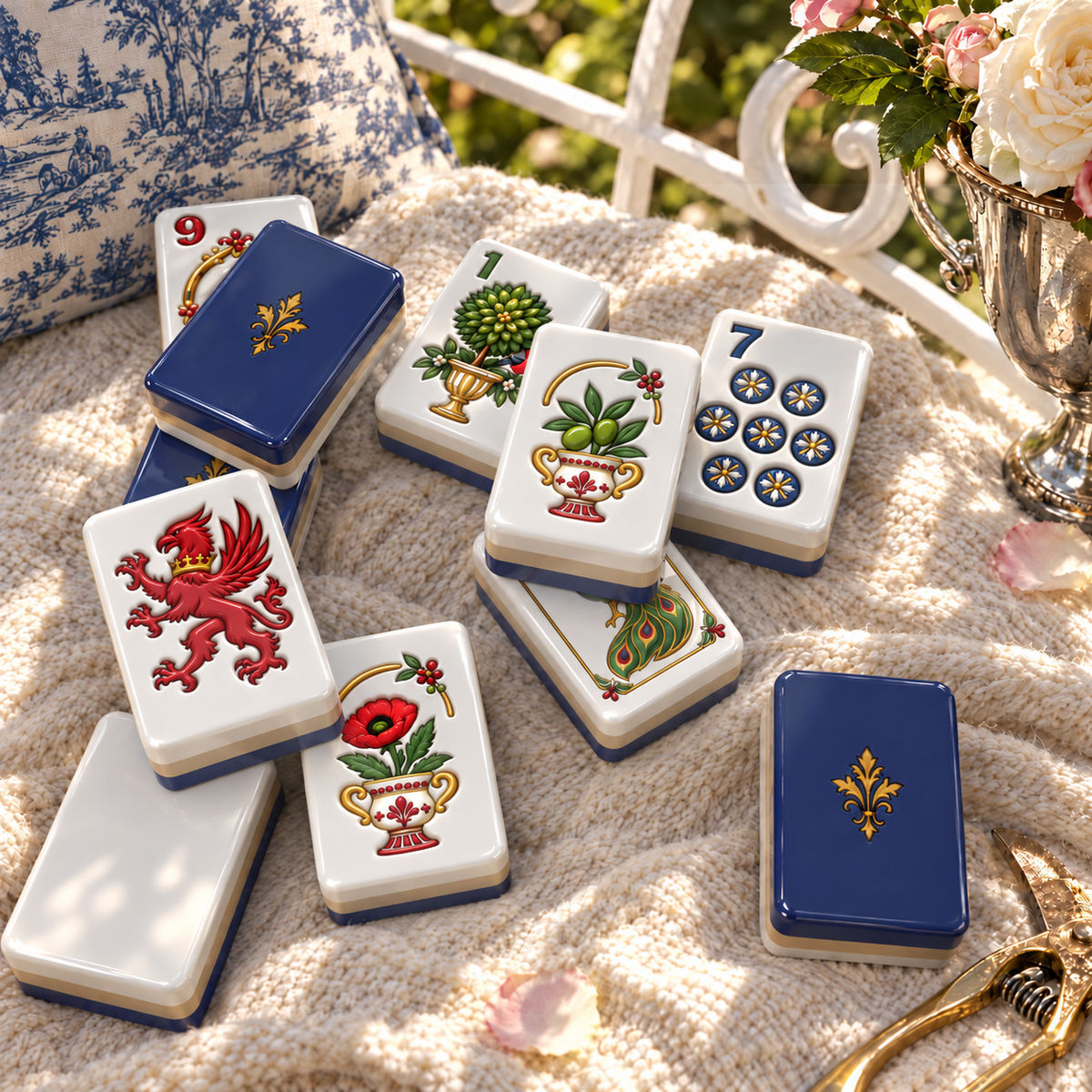
Chinese mahjong scoring awards points based on two factors: the base points (fu, typically 20, 25, or 30) and fan (pattern multipliers ranging from 1 to 13+). A 2-fan, 30-base hand scores differently depending on whether you won by self-draw or discard—a distinction American mahjong doesn't make. You calculate total points, then divide them among losers according to winner type (discarding player pays double, non-winners split the rest). Winning hands typically score 2–8 fan; rarer patterns (like all honors or all one suit) score 11–13 fan and earn exponentially higher payouts. Unlike American mahjong's binary win-or-lose card-based hands, Chinese scoring rewards strategic tile selection, timing, and defensive reading throughout the hand's development.
🀄 Shop best-selling mahjong sets →
What does "fan" mean in Chinese mahjong scoring?
Fan (翻) are multiplier tiers that stack to increase hand value. Each fan roughly doubles points; a 1-fan hand might be worth 1,000 points base, while a 3-fan hand is 4,000. Common 1-fan patterns include a pung of your wind, a terminal pung (1s or 9s), or an honor pung. Patterns like all pungs (no sequences), all one suit, or all terminals score higher (3–6 fan). Understanding which tiles build multi-fan hands lets you pivot mid-game toward bigger scores instead of chasing quick wins.

How do you calculate the total payout in a Chinese game?
Base calculation: multiply base points × 2^(fan count). For a 2-fan, 30-base hand, that's 30 × 4 = 120 points. In payment: if you won by self-draw (tsumo), each opponent pays the full amount. If someone discarded your winning tile, they pay double (240 in this example) and the other two pay single (120 each). Most tables apply a 1,000-point minimum per hand to keep games moving. After each hand, points subtract from running scores; the player with the highest score after a full round (four hands, one at each wind seat) wins the session.
Which hand patterns are worth the most fan?
The "13 orphans" pattern (one each of the seven honors plus the four winds and three dragons) is a maximum-fan hand. "All terminals and honors," "four kongs," and "all one suit" each score 11–13 fan depending on house rules. "Seven pairs" is usually 2–3 fan; "all pungs" is 3–4 fan. "Heavenly hand" (a winning hand drawn on the first turn) and "human hand" (winning by claiming the first discard) are bonus patterns worth 1–2 extra fan. Regional rule sets vary: Hong Kong mahjong uses different fan limits and patterns than Taiwanese or Cantonese variants. Learning your table's local rules before play prevents mid-game disputes.
Why does self-draw (tsumo) payout differ from a discard win?
In Chinese mahjong, self-draw means you picked the winning tile from the wall yourself. All three opponents pay you equally. Discard wins mean someone else threw your winning tile—they pay you double, the other two pay single. This rule encourages defensive play: if your hand is nearly complete, opponents must be cautious about what they throw. Conversely, risky discards near the end of the wall can swing a hand's outcome entirely. American mahjong has no such distinction—a win is a win, and all players' scores change uniformly based on the card.

What's a practical strategy to increase fan during play?
Early-hand decisions determine fan potential: commit to one suit (easier 3–4 fan) or aim for honors (6–8 fan but harder to complete). Pungs score more fan than sequences, so prioritize collecting three identical tiles over chasing runs. If your first few draws include multiple honor tiles, pivot toward an all-honors hand (11+ fan) rather than forcing a one-suit hand. Watch discards: if opponents throw dragons, you know they don't need them, so claiming a dragon pung becomes safer. Never go after 1-fan hands; the payout barely covers time. Hold until you spot a 2–3 fan pattern, then commit. Defensive positioning—sitting across from the player with the most points—lets you block their winning tiles while building your own hand.
Pattern Type | Typical Fan Range | Difficulty | Strategic Use |
Single pung of your wind | 1 fan | Easy | Early-game pivot, safety net |
All one suit | 3–4 fan | Moderate | Core hand if suited tiles cluster early |
All pungs, no sequences | 3–4 fan | Moderate | Commit if three-tile groups form naturally |
All honors | 6–8 fan | Hard | Build only if three+ honor tiles drawn early |
All terminals | 5–6 fan | Hard | Rare; requires specific wall luck |
Thirteen orphans | 13 fan | Extremely rare | Almost never achievable; mostly for reference |
🎁 See our most-loved mahjong sets & accessories →
How do regional variants change scoring?
Cantonese mahjong caps fan at 13 and uses strict rules: no limit hands (天胡, 地胡) are rare bonuses. Hong Kong mahjong often plays "limit hands" where 8+ fan simply pays a flat maximum payout (e.g., everyone pays you 8,000 points regardless of the actual calculation). Taiwanese mahjong uses a different fan hierarchy; flower tiles and bonus tiles award extra points per set. Riichi mahjong (Japanese) abandons fan entirely, using a table-based point grid keyed to hand pattern and tile count. If you play across tables, always confirm scoring rules before the first hand. Many disputes arise from players assuming their home rules apply elsewhere.
What mistakes ruin your scoring strategy?
Chasing 1-fan hands: the payout barely covers ante. Holding too long for perfection: a 2-fan hand in hand now beats a mythical 5-fan hand you'll never draw. Ignoring discard patterns: if two players have discarded dragons, the third probably holds one—don't claim a dragon pung blindly. Playing too defensive: sitting out waiting for a massive hand costs you time; grab a 2–3 fan when it's clear and move to the next round. Miscalculating mid-hand: always count your remaining tiles and potential patterns before committing to a direction. Most costly error: assuming American mahjong rules (no self-draw distinction, no live wall, binary win-or-loss) carry over—they don't.
What you'll need to play Chinese mahjong well
A standard set includes 136 tiles (Bams, Craks, Dots 1–9 in fours, plus 16 winds, 12 dragons, 8 flowers). If you host games regularly, check our best-selling mahjong sets—durable acrylic tiles survive shuffle-heavy sessions. A mahjong mat with marked zones helps players track live wall position and round wind clearly. Racks with pushers keep hands organized and prevent accidental reveals during scoring conversations. A scorepad (physical or app) prevents arithmetic errors; note each hand's fan, base points, and final payout so newer players learn the calculation.
✨ Find your Mahstead set — free US shipping →

FAQ
Can you teach me the exact formula to calculate points from fan and base?
Formula: base points × 2^(fan). Example: 30-base, 3-fan hand = 30 × 8 = 240 points base. If self-draw, each opponent pays 240; if discard win, discarding player pays 480, others pay 240. Most tables apply a 1,000-point minimum per hand.
Is Chinese mahjong scoring the same across all regions?
No. Cantonese, Hong Kong, Taiwanese, and Riichi variants use different fan limits, bonus tiles, and payout rules. Always confirm table rules before play begins to avoid disputes.
How do I know if a hand is worth pursuing mid-game?
Count remaining tiles (typically 2–4 draws left). If you're one tile away from a 2–3 fan pattern, pursue it. If you need two+ tiles, hold what you have and pivot defensively. Never chase 1-fan hands.
What's the difference between self-draw and discard-win payout?
Self-draw (tsumo): all three opponents pay you equally. Discard-win: the player who threw your winning tile pays double; the other two pay single. This makes discarding near game-end riskier.
How many tiles are in a Chinese mahjong set?
136 playing tiles: three suits (1–9) × 4 copies each (108 tiles), plus 16 winds, 12 dragons, and 8 flowers. Sets sold for play include spare tiles; only 136 are used per game.
Should I learn Chinese mahjong if I already play American mahjong?
Yes, but expect major differences: no card-based hand list, no Charleston pass, live-wall draws, and fan-based scoring. The tile values shift mid-game, making defensive reading and timing strategy-critical. Chinese mahjong rewards adaptive play; American rewards memory and card knowledge.


View More
View More
View More
