
Cheap vs. Expensive American Mahjong Sets: What to Buy
Last updated: Nov 23, 2026
An entry-level American mahjong set costs less upfront but may have thinner acrylic, simpler designs, or tile wear after 50–100 games. Premium sets use thicker acrylic, hand-selected engraving, and hold up to regular weekly play for years. You'll find best-selling mahjong sets across both ranges. The real difference isn't "cheap vs. expensive"—it's durability per game played. If you host weekly, mid-to-premium tiles pay for themselves. If you play four times a year, a solid budget set works fine. American mahjong sets always include 152 playing tiles plus 8 jokers (160-tile total); the deciding factors are acrylic thickness (3–5 mm), tile finish smoothness, whether tiles are engraved or printed, and whether the rack and mat match your table size. Check tile thickness before ordering—thin tiles sound hollow and warp near humid windows.
What tile thickness and acrylic quality actually change?
Tile thickness ranges from 3 mm to 5 mm. At 3 mm, tiles feel light, clatter loudly, and can develop edge cracks after 6–12 months of weekly shuffling. At 4–5 mm, tiles feel substantial, shuffle more quietly, and stay level on the rack. Engraved tiles (where the symbol is cut into acrylic) stay readable for years; printed tiles fade after 200–300 games or if exposed to direct sunlight. Acrylic density also matters: denser acrylic resists yellowing and doesn't absorb odor from smoke or food. Budget sets often use standard acrylic and 3 mm thickness. Premium sets use UV-resistant acrylic and 4–5 mm tiles.
Who should buy a budget set, and who shouldn't?
A budget set works well if you play casually—four games a year or fewer—or if you're learning and aren't sure you'll stick with mahjong. Budget sets let you test the game without a large outlay. They don't work for weekly hosts or players who shuffle aggressively, or for anyone keeping a set longer than two years. If your group plays indoors near a sunny window or in humid climates, budget acrylic will yellow and warp. If noise bothers your household, thin tiles echo on tables and can wake neighbors downstairs.
What makes a mid-range set the sweet spot for most groups?
Mid-range sets (4 mm acrylic, engraved tiles, acrylic racks included) give you durability without the extra cost of ornamental designs or collector-grade materials. They survive two to five years of weekly play without cracking or fading. They come with mahjong racks with pushers sized for standard tables, so you don't need to buy accessories separately. Tile feel is responsive—shuffling sounds clean, tiles stack evenly, and the rack doesn't pinch when you push tiles forward for your hand. Mid-range is what most hosts we know actually use week to week.
When does premium-tier (hand-engraved, special designs) make sense?
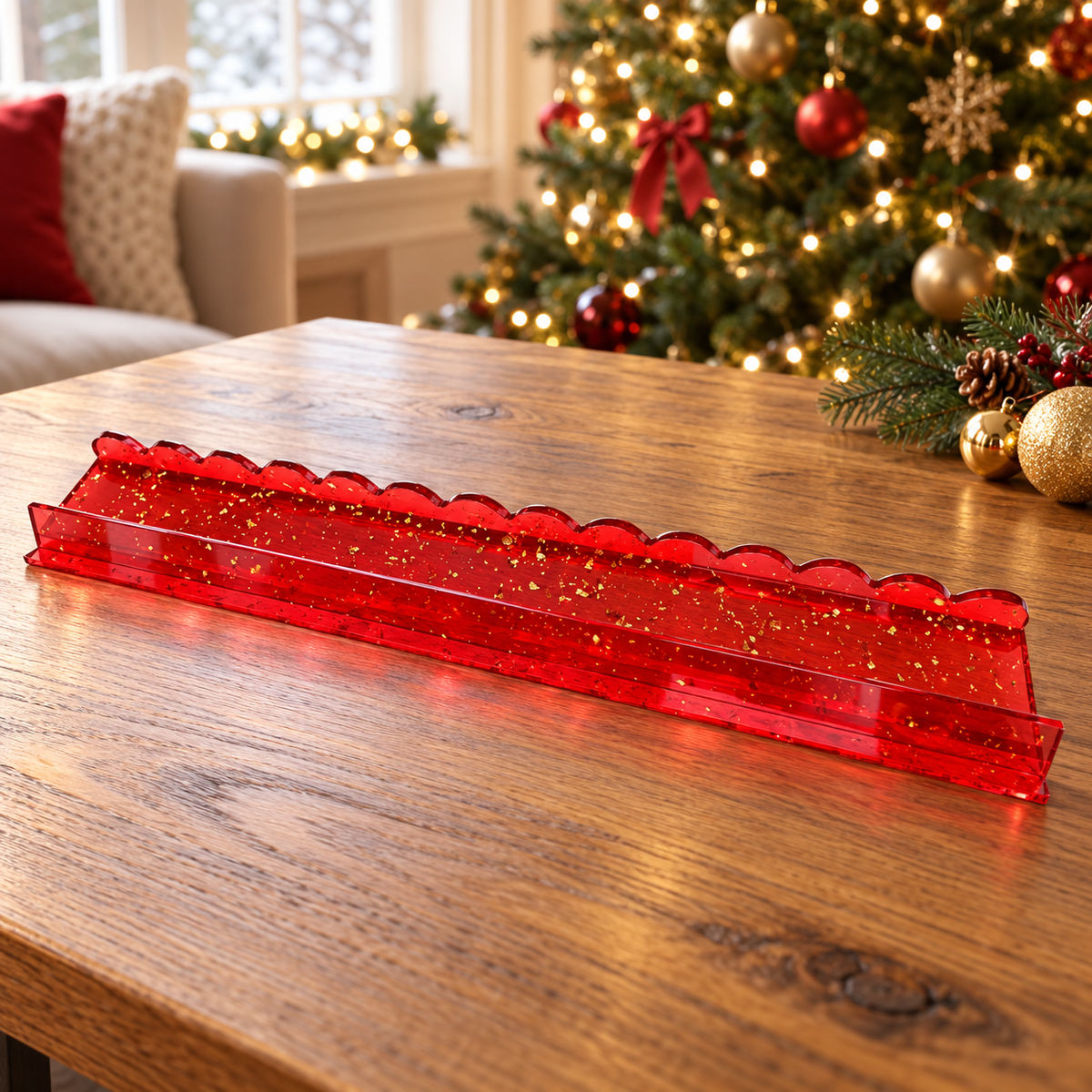
Premium sets justify their cost when you host consistently, want tiles as décor between games, or are gifting to a serious player. Hand-engraved tiles feature custom titles, names, or decorative motifs—like engraved American mahjong sets with personalized branding or holiday themes. These sets can become conversation pieces at the table. They also age better: thicker acrylic and premium finishes resist yellowing, tile edges don't chip, and they're heirloom-quality if kept in a case. Premium racks often include pushers designed to move smoothly without binding, and premium cases use reinforced zippers. Downsides: longer wait times if custom-made, and if you're a casual player, the extra cost per game played is steep.
🀄 Shop best-selling mahjong sets →
Comparison: Budget vs. Mid-Range vs. Premium
Feature | Budget | Mid-Range | Premium |
Acrylic thickness | 3 mm | 4 mm | 4–5 mm |
Tile finish | Printed | Engraved | Engraved + UV-resistant |
Racks included | Basic plastic | Acrylic, fitted pushers | Acrylic, luxury pushers |
Expected lifespan (weekly play) | 6–12 months | 2–3 years | 4+ years |
Shuffling sound | Loud, hollow | Clean, even | Quiet, premium |
Yellowing resistance | Poor | Good | Excellent |
Design options | Standard symbols only | Standard + some custom | Full personalization |
Best for | Casual, learning | Weekly hosts | Serious groups, gifts |

How to compare sets before you order: a checklist
Check the product listing:
Does it state acrylic thickness? If not, ask before buying.
Are tiles engraved or printed? Engraved lasts longer.
Does the listing specify acrylic racks, or are they plastic? (Acrylic racks are stronger.)
Is a mahjong mat included? If not, budget for one—it protects tiles and the table.
Inspect shipping and packaging:
Does the product ship in a rigid box with foam, or soft bag? Rigid packaging means less tile movement during transit.
Are spare jokers or blanks mentioned? 160-tile sets include spare tiles; confirm your set has them.
Ask about the tiles themselves:
Do tiles stack flat, or do they have a slight dome? Flat tiles are easier to read and shuffle.
What's the weight per tile? Heavier (denser acrylic) feels better and shuffles more quietly.
For groups with humidity or sunlight:
Does the product page mention UV-resistant acrylic? If you play near windows, this matters.
Will the seller replace tiles if they yellow within a year? (Check their returns policy.)
For hosts buying accessories:
Mahjong racks with pushers should fit your table width—measure first.
Do you need a travel bag if you rotate between homes or venues?
🎁 See our most-loved mahjong sets & accessories →
The hidden cost of a cheap set: game-by-game math
Here's why premium sets often cost less per game. A budget set costs less upfront but cracks, fades, or warps after 50 games. That's roughly one year of weekly play. If you host 50 times at that price, your cost per game is high. A mid-range set lasts 150 games (three years weekly), so the cost per game spreads over three times as many plays. A premium set lasts 250+ games (five years weekly), making each game even cheaper by year three. For casual players (four games per year), any set lasts a decade, so cheap is fine. For weekly hosts, premium breaks even by month eight.
Real reasons to avoid certain cheap sets
Some budget sets use inferior molding—tiles aren't cut square, so they jam in racks or don't shuffle smoothly. Others use glued-on number tiles instead of engraved symbols; the glue fails and numbers peel off. Avoid any set without clear product photos showing tile detail. Don't buy a set that doesn't list acrylic thickness or material composition. If a seller won't answer these questions, they're hiding something. We always give honest specs because we know our play-testers (our weekly group) will call us out otherwise.
When to buy seasonal or gift-focused sets
If you're buying for a holiday, Christmas mahjong sets often use thicker acrylic and premium finishes—they're marketed as gifts, so they're built to impress. These are mid-to-premium tier, and they're worth the cost if the recipient plays regularly. For casual gift-giving, buy a mid-range set and pair it with a quality mat and racks with pushers—the total package is more useful than a set alone.
✨ Find your Mahstead set — free US shipping →
FAQ
Does a more expensive set actually last longer, or is it just prettier?
Both. Premium acrylic resists yellowing and warping; engraved tiles don't fade like printed ones. A 4–5 mm premium set survives three to five years of weekly play without cracking. A 3 mm budget set may crack or warp within 12 months in humid rooms or near sunny windows. Prettier doesn't matter if tiles warp and don't shuffle.
Can I mix old tiles from a cheap set with new tiles from an expensive set?
No. Tile thickness, acrylic density, and finish vary. Mixing creates uneven stacks, unstable racks, and shuffling noise. If tiles are damaged, replace the whole set or buy a backup rack so you can retire worn tiles cleanly.
What's the cheapest reliable American mahjong set I can buy?
A solid mid-range set—4 mm acrylic, engraved tiles, included racks—offers the best value. It costs more than budget but lasts three times as long. For weekly hosts, it pays for itself. We can't quote a price, but see current pricing on the best-selling collection.
Do I need to buy a mat and racks separately, or do they come with the set?
Most quality sets include basic acrylic racks, but not a mat. Mats protect tiles and the table from spills and scratches. Budget for a mat separately—it's not optional if you play weekly. See how to choose a mahjong mat for sizing guidance.
If I buy a cheap set and it breaks, can I return it and upgrade to premium?
Return policies vary. Check the seller's returns before ordering. Some allow returns within 30 days; others don't. Budget sets often have limited warranties. Premium sets from Mahstead are built to last, so returns are rare—we test every batch for cracking before shipping.
Do engraved tiles really stay readable longer than printed ones?
Yes. Printing fades after 200–300 games or if tiles sit in sunlight. Engraving cuts the symbol into the acrylic itself, so it's permanent. After three years of weekly play, engraved tiles are still sharp; printed tiles blur noticeably.
Should I buy a budget set if I'm just learning mahjong?
If you're learning alone at home, yes. If you're joining a weekly group, ask them what they use first—many groups lend a set to new players so you don't buy until you're committed. Learning with a budget set risks frustration if tiles jam in racks or warp.


View More
View More
View More
