
Chanta in Riichi Mahjong Explained
Last updated: Nov 23, 2026
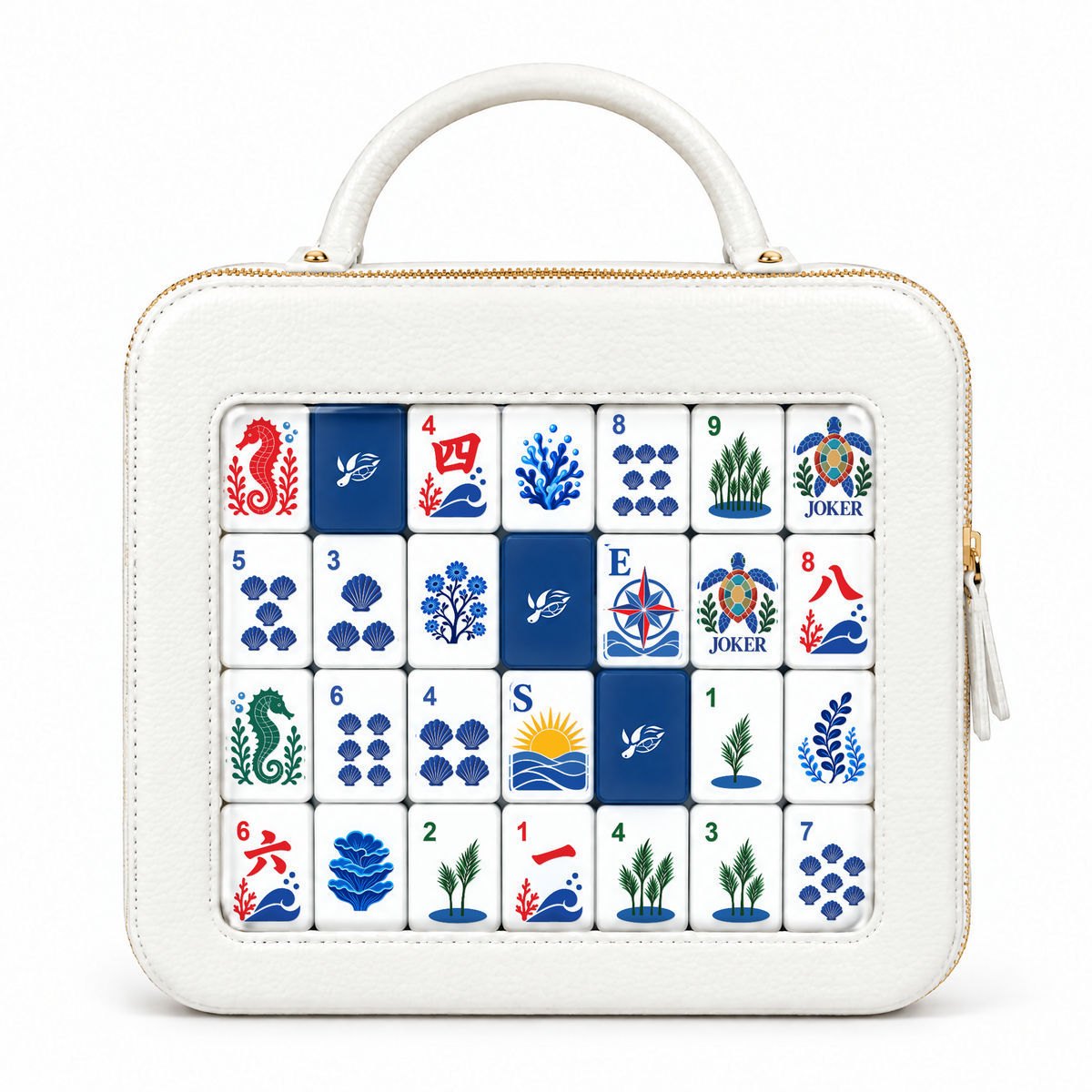
Chanta (also called "chantaiyao" or "all terminals and honors") is a one-fan yaku in Riichi mahjong. It requires your winning hand to have at least one terminal (1 or 9) or an honor tile (wind or dragon) in every melee group (pung, kong, or chow) and your pair. You do not need all terminals; you need at least one in each group. Chanta is worth 1 fan if closed, or 1 fan if open (no fan increase for exposure). It loses to hands like honourless (tanyao), which uses only numbers 2–8 and is worth 1 fan, and to any hand with multiple fans. Unlike American mahjong—which has no sequences and uses only the current year's card—Riichi mahjong lets you build chanta from any numbered tiles, honors, and sequences you can draw or discard-call. You win by drawing or calling a tile that completes your hand and declaring "tsumo" (self-drawn) or "ron" (opponent's discard). A standard Riichi set uses 136 tiles (no jokers, no blanks), so tile conservation and sequence timing matter far more than in American play. Mahstead's best-selling mahjong sets include acrylic Riichi-compatible sets designed for smooth, rapid play. 🀄 Shop best-selling mahjong sets →
What tiles count as terminals or honors in chanta?
Terminals are the 1 and 9 of each suit (Bam, Crak, Dot). Honors are the four winds (East, South, West, North) and three dragons (Red, Green, White). In a hand of four groups and a pair, every group must have at least one of these tiles; your pair can be any tile but still counts toward the rule. If your pair is, say, 5 Dots (not a terminal or honor), your four groups must each contain a 1, 9, or honor.

How does chanta differ from tanyao (honourless)?
Tanyao also scores 1 fan but requires the opposite: every group and pair must use only middle numbers (2–8) with no terminals or honors at all. Chanta requires at least one terminal or honor in every group and pair; tanyao forbids them entirely. This means the two hands are mutually exclusive—you cannot make both from the same tiles. Tanyao is easier to spot visually because it has a clean, narrow range; chanta allows more flexibility because terminals and honors are spread across the board.
Can you have sequences (chows) in chanta?
Yes. A chow like 1–2–3 Bam contains the 1 (terminal), so it counts. A chow like 7–8–9 Dots contains the 9 (terminal), so it counts. A chow like 2–3–4 Craks contains no terminal or honor, so it cannot appear in chanta. You can mix sequences, pungs, and kongs as long as each has a terminal or honor. A pung of 5 Dots (all middle numbers, no terminals) fails the chanta rule unless paired with three qualifying groups.
Group Type | Example 1 | Example 2 | Counts for Chanta? |
Chow with 1 | 1–2–3 Bam | 1–2–3 Dot | Yes (terminal 1) |
Chow with 9 | 7–8–9 Crak | 8–9 Bam + tile | Yes (terminal 9) |
Chow, mid only | 3–4–5 Bam | 4–5–6 Dot | No (no terminal/honor) |
Pung terminal | 1–1–1 Dot | 9–9–9 Crak | Yes (terminal) |
Pung mid only | 5–5–5 Bam | 6–6–6 Crak | No (no terminal/honor) |
Kong, honor | E–E–E–E | R–R–R–R | Yes (honor) |
Pair terminal | 1–1 | 9–9 | Yes (terminal in pair) |
Pair honor | E–E | W–W | Yes (honor in pair) |
🎁 See our most-loved mahjong sets & accessories →
What hands beat chanta in Riichi?
Chanta (1 fan, open or closed) loses to any hand with more fans. Tanyao is also 1 fan but mutually exclusive. Hands like honitsu (one suit + honors, 2–3 fans), chinitsu (one suit only, 5–6 fans), or yakuhai (scoring pairs, 1 fan each) beat or tie chanta depending on their fan count. Pinfu (no melds, 1 fan) and iipeikou (two identical sequences, 1 fan closed / not open) are also 1 fan. If multiple players complete winning hands in the same round, the dealer (or by turn order) takes precedence. Chanta's real value is that it combines easily with other yaku—for example, a chanta hand that is also toitoi (all pungs/kongs, 2 fans) scores higher. This layering of yaku is why Riichi is called "a game of combinations."

How do you tell if your hand qualifies for chanta?
Check each group in turn. Write down or mentally isolate your four groups and pair. For each group, ask: "Does this have a 1, a 9, or an honor (E/S/W/N/R/G/W)?" If yes, mark it. If all four groups and the pair have at least one yes, you have chanta—declare it when you win. Common mistakes: forgetting that 1 and 9 Bam are terminals (players sometimes think only 1 is), or assuming a pair of 5–5 honors the hand (pairs don't need terminals; groups do). If you draw a tile that gives you all four groups + pair with a terminal or honor in each, and it is your turn to win (melds are closed or you called a discard), you declare tsumo (self-drawn) or ron (on opponent's discard) and show your hand. Scoring is 1 fan, worth roughly 1,000–2,000 points depending on your role (dealer or non-dealer) and whether it's open or closed play.
✨ Find your Mahstead set — free US shipping →
Chanta in multi-yaku hands: how does it stack?
Chanta often appears alongside other yaku. For example, if you build a chanta hand that is also toitoi (all four melds are pungs/kongs, no chows), you score both: 1 fan (chanta) + 2 fans (toitoi) = 3 fans. If your chanta hand has all tiles from one suit plus honors (honitsu), it is 1 + 2 = 3 fans. A chanta with a scoring pair—such as East wind when you are East dealer (yakuhai)—is 1 + 1 = 2 fans. Skilled players hunt for these layered combinations because they multiply the point payout. Chanta is also often grouped with tanyao conceptually: together they show how Riichi yaku reward "purity" (all terminals and honors) or "middle-ness" (no terminals and honors). This is different from American mahjong, which awards points based on the specific pattern on that year's card, not on yaku categories. If you are learning Riichi, practice building chanta first because spotting terminals and honors trains your eye for the entire yaku hierarchy. Standard Riichi play requires quick tile recognition, so mahjong sets with clear tile marking reduce errors and speed up learning.
What to check before you buy
Tile clarity: Riichi play is fast; ensure your set's numbers and suit marks are large and distinct.
Tile count: Riichi uses exactly 136 tiles (no extras, no jokers). Confirm your set includes only standard Riichi tiles.
Size: Riichi tiles are often smaller than American tiles; check dimensions if you have hand-size concerns.
Material: Acrylic tiles are durable and easy to clean after frequent play.
Sorting ease: Tiles that don't stick or chatter help you organize groups quickly.

FAQ
Is chanta the same in all Riichi variants (Hong Kong, Taiwanese)?
No. Hong Kong mahjong and Taiwanese mahjong use different yaku systems and tile counts. Chanta exists primarily in Japanese Riichi mahjong. If you play Hong Kong or Taiwanese, check your rulebook for equivalent hands.
Can I use a joker or blank tile for chanta?
No. Riichi mahjong has no jokers or blanks. All 136 tiles are standard (suits, honors, dragons). American mahjong, by contrast, uses 8 jokers from a 152-tile set, but American mahjong has no yaku system—it uses the National Mah Jongg League card instead.
If I have three groups with terminals and one without, do I still have chanta?
No. Chanta requires every group to have a terminal or honor. If one group has only mid-numbers (2–8 Bam, Crak, or Dot), you fail chanta. That hand might qualify for a different yaku, but not chanta.
How many points does chanta win?
Chanta is 1 fan, typically worth 1,000 points (non-dealer) or 1,500 points (dealer) if the hand is closed. If open (you called a discard for one or more melds), it's still 1 fan and the same point value. Bonuses and multipliers vary by house rules.
Can chanta be open, or only closed?
Chanta can be open or closed. If you call a discard to complete a group and then win, it is an open chanta and still scores 1 fan. The key is that all groups (including those formed by your calls) meet the terminal-or-honor rule. Some yaku lose fans when opened; chanta does not—it is always 1 fan.
What is the difference between chanta and chiitoi (seven pairs)?
Chiitoi requires exactly seven pairs (no groups/melds). Chanta requires four groups + one pair, with terminals or honors in each. They are entirely different hand structures and cannot be the same hand.


View More
View More
View More
