
Cantonese Mahjong Tips: Strategy, Rules & Tile Selection
Last updated: Nov 23, 2026
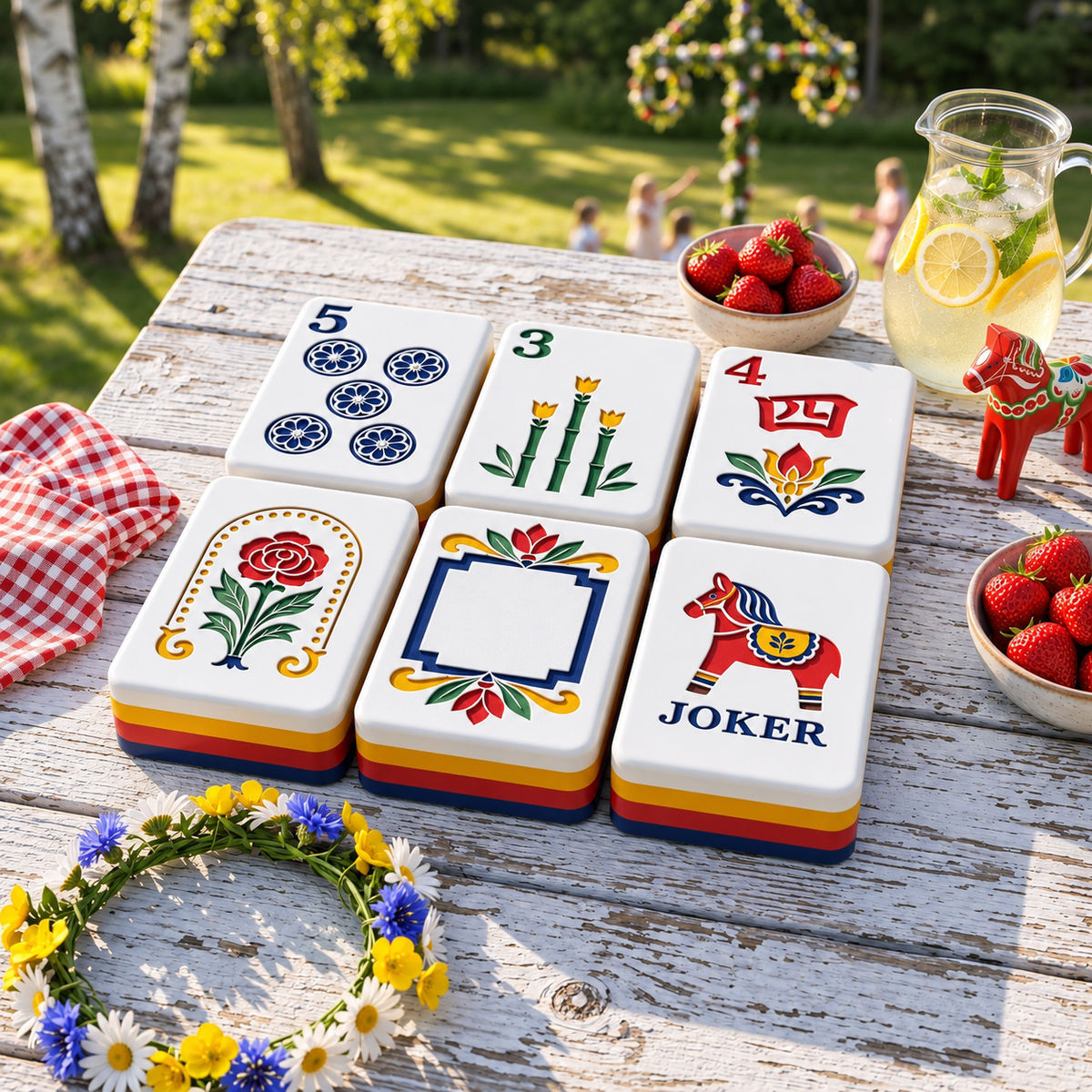
Cantonese mahjong (also called Hong Kong mahjong) uses 136 tiles—three suits (Bams, Craks, Dots) numbered 1–9 in four copies each, plus honors (winds and dragons), flowers, and seasons. Unlike American mahjong, which follows a printed card, Cantonese play is pattern-free: you win by collecting melds (pungs of identical tiles, kongs, or sequences called chows—three consecutive numbers like 5-6-7 Dots) plus a pair. Win conditions are flexible and player-called; you need 14 tiles total (13 melds plus a pair) with no locked hand list. The game moves faster, suits are drawn from a central wall, and you draw and discard in real time. Scoring varies by region but often hinges on points multipliers, concealed melds, and speed. You'll need a 136-tile Cantonese set or a versatile acrylic American set repurposed for casual Cantonese play; mats and racks help during longer sessions.
Cantonese mahjong demands speed, memory, and tactical awareness. We'll walk you through the core differences from American play, key strategic principles, and how your tile set affects your game experience.
🀄 Shop best-selling mahjong sets →
What are the core rule differences between Cantonese and American mahjong?
American mahjong is hand-locked: every winning combination must appear on the current year's National Mah Jongg League card. Cantonese mahjong is pattern-free—you win by calling any legal combination of melds and a pair, decided by the player, not a card. American tiles never form sequences (no chows); Cantonese requires chows as valid melds. American uses 152 tiles; Cantonese uses 136. Cantonese play is continuous drawing and discarding from a live wall, while American uses the Charleston tile-passing ritual before play begins. Scoring in Cantonese multiplies points for concealed melds and winning off another player's discard; American scoring is fixed per hand type on the card. The faster pace and flexibility make Cantonese ideal for social play without a reference sheet.

How do you build a winning hand in Cantonese mahjong?
Start by assessing your hand for "meeldability"—how easily your tiles form pungs, kongs, or chows. Discard terminals (1s and 9s) early unless they anchor a chow; hold onto middle-range tiles (4, 5, 6) because they form chows with more partners. Track discards obsessively: if an opponent throws a 3 Crak, the likelihood of a 3-4-5 Crak chow depends on what 4s and 5s remain visible. Mentally sort your hand by suit, not by type—keeping Bams together helps you spot potential sequences instantly. Prioritize concealed melds (tiles you drew or won unseen) because they score higher than exposed ones. When close to winning, reduce your discard pile to safe tiles: mid-range honors and 2s and 8s are lower risk than common chow tiles. Never get tunnel-vision on one type of meld; if a pung isn't forming, pivot to chows using the same tiles.
What's the strategic value of speed and memory in Cantonese play?
Speed wins games outright: the faster you recognize your options and discard, the fewer tiles your opponents draw before you win. A player who hesitates telegraphs indecision; sharp, quick discards keep opponents guessing your hand direction. Memory separates casual players from strong ones. Tracking which tiles have been discarded, which suits are depleting, and who discards what under pressure lets you predict what's left in the wall. If you've seen three 7 Craks discarded, the fourth is either in the wall or someone's hand; adjust your chow strategies accordingly. Players with sharp recall notice when an opponent suddenly speeds up—often a sign they've drawn a key tile. Conversely, deliberate slow play can induce mistakes in impatient opponents. In tournament or high-stakes groups, a player who remembers the 20-tile discard history holds a measurable edge.
How do you defend against common Cantonese tactics?
Avoid "painting" (discarding from your current draw) the same suit repeatedly—it shows weakness in that suit and invites aggressive play from others. Discard dangerous tiles (tiles many other players need) early and safely; hold defensive tiles (rarer numbers, honors) until late game when fewer melds are possible. Watch for "flower" signals: if a player consistently discards certain positions within a meld type, they may be signaling their hand structure to an ally (common in social play). Counter this by calling tiles defensively—if three players need your 5 Bam and one is clearly signaling a partner, call it yourself even if it weakens your hand; disruption is worth the cost. Never assume a fast discard means a weak hand; skilled players accelerate when sitting on a safe, nearly-complete hand. If an opponent hasn't claimed a discard in three rounds, they're likely close to winning—tighten up immediately.

When should you prioritize concealed melds, and how does tile visibility affect your decision?
Concealed melds score 2–3× visible melds depending on your house rules. If you're trailing in points, building all concealed is worth the slower completion time. However, if the wall is half-depleted and you're 5 tiles from winning, visibility is secondary; speed beats style. Watch the wall height: in the first half of the game (wall >60 tiles), invest time in concealed melds. In the final quarter (wall <30 tiles), any meld beats none. Tile visibility is your radar: if 60% of the remaining tiles are honors (winds, dragons) and you're holding two honors toward a pung, your pung is at risk—many players will compete for it. Pivot to chows in suits where fewer tiles have been discarded. If a suit has zero visible discards halfway through the game, assume it's locked in players' hands; avoid fishing in that suit unless forced. The conjunction of concealed-meld scoring, wall depletion, and visible discard history tells you the moment to shift from scoring-maximization to win-now tactics.
Situation | Concealed Priority | Visible Priority | Why |
Wall >70 tiles, tied score | High | Low | Time for points |
Wall 30–50 tiles, ahead | Medium | High | Secure the win |
Wall <30 tiles, behind | Low | High | Speed beats style |
All honors visible, <5 remain | High | N/A | Opponents blocked |
One suit unplayed (0 discards) | Low | High | Hand is locked |
What equipment makes Cantonese play smoother and safer?
Mahjong mats with clear zones and felt surfaces keep tiles silent during fast play—critical when you're discarding 20+ tiles per hand. A non-slip base prevents the mat from sliding on your table, and raised edges contain wild draws. Racks with pushers organize your hand so you can scan melds in 1–2 seconds, cutting hesitation time. Standard acrylic best-selling mahjong sets work perfectly for Cantonese play; the tile size and weight feel consistent across dozens of hands. If you're hosting regular games, a padded travel bag protects your set and mats from damage during transport. Choose a bag with interior compartments so tiles stay sorted and racks stay upright. A quality set lasts decades; cheaper plastic sets chip or warp after heavy use, and cracked tiles can wedge during fast wall draws, halting play and breaking rhythm.
🎁 See our most-loved mahjong sets & accessories →
What should you check before buying a Cantonese mahjong set?
Verify your group's tile count: authentic Cantonese sets have 136 tiles (not 144 or 152). If your group is mixed or casual, a versatile set works fine. Inspect tile weight and surface: acrylic tiles should slide smoothly on a felt mat without sticking or scratching. Test the characters—if you're learning, engraved suits (Bam bird symbol, Crak character, Dot circles) should be crisp and easy to read in low light. Check bamboo or plastic tray dividers; they prevent tiles from clumping and sliding during shuffles. If your group plays fast, avoid sets with overly glossy surfaces; they bounce unpredictably during draws. Ask if anyone uses pushers; if yes, confirm your tiles are narrow enough to stack three high without toppling. Verify the bag has enough padding if you transport regularly—one drop can crack acrylic tiles. Buy from a source offering free US shipping so replacements are simple if a tile arrives damaged.
✨ Find your Mahstead set — free US shipping →

FAQ
Can I play Cantonese mahjong with an American mahjong set?
Yes, if your set has 136 playable tiles or close. American 152-tile sets include extra jokers and blanks—ignore them and use only the base suits, winds, dragons, and flowers. You'll have 8 extra tiles, but the core play remains identical. Many casual groups mix sets without issue.
What does "concealed" mean, and how much does it affect scoring?
A concealed meld is one you drew or won from the wall unseen—not called from a discard. Scoring multiplies concealed melds by 2–3×, depending on house rules. A hand with all concealed melds (called "all concealed" or "quint") is worth far more than the same meld structure exposed.
How do I know if a tile is safe to discard?
A tile is safer if it's been seen discarded recently (others already have what they need), if it's an extreme number (1 or 9 in a suit) late in the game, or if it's an honor no one is fishing for. Watch opponents' reactions; if no one claims a 2 Bam for three rounds, it's likely safe.
What's the difference between a pung and a chow?
A pung is three identical tiles (e.g., three 5 Dots). A chow is three consecutive tiles of the same suit (e.g., 4-5-6 Craks). Pungs are rigid; chows offer more flexibility because many number combos work with many tiles.
How long does a typical Cantonese game take?
A casual game runs 15–30 minutes. Fast groups with sharp memory finish in 10–15 minutes. Beginners or deliberate play can stretch to 45 minutes. Speed improves with practice and table familiarity.
Can I study Cantonese mahjong rules online, or is coaching necessary?
Many YouTube channels and forums cover Cantonese play. However, regional scoring rules vary widely—Guangdong, Hong Kong, and Malaysian rules differ. Ask your group for their specific scoring sheet; it's faster than memorizing 10 online sources. A single coaching session from a group veteran pays huge dividends.


View More
View More
View More
