
Cantonese Mahjong Defensive Play: When to Hold Tiles
Last updated: Nov 23, 2026
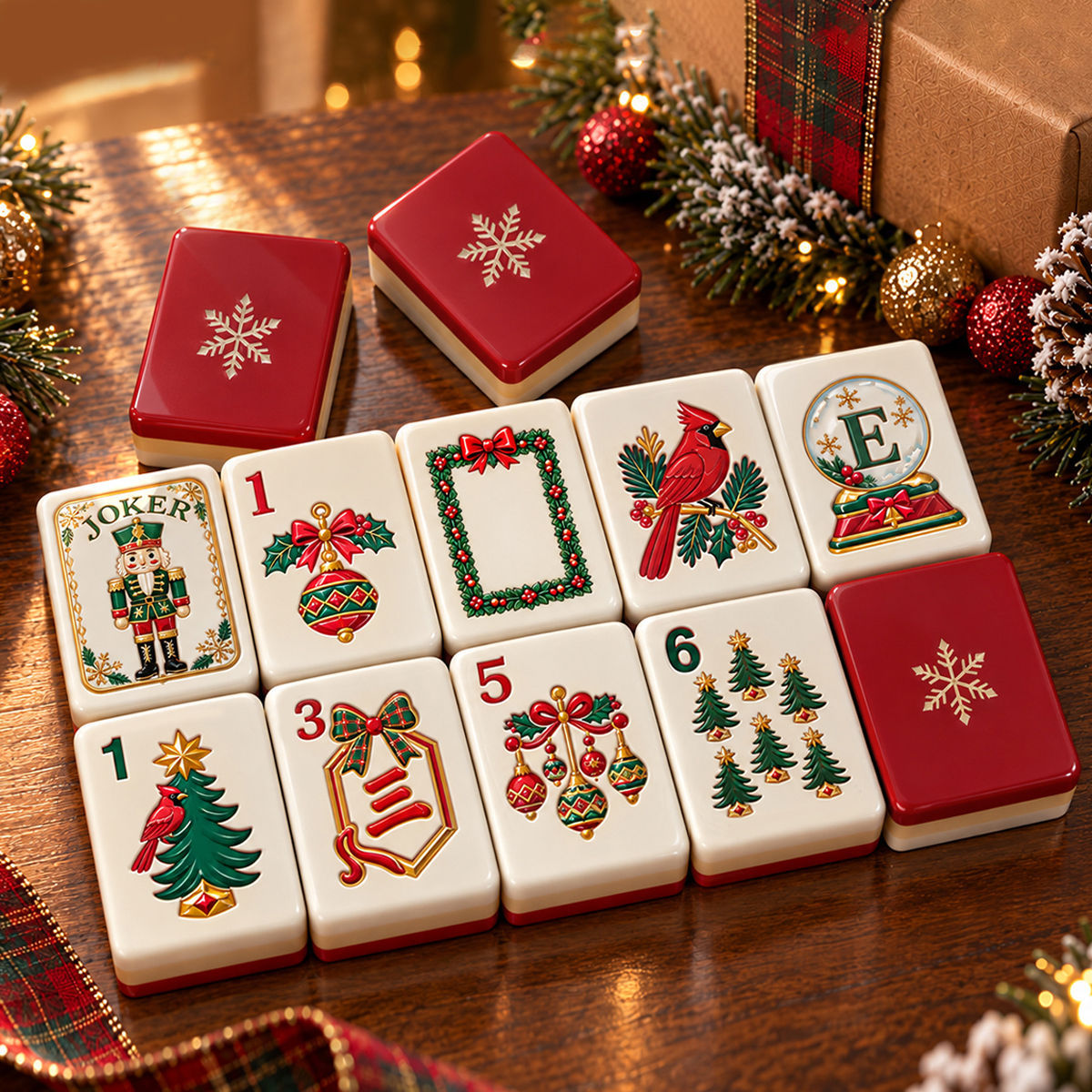
Cantonese mahjong defense means discarding safely to prevent opponents from completing their hands while keeping your own possibilities open. Unlike American mahjong, which uses a fixed seasonal card, Cantonese play follows traditional hand patterns and allows you to track dangerous discards more actively. The core strategy involves: (1) tracking what each player needs by watching their picks and discards; (2) identifying "live" tiles (those unlikely to be dangerous because multiple copies are still in deck or player hands); (3) holding honor tiles (winds, dragons) longer if suits are flowing around the table; (4) discarding from the suit your left-hand opponent discarded first, since that signals weakness there. Defensive mahjong is roughly 40% recognizing patterns and 60% reading your opponents' speed and hesitation. The biggest mistake new players make is discarding randomly; even a casual glance at the discard wall tells you which tiles are safe. We recommend playing with a quality mahjong mat to keep the discard pattern clear and readable. 🀄 Shop best-selling mahjong sets →
How do you know which tiles are truly safe to discard?
A safe tile is one that (1) your right-hand opponent has already discarded, (2) appears multiple times in the discard wall already, or (3) no one else has picked from the dead wall. Watch the discard pattern: if someone threw a 4 Dot early and hasn't picked from the deck since, that 4 Dot is extremely safe. Honor tiles (winds and dragons) are usually safer in the mid-game because players are still building suit combinations. The real danger comes when an opponent stops discarding from their start tiles—that's when they've begun their hand.

What does the discard order tell you about each opponent's strategy?
In Cantonese mahjong, your first three discards reveal your hand direction. If East discards Bamboos, then Craks, then Dots, they're likely hunting a mixed hand and have no immediate suit strength. A player who discards all one suit at the start signals they're waiting on that suit—avoid it entirely. Speed matters: a quick discard means they were holding that tile without using it; a hesitation means they considered keeping it. By the eighth discard, you can usually guess whether an opponent is pursuing a pung-heavy hand (many same tiles) or a mixed strategy. This pattern-reading is why experienced players seem to "know" what's coming—they're simply tracking the first ten discards carefully.
When should you hold dragons and winds instead of rushing to complete pung combos?
Hold honor tiles when (1) all three Bam suits are flowing—dragons are truly dead that hand, (2) two players discard multiple honor tiles early, signaling they're not hunting them, or (3) you're still uncertain about your final hand direction. Discard them when (1) only one suit is appearing in the discard wall (others are hoarding that suit), (2) you're trailing and need to wait aggressively, or (3) an opponent has already called a pung of that honor—they can't call your second copy. In Cantonese play, holding a dragon too long costs you flexibility; by turn five, if you haven't used it, its safety odds drop sharply because opponents are tightening their hands. Honor tiles are psychological tools: throwing one early tells table you're not hunting them. Throwing one late tells the table you were hunting it and gave up—dangerous, because it signals weakness and may prompt opponents to accelerate their own hands.
What's the difference between defensive play in Cantonese, Hong Kong, and American mahjong?
Variant | Hand Source | Defense Focus | Risk Window |
Cantonese | Traditional patterns; always changing | Opponent psychology; read discard timing | Turns 5–10 (critical) |
Hong Kong | Traditional patterns; speeds up end-game | Discard wall + live tile math | Turns 8–14 (prolonged) |
American | Fixed seasonal card year-round | Card memorization; block specific combos | Turns 6–13 (predictable) |
Cantonese defense is the most fluid because hands are less predictable—you're reading people, not a static card. Hong Kong adds time pressure, making quick decisions vital. American play is more systematic: you know roughly what hands are possible that year, so defense is about knowing the card cold and tracking Charleston effects. In Cantonese, a player can shift strategy mid-hand; in American, the hand is fixed once play begins.

Why do experienced players discard honor tiles in a specific sequence?
Experienced Cantonese players throw honors in this order: (1) first the wind that matches the round (never safe); (2) then the wind of the player to their right (slightly safer, since that player often needs their own wind); (3) then neutral dragons. This sequence minimizes the chance you're feeding the player most likely to win. The logic: your right-hand player will be more aggressive about taking your discards because they're closer to your hand visually and psychologically feel "entitled" to your tiles. By throwing their matching wind early, you either bait them into calling it (revealing they need it) or force them to pass (proving they don't). A second mistake is throwing all three dragons of the same color together; instead, scatter them across turns 4, 7, and 10 so opponents can't track that you have none left. Advanced players also throw a high-value discard (like a 9) right after passing on a 5-of-the-same suit—this creates the false impression they're not hunting that suit.
What should you do if your left-hand opponent is clearly on the verge of winning?
Stop discarding from the suit they're building—immediately. If they've called two pungs of Bams, your next Bam discard wins them the hand. Pivot to the suit that appears least in the discard wall. If you're forced to discard from a dangerous suit, throw the highest number (8 or 9) first, as these are less flexible for completing patterns. Watch for the "one-away" tell: if your opponent picks and holds, then slowly returns a tile, they're one tile away from winning. At that moment, activate full lockdown—discard only honor tiles or the suit they just threw away. If you hold a tile they discarded three turns ago, that tile is extremely safe to throw back. This is called a "mirror discard," and it's one of the strongest defensive moves in Cantonese mahjong: you're essentially saying "I know you don't need this anymore."
Defensive mastery in Cantonese mahjong comes from repetition and table discipline. Play the same group weekly, and you'll begin to anticipate patterns before they happen. The best players aren't always the quickest hand-solvers—they're the ones who spent three hands reading instead of winning, building a mental model of how the table flows. A quality mahjong set with a clear mat reduces visual confusion and speeds up your ability to read the discard wall. Pair that with our engraved sets if you're hosting regular Cantonese games—players will thank you for the readability and durability.
🎁 See our most-loved mahjong sets & accessories →
What to Check Before You Buy a Mahjong Set for Cantonese Play
Tile clarity: Cantonese players read the discard wall constantly. Choose a set with bright, high-contrast tiles (acrylic or bone over resin).
Discard wall stability: If tiles slip or stack unevenly, defensive reads fail. Test weight and balance before purchasing.
Set completeness: Ensure the set has all 152 playing tiles plus spares. A missing tile mid-game breaks your entire defensive strategy.
Mat size: A 36"+ mat gives you clear sight lines to all discards. Smaller mats force you to lean or guess.
How does Cantonese defensive play differ from simply playing conservatively?
Conservative play means discarding the newest tile you picked; defensive play means choosing which tile to discard based on table position. A conservative player in turn three throws a 4 Dot because they drew it. A defensive player throws a 4 Dot because they watched South discard it in turn two, meaning it's safe. The difference is intention and pattern awareness. Conservative play loses because it reacts to your own hand. Defensive play wins because it reacts to the entire table. Cantonese masters spend more time watching than thinking—it's a skill, not a talent, and it improves with every session.
✨ Find your Mahstead set — free US shipping →

FAQ
Can you ever be 100% sure a tile is safe in Cantonese mahjong?
No. Even if a tile was discarded once, a second copy may exist in someone's hand. Safety is probabilistic: a 4 Dot thrown in turn two is 85–90% safe by turn six, never 100%. The safest tiles are those discarded twice from different players, or honor tiles when all three are visible in the discard wall.
How many turns of observation do you need before discarding aggressively?
Four to five turns. By turn five, you've seen 15–20 discards per player, enough to spot which suits are "dead" (all copies visible or in safe hands). Before turn five, stick to honor tiles and suit extremes (1s and 9s). After turn five, you can read the table clearly.
If I'm trailing on points, should I throw safer tiles or take more risks?
Take calculated risks—discard from a suit that's already appeared three times. Trailing players who throw ultra-safe tiles (all honors, all 1s and 9s) telegraph weakness and get attacked harder. A timely risky discard can shock the table and buy you breathing room.
What's the biggest defensive mistake beginners make?
Discarding in numerical order (1, 2, 3, 4...) or color order (all Bams, then Craks, then Dots). This tells opponents exactly what you're hunting. Randomize your discard sequence: throw a 7 Dot, then a North Wind, then a 2 Bam. Chaos is your ally.
How do you stay focused on reading the table for an entire two-hour session?
Watch the first three discards of each opponent at every new hand; treat that as your "scan window." Outside the first three turns, you can relax slightly. Also, stay hydrated and take a two-minute break between hands. Fatigue kills your pattern recognition faster than anything else.
Is defensive play the same in 4-player and 3-player Cantonese mahjong?
No. In 3-player, the game accelerates and dead walls shrink, so fewer copies of each tile are in circulation. Your defensive window is tighter—positions matter more, and speed is critical. In 4-player, you have more observation time and backup partners in the discard wall. Play 3-player defense 10–15% more aggressively.


View More
View More
View More
