
Cantonese Mahjong Rules: Complete Guide for Western Players
Last updated: Nov 23, 2026
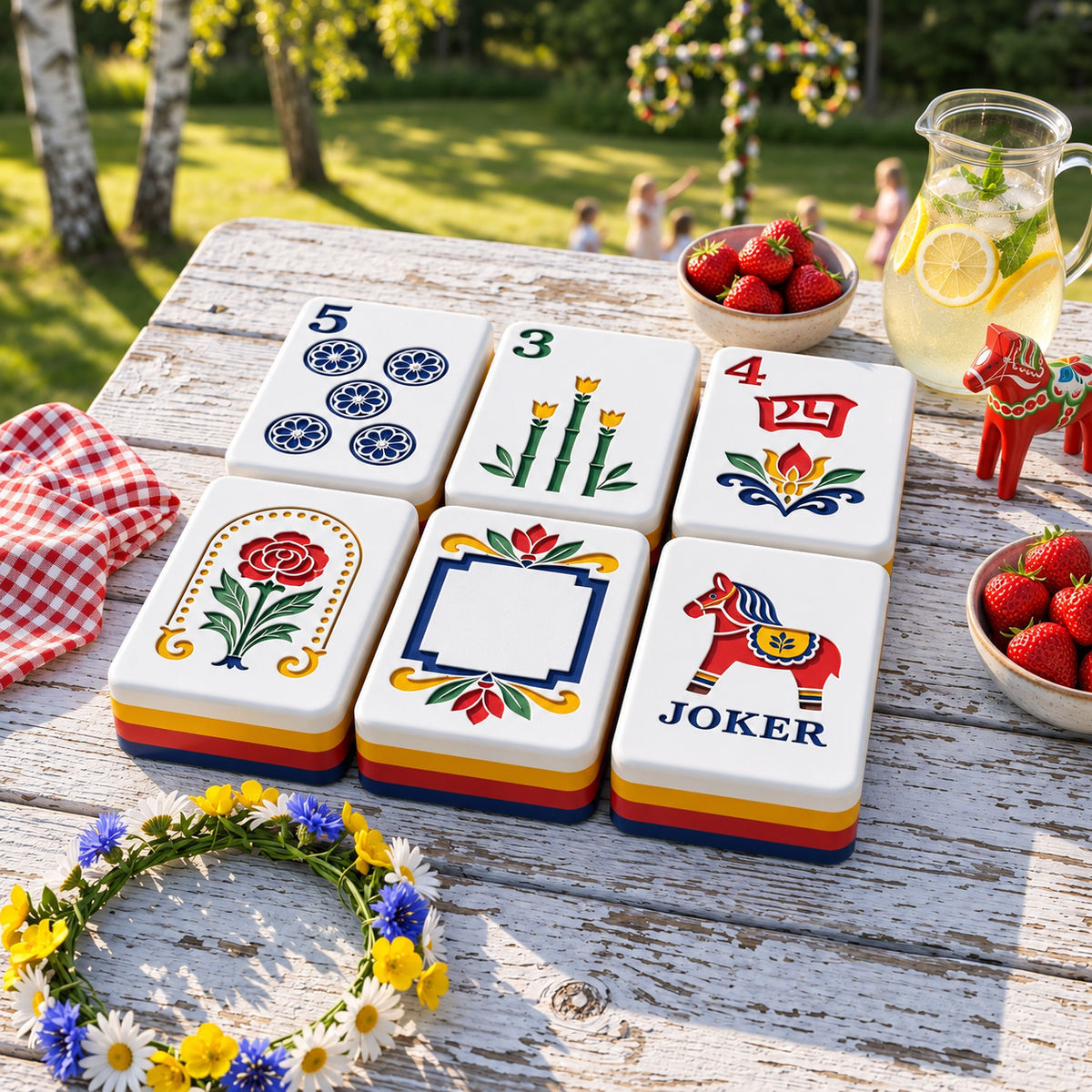
Cantonese mahjong uses a 144-tile set: three suits (Bams, Craks, Dots, numbered 1–9, four copies each = 108 tiles) plus 16 winds, 12 dragons, and 8 flowers. Players draw and discard one tile per turn, building melds (pungs, kongs, chows) face-up on the table. A hand wins by completing 14 tiles in melds plus a pair, or occasionally a special hand. Games move fast—typically 15 minutes per round—because players expose tiles immediately and anyone can call a discard to form a meld. The core difference from American mahjong: Cantonese allows sequences (chow: three consecutive numbers in one suit) as valid melds, and all melds can be called openly. There's no NMJL card; hands are learned through tradition or printed reference guides. Scoring varies by region but focuses on meld type, hand structure, and doubles (repetitions of a pattern).
Cantonese mahjong sits at the heart of how the game was played for centuries before American and Hong Kong variants branched off. If you've played American mahjong or watched others, you'll recognize the tiles—but the rhythm, strategy, and hand-winning logic are distinct. We'll walk through the core rules, show you how melds work, and highlight the specific choices that separate Cantonese play from what many Western players expect.
How is Cantonese mahjong different from American mahjong?
The clearest gap: Cantonese mahjong uses 144 tiles with no extra jokers or blanks, plays all melds open on the table, and allows chows (sequences like 3-4-5 Bams) as legal, callable melds. American mahjong uses 152 tiles, 8 jokers, hides melds until the hand is won, and forbids chows entirely. In Cantonese play, every player watches every meld appear; the game is collaborative exposure, not hidden hand racing. Rounds are shorter and more tactical because claiming a discard (to make a pung, kong, or chow) interrupts the turn order and changes the hand immediately. There's no annual NMJL card; instead, traditional hand patterns and regional scoring variants pass through community knowledge or printed local guides.

What tiles are in a Cantonese mahjong set?
A full Cantonese set holds 144 tiles. The three main suits each contain numbers 1–9 (four of each = 36 tiles per suit, 108 total). The honor tiles include 16 winds (four each: North, East, South, West) and 12 dragons (four each: Red, Green, White). Eight flower tiles (labeled 1–4, four copies) complete the set. Unlike American mahjong sets sold as best-selling designs, Cantonese sets contain exactly 144 tiles and no blanks or spare jokers; every tile is in play. Some players prefer sets with larger characters or thicker tiles for ease of reading during fast play. If you're shopping for a set to learn Cantonese rules, confirm the seller specifies 144-tile count and check that suits, winds, dragons, and flowers are all present and clearly labeled.
🀄 Shop best-selling mahjong sets →
What counts as a legal meld in Cantonese mahjong?
In Cantonese play, four meld types are valid: pung (three identical tiles—e.g., three 5 Dots), kong (four identical tiles), chow (three consecutive numbers in the same suit—e.g., 4-5-6 Craks), and a pair (two identical tiles for the winning hand). The crucial difference from American mahjong: chows are allowed and can be called from any player's discard. If your turn sequence is disrupted because another player discards a tile you need for a chow, pung, or kong, you can claim it immediately, add it to your melds on the table, then discard a tile to end your turn. This open exposure means every meld is visible; there's no hidden rack strategy. A winning hand consists of 14 tiles: four melds (each a pung, kong, or chow) plus a pair. A few rare hands use all melded pairs or all sequences, but the standard pattern is 4 melds + 1 pair.
Meld Type | Example | Can Be Called | Can Be Exposed |
Pung | 3 × 5 Dot | Yes | Yes |
Kong | 4 × 5 Dot | Yes | Yes |
Chow | 4-5-6 Crak | Yes | Yes |
Pair | 2 × Red Dragon | No (only to win) | Only at win |
How does winning and scoring work in Cantonese mahjong?
A player wins by completing 14 tiles in the structure above (four melds + pair) and declaring "mahjong." Scoring depends on hand composition and the region's rules; common scoring factors include the number of melded pairs, whether all melds are pungs (no chows), the suit of the dragon or wind in the hand, and any "doubles" (pattern multipliers). For example, a hand of all pungs (no chows) may score higher than a mixed hand. Some variants award bonus points for a "flush" (all one suit), all honors, or melding a kong on your own draw. The player who wins collects points from all three opponents; ties and no-win rounds reset the dealer. Scoring math varies widely—some groups use simple point tables, others use multiplier systems. Before joining a game, ask the group for their regional scoring rules or consult a local Cantonese mahjong guide, as tradition and house rules differ significantly between Hong Kong, Guangdong, Macau, and diaspora communities.

What's the draw-and-discard turn structure?
The dealer draws a tile from the wall (the shuffled deck of remaining tiles arranged in stacks), then discards one tile face-up into the center. Other players, in order, either let that discard pass or claim it to form a meld. If no one claims the discard, the next player in turn order draws from the wall and discards. This cycle continues until someone calls "mahjong" on a completed 14-tile hand. Speed is key: once a tile hits the center, the next player or claimant must decide instantly. Unlike American mahjong's turn-by-turn hidden draws, Cantonese play is real-time and reactive. Mistakes happen when a player doesn't pay attention or misses a tile shape; experienced players develop reflexes to spot their needed tiles in a heartbeat. Games with attentive, practiced players move fast—a full round (four players, one dealer cycle) can take 15 minutes or less. Beginners benefit from slower, study-focused games where players pause to confirm tile reads before discarding.
🎁 See our most-loved mahjong sets & accessories →
Why do some hands use all sequences and others all pungs?
In Cantonese mahjong, the mix of chows and pungs in your melds affects hand value and difficulty. A hand of all sequences (four chows + pair) is common and easier to achieve because chows are flexible—any three consecutive numbers in a suit work. A hand of all pungs (four pungs + pair) is rarer and riskier because you need exact matches, but it scores higher and earns a scoring multiplier in many regions. Some hands also require all one suit (a "flush") or all honor tiles (winds and dragons), which are much harder but worth substantial points. Regional scoring traditions emphasize these patterns differently; Macau-style play rewards flushes and pure pung hands more heavily, while Hong Kong casual play may use simpler scoring. Understanding your group's hand-value hierarchy before playing helps you target the right patterns. Asking experienced players for the top-scoring hands in their variant is the fastest way to learn local priorities.
What common mistakes should I avoid as a beginner?
Tile recognition errors: Cantonese tiles require quick, accurate reading under game speed. Confusing a 1 Bam (often shown as a bird, not the numeral "1") with other ones, or misreading a White Dragon as a Blank, costs you the hand. Practice sorting tiles slowly before your first game.
Calling too late: If you need a discard for a meld, you must claim it before the next player draws. Hesitation or distraction means you lose that tile.
Forgetting chows are legal: New players from American mahjong backgrounds sometimes reject sequences as invalid. They're completely legal in Cantonese play—use them freely.
Ignoring the discard pile: Watching what others throw tells you which tiles are gone and which tiles your opponents need. Tracking the pile dramatically improves your odds.
Not asking for scoring rules upfront: Cantonese scoring varies by community. Playing without clarifying the hand values and multipliers beforehand leads to disputes.
What to check before you buy:
Does the seller specify "144 tiles"? (not 152 or 160)
Are all four suits, winds, dragons, and flowers clearly visible on sample images?
Are tile characters large and legible? (crucial for fast play)
Is the set sold with a mat or storage bag? (optional but helpful for travel or host tables)
Do you know the regional scoring rules your group uses? (get a printed guide or join a group first)
✨ Find your Mahstead set — free US shipping →

FAQ
Can I use American mahjong sets to play Cantonese mahjong?
No. American sets use 152 tiles with 8 jokers, no blanks, and no chows; Cantonese sets use 144 tiles with no jokers. The tile mixes are incompatible. You need a proper 144-tile Cantonese set to play correctly.
How long does a typical Cantonese mahjong game last?
One round usually takes 15–25 minutes with experienced players, or 30–45 minutes with beginners. A full session (four rounds, rotating dealer) is typically 1–2 hours including breaks.
What's the best way to learn Cantonese mahjong hand patterns?
Join a local community group (check libraries, community centers, or cultural organizations) and play alongside experienced players who can point out legal melds and winning hands. Printed regional guides or online video tutorials by Cantonese mahjong instructors also help. Hands are learned through observation and repetition, not from a single card like American mahjong.
Are there regional differences in Cantonese mahjong rules?
Yes. Hong Kong, Macau, Guangdong, and overseas communities play with different scoring systems, hand rankings, and special bonuses. Always confirm house rules before sitting down; it takes just two minutes and prevents confusion.
Can I play Cantonese mahjong with fewer than four players?
Most Cantonese variants require exactly four players. Two- and three-player versions exist but are less common and use modified rules. Stick with four-player games for the classic experience.
What do I need to host a Cantonese mahjong game at home?
A 144-tile Cantonese mahjong set, a sturdy table or mat (optional but helpful for fast play), and a printed scoring guide for your regional variant. Mahjong mats protect the table, organize the wall, and make tile draws smooth. A travel bag stores and transports your set safely between homes.


View More
View More
View More
