
Bone and Bamboo Mahjong Tiles: Weight, Feel, and Real Durability
Last updated: Nov 23, 2026
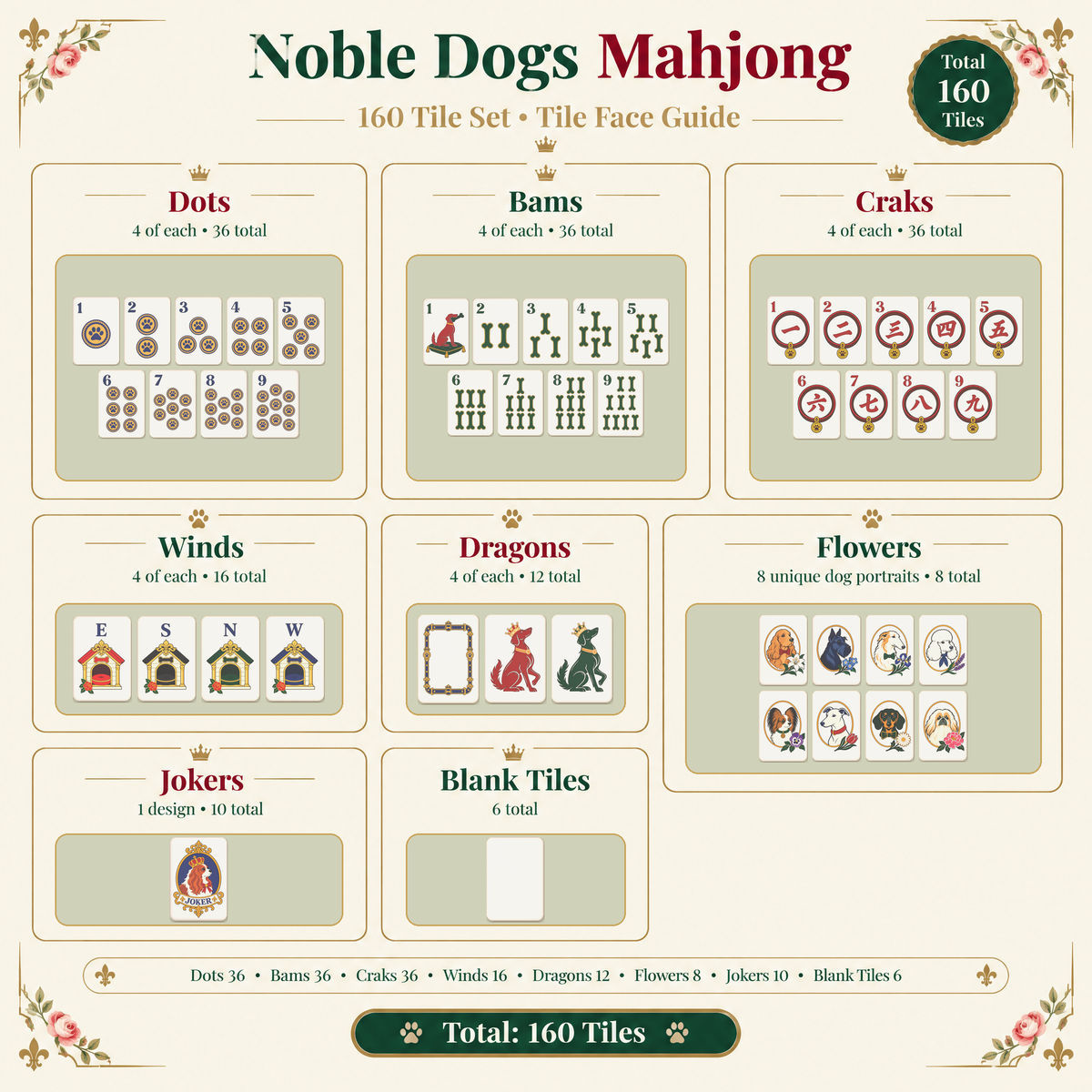
True bone tiles (carved from animal bone) and bamboo tiles (laminated or solid bamboo) weigh roughly 8–12 grams each and produce a sharp, satisfying click when stacked—far heavier and louder than acrylic. Bone sets typically cost substantially more than acrylic and require careful handling to avoid cracks; bamboo can warp in humidity. American mahjong players almost exclusively use acrylic tiles because the National Mah Jongg League card changes every spring, making annual set replacement practical and affordable. Bone and bamboo shine in Chinese, Hong Kong, and Riichi games, where hands are eternal and investment in beautiful, durable tiles makes sense. For American play hosting weekly games, acrylic from our best-selling mahjong sets offers reliability, replaceable tiles, and the clarity you need to read engraved numbers and suit symbols quickly under game pressure.
What do bone tiles actually feel like in hand?
Bone tiles are cool to the touch and dense—you feel the weight in your palm as you pick them up. When stacked in a wall or rack, they produce a deeper, crisper click than acrylic, a sound many traditional players prize. Each tile has slight color variation, warm cream to pale brown, which adds visual charm but can make fast tile-reading harder under poor light. Bone sets are typically hand-carved, so small imperfections are normal and add character rather than defect.

How much heavier are bone tiles than bamboo or acrylic?
A single bone tile typically weighs 8–12 grams, depending on thickness and carving depth. Bamboo tiles run 6–10 grams and feel lighter, almost fragile by comparison. Acrylic tiles weigh 4–6 grams, roughly half bone weight. For a full 152-tile set in play, that's a difference of 1+ pounds between bone and acrylic. The heavier tile demands stronger pushers and deeper racks—standard American pushers may struggle with bone sets, especially over a full evening of play.
Why don't American mahjong players use bone and bamboo tiles?
American mahjong is governed by the National Mah Jongg League card, which is reprinted every spring with new valid hands. A player cannot use a set from 2024 to play officially in 2026; the hands simply don't match. Because tiles rotate out of legality annually, buying expensive bone or bamboo sets makes no financial sense for American players. Chinese and Riichi variants, by contrast, use permanent hand structures, so investing in heirloom-quality tiles pays off over decades. For American weekly games, acrylic from engraved American mahjong sets fits the reality of seasonal tile turnover.
Tile Type | Weight (grams) | Durability | Best For | American Play? |
Bone (hand-carved) | 8–12 | Very high; cracks if dropped | Traditional/collector play | No—annual card change |
Bamboo (laminated) | 6–10 | Moderate; warps in humidity | Chinese, Riichi, casual | No—same reason |
Acrylic (injection-molded) | 4–6 | High; impacts don't crack | American mahjong | Yes—affordable, replaceable |
What damage do bone and bamboo tiles suffer over time?
Bone tiles can develop hairline cracks from repeated impact with pushers or rack edges, especially if dropped. Once cracked, repair is difficult and cosmetic. Bamboo tiles absorb moisture and can warp or swell; a humid game room or storage in a damp basement causes permanent shape distortion, making tiles jam in racks and slow gameplay. Both require climate-controlled storage and gentle handling—incompatible with a set that travels in a car weekly or sits in a garage. Acrylic tiles resist all three: they don't crack from normal use, don't absorb moisture, and tolerate temperature swings. If a tile does chip, it can be replaced individually without replacing the entire set.

Should you buy bone or bamboo tiles for American mahjong?
Only if you play traditional Chinese, Hong Kong, or Riichi mahjong regularly—not American. If you host American weekly games, the sound and feel of bone are luxuries you cannot justify when the entire set becomes invalid every twelve months. Bamboo is lighter and cheaper than bone but suffers the same hand-change problem and adds humidity risk. For American play, acrylic sets with clear engraving—readable under table lamps and across a standard mat—are the practical standard. If you want authentic weight and click for a secondary game variant, explore bone or bamboo, but store it separately and accept the maintenance burden. Check our best-selling mahjong sets for acrylic tiles that handle weekly tournaments and casual play without worry.
🎁 See our most-loved mahjong sets & accessories →
How to choose between weight and practicality for your table
Start by asking: Does my group play American mahjong or another variant? If American, acrylic is the answer—no debate. If you play only Chinese or Riichi, bone or bamboo is an investment that appreciates with age and use. Second: How often do tiles travel? Bone and bamboo belong in a climate-controlled home, not a car trunk or shared venue. Third: Do I host the same group weekly, or do games rotate? Regular hosting justifies acrylic's clarity and durability; traveling players benefit from light, portable acrylic sets. Fourth: Is sound and tradition worth the cost and care? Only you can answer this, but many players find acrylic tiles perfectly satisfying after the first few games—the weight matters less once play begins.
For American weekly games, the decision is simple: acrylic tiles from Mahstead's engraved collections eliminate maintenance, cost, and worry. You replace tiles individually if needed, not entire sets. You read numbers clearly under any light. And when the 2027 League card arrives, you're ready without financial regret.
✨ Find your Mahstead set — free US shipping →
What to check before you buy bone or bamboo tiles
Source and carving quality: Hand-carved bone varies widely; mass-produced "bone" may be compressed bone dust or plastic, not solid bone. Ask the seller directly.
Climate where you store it: Bamboo needs consistent temperature and humidity (40–50% relative humidity ideal). If your home swings widely, bamboo warps.
Rack and pusher compatibility: Heavy bone tiles demand reinforced racks and pushers. Standard American racks may bend under the load or wear faster.
Annual hand-validity check: Confirm which game variant uses the tiles permanently. If any part of your group plays American, bone and bamboo are not a shared investment.
Return and replacement policy: Cracks and warping are material defects, but some sellers treat them as wear. Know the policy before purchase.
For American play, acrylic tiles skip these checks entirely.
🀄 Shop best-selling mahjong sets →

FAQ
Do bone tiles really make that satisfying "click" sound people describe?
Yes—bone's density and hardness produce a crisp, sharp click when stacked or tapped that acrylic cannot match. It's a real sensory difference, not marketing. But acrylic produces a clear, quick click too; the difference is amplitude and tone, not presence.
Can I mix bone and acrylic tiles if I break some bone tiles mid-game?
Not for official American play; the League requires a uniform, matched set. For casual home play, mixed tiles work mechanically but look unprofessional and read inconsistently under light. Never mix in tournament settings.
How long does a bone tile set last if I play weekly?
Heavy daily use can produce hairline cracks after 5–10 years. Casual weekly play may extend life to 15–20 years if stored well. One dropped set or humidity damage can end a set's life in months, regardless of prior condition.
Is bamboo tile weight closer to bone or acrylic?
Bamboo falls between acrylic (lighter, 4–6g) and bone (heavier, 8–12g), typically 6–10 grams per tile. It feels noticeably heavier than acrylic but lighter than bone. Humidity damage is the bigger risk than weight.
Why do Chinese players prefer bone tiles over acrylic?
Bone tiles are traditional, beautiful, and because Chinese mahjong hands never change, the investment pays off over a lifetime. Acrylic is faster to read in bright light and resists damage, but bone carries cultural and aesthetic weight that matters to collectors and serious players.
If I buy a bone set, do I need a special rack or pusher?
Standard American acrylic racks may bend under sustained bone tile weight; reinforced wood or composite racks are safer. Pushers should be sturdy and slightly thicker. Mahstead offers racks with pushers designed for acrylic; confirm compatibility before using bone tiles with them.


View More
View More
View More
