
Blue Mahjong Travel Bag: What to Check Before Buying
Last updated: Nov 23, 2026
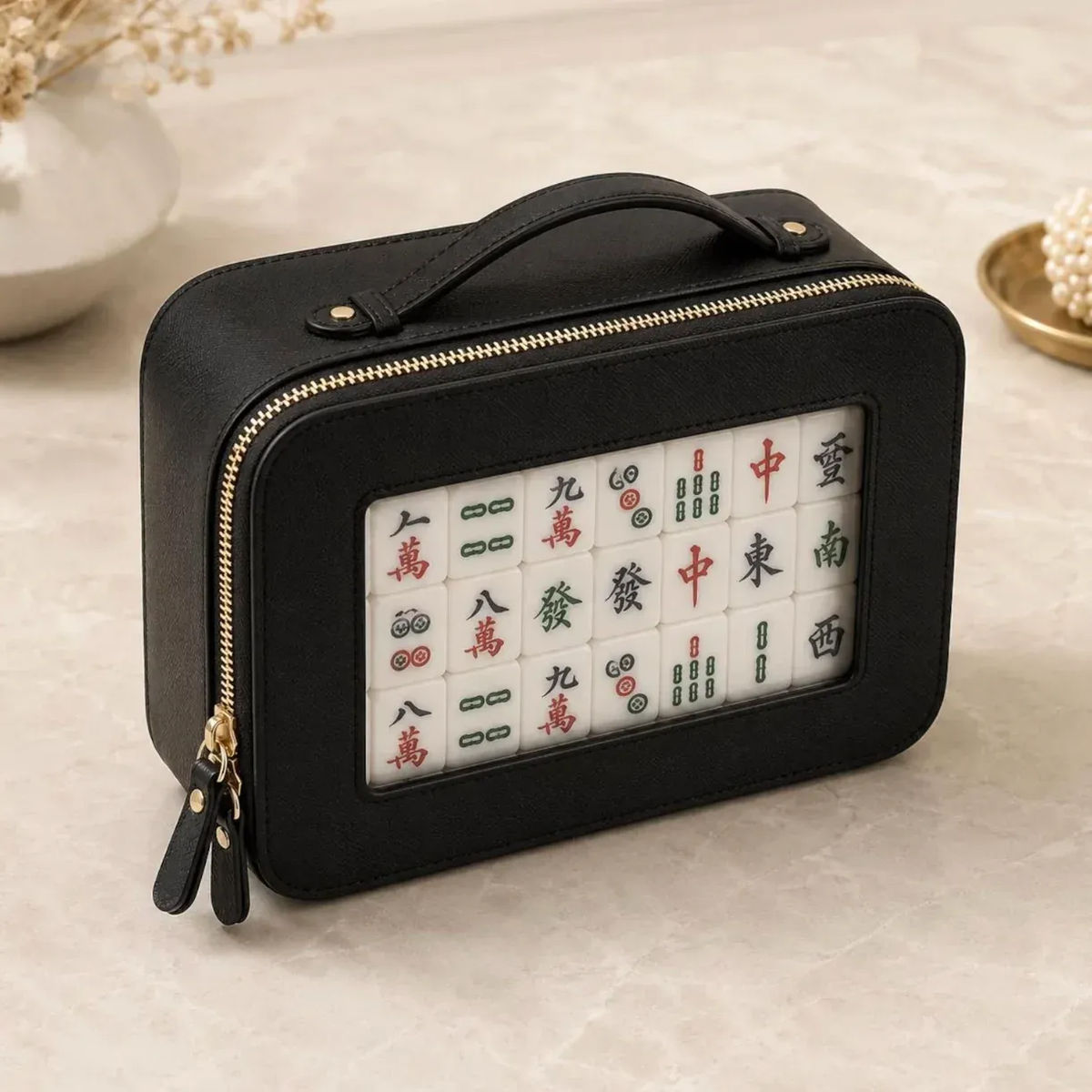
A blue mahjong travel bag is a padded carrying case designed to hold a 160-tile acrylic set, mat, racks, and accessories in one compact container. Mahstead offers bags in the mahjong bags and cases collection that range from smaller cases holding just a set and a few tiles to larger models accommodating a full game kit with mat, racks with pushers, dice, and jokers. Dimensions vary: compact bags fit under an airplane seat or car door; larger models work best in trunks or closets. Before ordering, measure your mat rolled (typically 24–32 inches long) and your rack height (usually 2–3 inches), then check the bag's interior dimensions on the product page. Blue finishes range from navy to cobalt; some bags feature engraved accents or zipper pulls. Most travel bags ship flat and take 3–7 business days to arrive. Inspect the seams and zipper pull when it arrives—if it feels loose or frayed, contact the seller within 14 days.
🀄 Shop best-selling mahjong sets →
What size blue bag do you actually need?
The most common mistake is buying too small. A rolled mahjong mat measures 24–32 inches depending on thickness; mahjong racks with pushers stack 2–3 inches tall. If your bag interior is less than 35 inches long, your mat won't fit flat—you'll have to fold or crease it, risking wear. Measure your current mat rolled, add your rack stack height, then verify the bag's interior length exceeds that by at least 2 inches for padding. Compact bags (under 12 inches wide) suit players who carry only a set and a few loose tiles to a friend's house; weekend-trip players need 15+ inches wide to fit a set, four racks, and a mat without crushing.
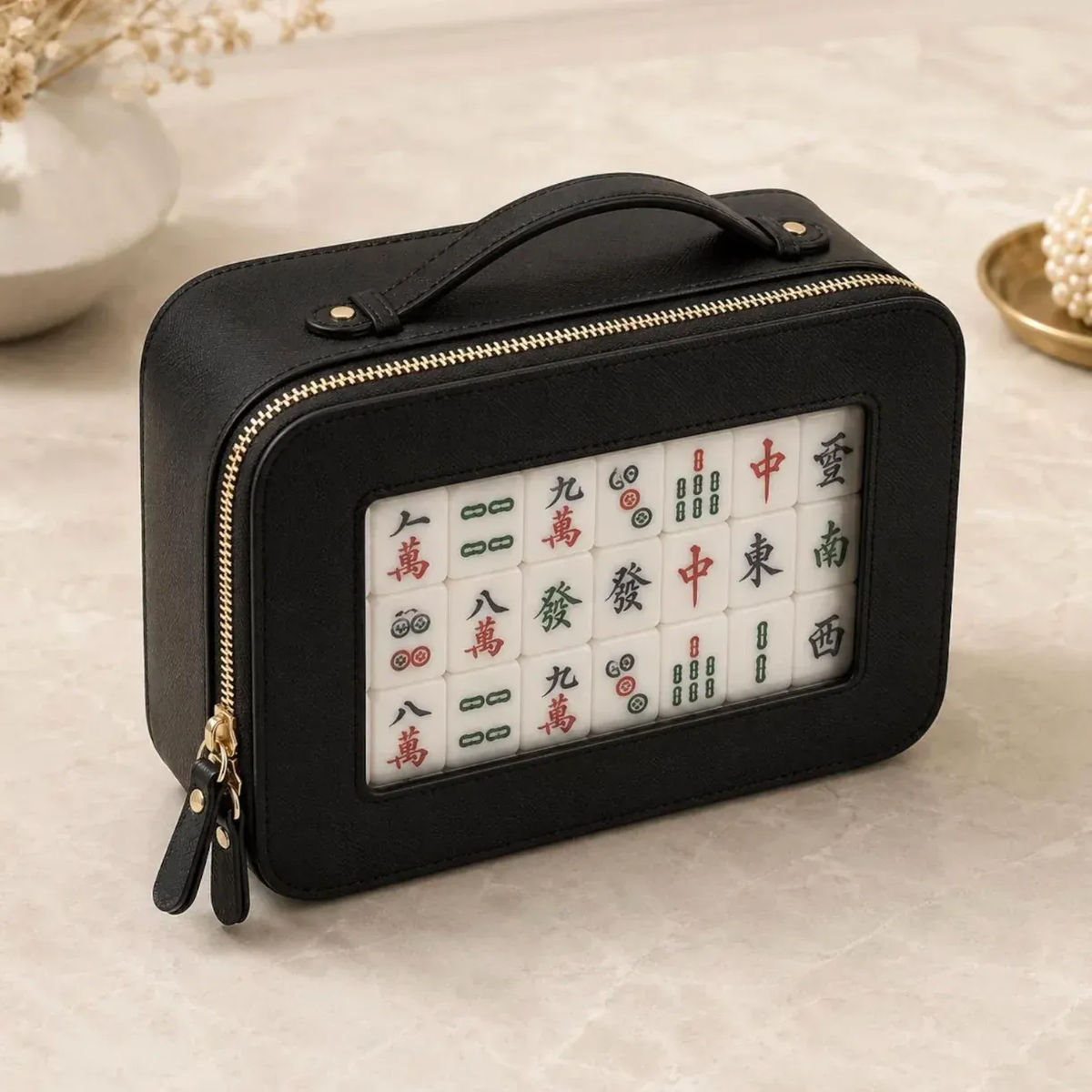
Does a blue bag protect acrylic tiles from cracking?
Acrylic tiles are durable but brittle under shock. A padded blue travel bag cushions sudden drops and door-frame bumps—the padding typically adds ½ to ¾ inch of buffer around the inside, reducing impact force. A set without a bag thrown into a car trunk risks tile cracks if the trunk closes hard or items shift. The padded walls of a travel bag spread force over the entire bag surface rather than concentrating it on a few tiles; this is why a bag with air pockets or foam backing outperforms a thin nylon case. Check the product description for padding thickness (usually listed in millimeters or as "high-density foam"). If the bag's interior is bare plastic or cloth with no visible foam, it's a storage bag, not a travel bag—suitable for shelf storage but risky for car or plane transit.
How do you pack a blue mahjong bag efficiently?
Rolling your mat inside-out with racks nested in the roll saves space and prevents racks from sliding during transit. Place your set in its original box (or a protective sleeve if you removed it) at the mat's center core. Dice, extra jokers, and the current-year mahjong card fit in exterior zipper pockets or small interior compartments. Avoid packing the bag completely full—leave 1–2 inches of give so the zipper closes smoothly and padding absorbs impact. If you've customized your set with engraved tiles or titles, that investment justifies a well-padded bag. Pro tip: place heavier items (the set box) at the bag's base and lighter items (dice, card) on top so weight is distributed and fragile corners don't bear pressure.

What's the difference between blue travel bags and blue mats?
A travel bag is for moving your game; a mahjong mat is where you play. A mat stays on the table and protects it from tile scratches and water rings. Some mats come in blue and include suction cups or a carrying handle, but they don't enclose your set—tiles and racks remain exposed. A travel bag, by contrast, zips shut and protects all components during transport. Many players own both: a mat for weekly games at home or a game room, and a bag for traveling to tournaments, vacation homes, or friends' houses. A mat is broader (typically 2–3 feet per side) and heavier; a bag is compact and stackable. If you're buying your first protective item, choose based on your play pattern: if you host games at home, prioritize a mat; if you travel to games weekly, a bag is essential.
Which blue bag style matches your setup?
Bag Type | Who It's For | Key Feature | Best Use |
Compact hard case (navy blue) | Solo players, beginners | Rigid shell, locks, holds set only | Airplane trips, office storage |
Soft-sided blue tote | Casual game hosts | Lightweight, handles, mesh pockets | Car rides to friends' houses |
Blue roll bag with strap | Weekly players | Mat-friendly length, shoulder strap, foam core | Transit to weekly games, tournaments |
Blue luxury case (cobalt) | Serious collectors | High-density padding, interior dividers, engraved | Set protection, home display, gifting |
Hard cases protect against crushing but weigh more and don't fit under seats easily. Soft-sided totes are portable but offer less shock protection if dropped corner-first. Roll bags with long interiors and shoulder straps suit players who carry a full game kit every week. Luxury cases with engraved accents or custom linings appeal to players who've invested in premium mahjong sets and want a display-quality carrier. Check the product photos for zipper type (YKK metal zippers outlast plastic), handle strength (stitched or riveted attachments hold better), and interior lining (nylon is durable; felt is softer but stains easier).
🎁 See our most-loved mahjong sets & accessories →
What to check before you buy
Measure your mat rolled. Don't guess. Grab your mat, roll it, and measure length and width. Compare those to the bag's interior dimensions (not exterior).
Test the zipper pull. Click through product photos for close-ups. Metal pulls and reinforced stitching last longer than plastic.
Read the padding description. If it doesn't mention padding thickness or material, assume it's minimal.
Count the pockets. Do you need exterior slots for a dice cup, card holder, or joker envelope? Interior dividers help prevent tiles from shifting.
Check weight. Soft bags weigh 2–4 pounds empty; hard cases weigh 4–8 pounds. Factor this in if you fly frequently.
Look at the color photo under natural light. Blue varies widely from slate to royal; the product page should show it in daylight, not studio lighting alone.
✨ Find your Mahstead set — free US shipping →

FAQ
Can I fit a 160-tile set and a mahjong mat in one blue travel bag?
Yes, if the bag is 35+ inches long and at least 15 inches wide. Measure your rolled mat (usually 24–32 inches) and add rack stack height before ordering. Compact bags under 35 inches long won't fit both without creasing the mat.
Does a blue padded bag prevent tiles from cracking?
Padding reduces impact force by distributing shock across the bag's interior walls rather than concentrating it on a few tiles. This cuts risk significantly, but a hard drop onto a corner or an open zipper can still cause damage—bags are protection, not guarantees.
How long does a mahjong travel bag last?
Most padded bags last 5–10 years with weekly use if zippers are treated gently and the bag is stored dry. Metal zippers and reinforced stitching extend lifespan; plastic pulls and seams weaken after repeated opening and closing.
Can I carry a blue mahjong bag as a personal item on an airplane?
Compact travel bags (under 22 inches long × 14 inches wide × 9 inches deep) fit most airline overhead bins and some under-seat spaces. Check your carrier's dimensions before packing; larger roll bags may require checked baggage.
Should I buy a blue bag or a case with a lock?
Locked cases offer security for valuable sets but are heavier and less portable. Padded blue bags are lighter and faster to pack for weekly games. Choose a locked case if you're storing a set in a shared space or traveling internationally; choose a bag if you play locally and need quick setup.


View More
View More
View More
