
Black Mahjong Starter Kit: What to Buy & Why
Last updated: Nov 23, 2026
A black mahjong starter kit is a complete package: a 160-tile set (152 playing tiles plus spares) in black acrylic, usually paired with a mat, rack with pushers, and a bag. Most kits come as individual items you assemble or as curated bundles. Black tiles offer high contrast, making tiles easy to read under table lighting—a practical choice for weekly games. Mahstead offers best-selling mahjong sets in black with customizable engravings and optional accessories. Cost varies by whether you buy a set alone or bundle it with a mat and racks; see current prices on product pages. Avoid kits that skip a mat (messy tile sliding) or include thin bags that won't protect tiles in transit. A real starter kit has a mat, racks, and a sturdy case—non-negotiable for protecting your investment and hosting games weekly. 🀄 Shop best-selling mahjong sets →
What exactly comes in a black starter kit?
A black mahjong starter kit typically includes a 160-tile acrylic set, a felt or vinyl mat with corner pockets, wooden or acrylic racks with pushers, and a zippered bag or hard case. The set contains all tiles needed for American mahjong: three suits (Bams, Craks, Dots), 1–9 in each suit with four copies per number; 16 winds; 12 dragons; 8 flowers; and 8 jokers. The spare tiles beyond the 152 playing tiles protect against loss or damage. A mat prevents tiles from sliding across the table; racks keep your hand private and organized; a good bag protects tiles and racks from dust and travel wear. Some kits bundle these separately so you can upgrade individual pieces; others come pre-matched. The difference matters: a mat alone won't protect tiles in storage, and a bag without padding invites cracked acrylic.
Black vs. other colors for beginners—which works best?
Black tiles contrast sharply with most table surfaces and lighting conditions, making them the easiest choice for new players learning to spot tiles quickly. Red, green, or ivory tiles are equally valid; the color choice is purely visual preference. Black acrylic is durable, hides fingerprints better than lighter colors, and feels premium without cost premium. If you're playing in a bright room weekly, black's contrast advantage is real. If your group prefers a specific color (many longtime players favor ivory or jade), join their aesthetic rather than fight it—but black remains the most forgiving for beginners squinting at tiles under variable light.
How do you decide: buy a kit or assemble one yourself?
Option | Best For | Why It Works | Consideration |
Pre-assembled kit | Beginners who want zero setup decisions | Everything matches; one order ships together | Limited customization |
Build-your-own (set + mat + racks + bag separately) | Players with specific preferences | Pick each piece; customize engravings | Requires research on compatibility |
Set-only (buy mat/racks later) | Budget-conscious first-timers | Lower initial cost; upgrade as you host more | Risk buying mismatched accessories later |
Most of us started with a kit because it forced us to stop overthinking and start playing. If you know you'll host weekly games, the kit approach saves time. If you're experimenting with the game first, buy the set alone and add accessories after your first season. Check whether your chosen set plays well with standard mat dimensions (most mats fit 152-tile sets) before ordering; a mat too small creates a cramped, annoying layout.
🎁 See our most-loved mahjong sets & accessories →
What makes a mat essential for a black tile set?
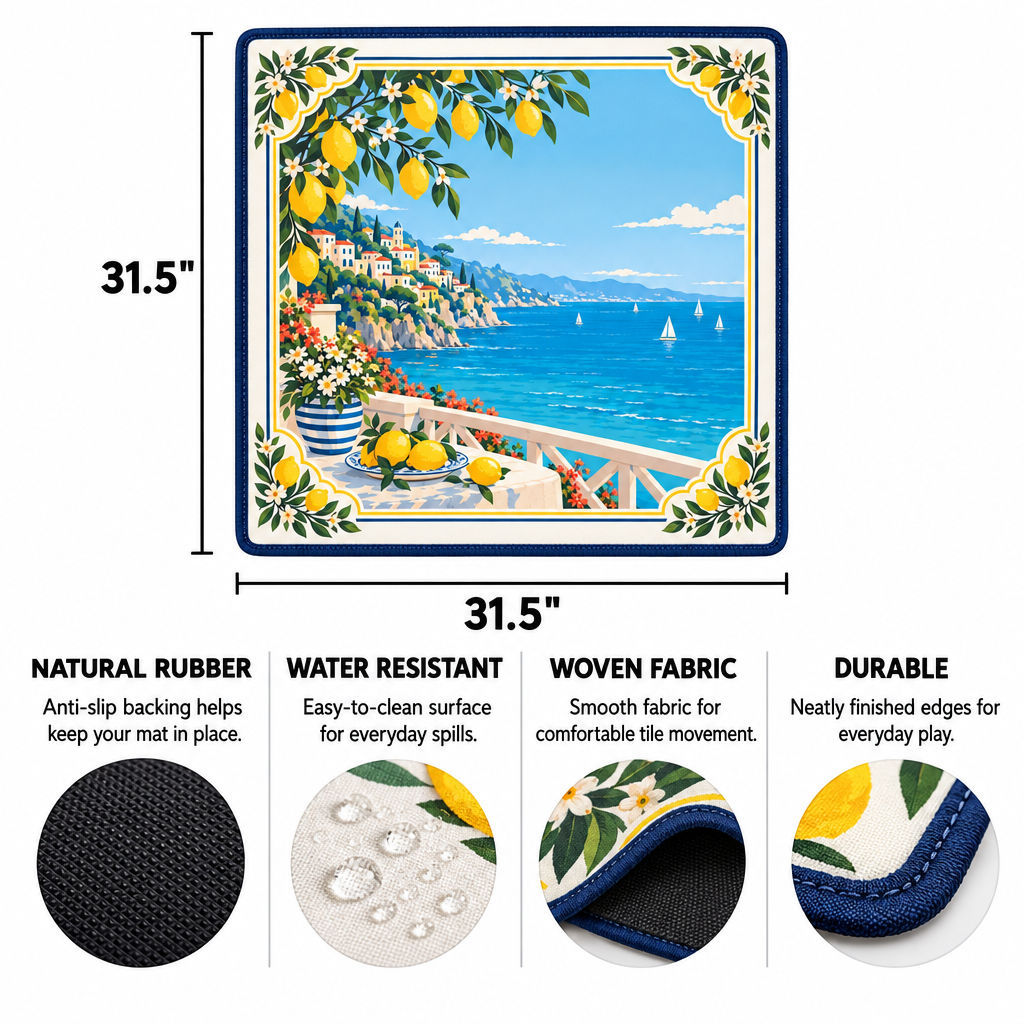
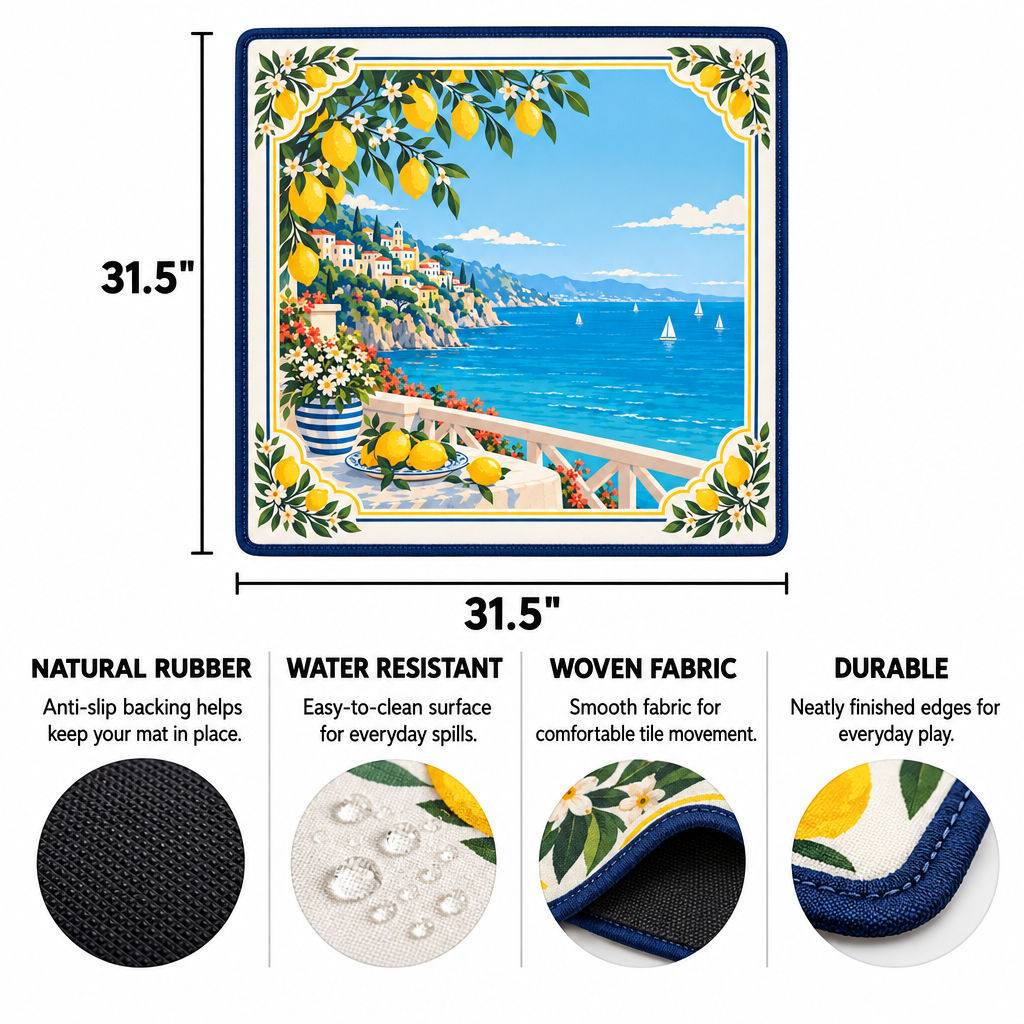
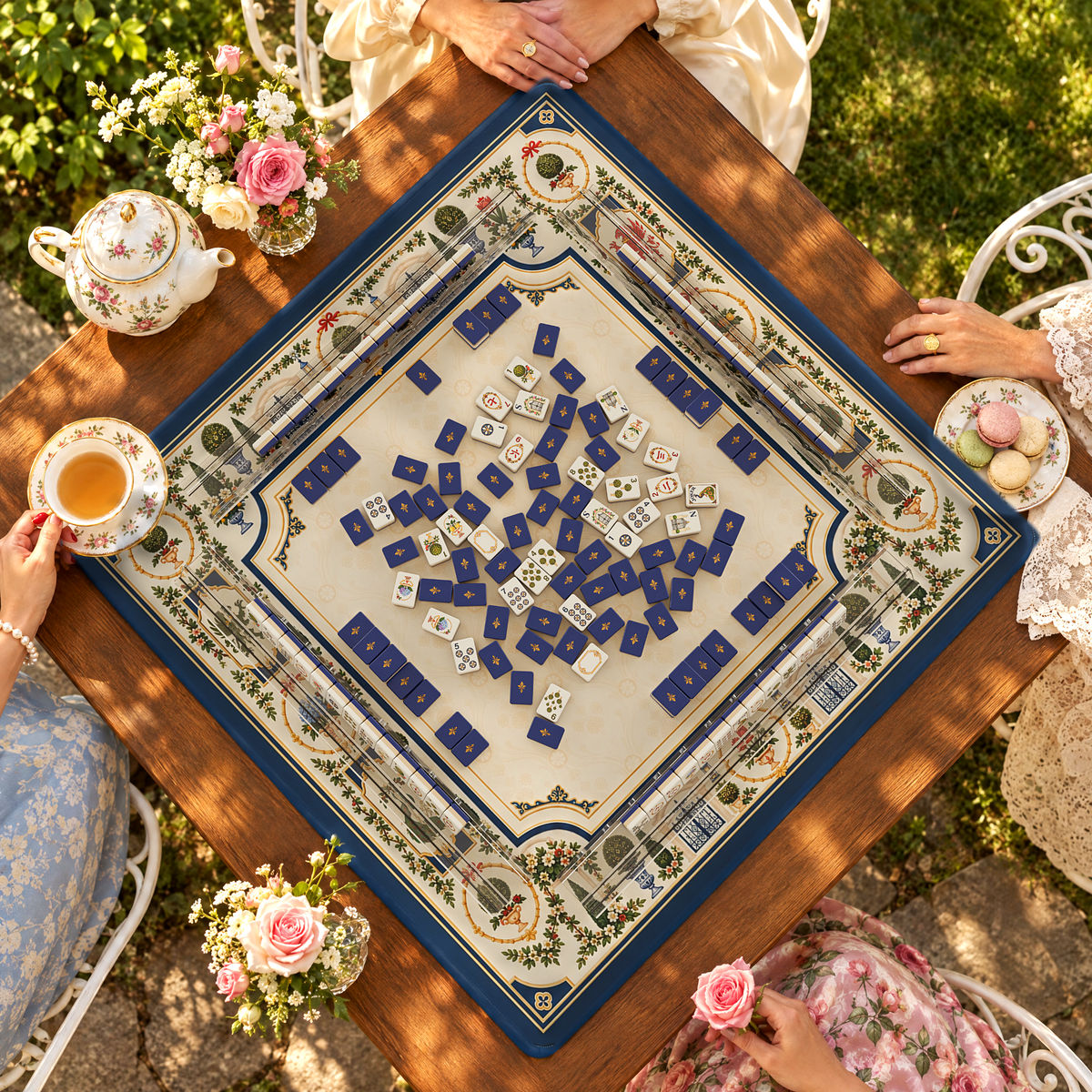
A mat serves three practical functions: it defines the play boundary, prevents tiles from sliding into players' laps, and protects the table from scratches. Black acrylic tiles on a bare wooden or glass table slide almost frictionlessly—a frustrating experience when you're learning. A felt or vinyl mat provides enough grip that tiles move only when intentionally pushed. Mats with corner pockets keep the Charleston organized, and the border keeps discarded tiles from scattering. A poor mat (thin plastic, no pockets) creates the illusion that a mat exists but fails at all three jobs. When choosing mahjong mats, confirm the mat fits your table size; most are designed for standard dining tables. A 35"–40" mat accommodates four players with racks comfortably. This isn't optional—a mat is how the game feels like an intentional, organized activity rather than a chaotic tile spill.
What protective case or bag do you actually need?
A bag protects your investment during storage and transport between game houses. Most acrylic tiles survive a fall, but repeated jostling in a thin bag causes edge chipping and cracking over years. A zippered nylon or canvas bag with padding is the minimum; a hard case with foam inserts is luxury but unnecessary unless you travel with your set monthly. Black tiles hide dust well, so storage in a regular closed bag works fine. What matters: the bag seals (no open tops), has enough cushioning that tiles don't knock together, and fits your mat rolled up inside. A starter kit often pairs the set with a basic bag; if it doesn't, budget for one. When shopping mahjong bags and cases, pick a size that holds racks and a mat together—you'll use it weekly if you rotate game hosting.
Racks with pushers—must-have or luxury?
Racks are functional, not luxury. They hide your hand from the player across the table, keep tiles organized in order (right to left: newest drawn tile on the right), and make tile pushing easier as you discard. Wooden racks with matching pushers feel traditional and look sharp; acrylic racks match modern sets and are lighter. Pushers reduce hand strain—without them, you're flicking tiles with your fingers for hours, which is tiring. A real starter kit includes racks because teaching new players to organize their hand properly from day one is how the game feels less chaotic. Buy mahjong racks with pushers that match your set's color (black racks with black tiles, for example); mismatched racks aren't wrong, just visually odd. If your kit doesn't include racks, add them; they cost less than a set and improve the game dramatically.
What to check before you order a black starter kit
Tile count and composition: Confirm the set has 160 tiles (152 playing + spares). Verify it includes all three suits, winds, dragons, flowers, and jokers. Count should be exact: 108 suit tiles + 16 winds + 12 dragons + 8 flowers + 8 jokers + spares = 160.
Material durability: Acrylic outlasts plastic and feels more premium. Confirm tiles are engraved, not printed; engravings last decades, prints fade.
Mat compatibility: Measure your table. Standard mats are 35"–40"; confirm this works for your space before ordering.
Bag padding: Open the bag's seams description; look for phrases like "padded," "foam-lined," or "reinforced." Thin bags fail within a season of weekly hosting.
Rack height and fit: Racks should hold tiles at 45 degrees so you can see your entire hand; too flat is useless, too steep is awkward. Test if possible before ordering, or buy from retailers with clear return policies.
Accessory bundling: Some kits bundle everything; others sell pieces separately. If separate, calculate the total cost and confirm everything's in stock before ordering.
Engraving options: If the set includes personalization, verify the artwork is clear and the engraving method is durable (laser-etched or painted, not adhesive).
✨ Find your Mahstead set — free US shipping →
Common mistakes new kit buyers make
Buying only the set, planning to add a mat "later." Later rarely happens. You'll play five games on the bare table, get frustrated, and either quit or buy a rushed replacement mat that doesn't fit. Buy the mat with the set.
Choosing a kit based on price alone. The cheapest kit often skips one critical item (usually the bag or racks), forcing you to spend more later. Mid-range kits bundle thoughtfully; compare what's included, not just the total price.
Assuming all black acrylic sets are identical. They're not. Tile weight, engraving depth, and suit symbol clarity vary. Read what's in an American mahjong set to know what to inspect.
Neglecting mat dimensions. A mat that's 2 inches too narrow creates a cramped, unplayable layout. Measure your table first.
Skipping racks. You'll hate organizing your hand without them. Don't skip them.

FAQ
What's the difference between a "beginner kit" and a full set I'd buy later?
A beginner kit includes protective accessories (mat, bag, racks) chosen for durability and ease of use, often pre-tested for compatibility. A full set is just the tiles. A real beginner kit removes decision-making; you unbox and play.
Can I use a black acrylic set at a game hosted by players with ivory tiles?
Yes. Acrylic color is aesthetic choice only. American mahjong rules don't care. You'll spot your tiles faster (contrast advantage) but play by identical rules as everyone else.
Do I need a hard case or is a padded bag enough?
A padded bag is sufficient for weekly home games and occasional transport. A hard case is necessary only if you travel monthly or store in a humid environment. Start with a bag; upgrade if needed.
What does "160 tiles" mean—why not 152?
American mahjong plays with exactly 152 tiles (and 8 jokers = 160 total). A 160-tile set includes 8 spare tiles beyond the playing set, protecting against loss or damage. Never add spares to play.
Should I buy engraved tiles or blank black acrylic?
Engraved tiles are easier to read under poor lighting, look more intentional, and personalization makes hosting feel special. Blank tiles cost less. If you'll host weekly, engraving justifies the cost; if you're experimenting, plain works fine.
Are wooden racks better than acrylic racks?
Wooden racks feel warm and look traditional; acrylic racks match modern sets and are lighter. Both function identically. Choose based on your table's aesthetic. Either beats no rack.
What's the best black starter kit for someone who plays American mahjong for the first time?
Choose a kit with a confirmed mat, padded bag, and racks included; verify tile count (160), acrylic material, and clear engravings; confirm the mat fits your table. See best-selling mahjong sets for Mahstead options that meet all three criteria.


View More
View More
View More
