
Black Mahjong Card Holder: What to Choose in 2026
Last updated: Nov 23, 2026
A black mahjong card holder is an acrylic or fabric stand that displays your hand-reference card at the table. American players use the current-year National Mah Jongg League card to check legal hand combinations during play. Card holders come in three main forms: acrylic desktop stands (rigid, tilted, best for stationary games), fabric sleeves or binders (portable, suit travel), and retrofit racks with integrated card slots (built into pushers and tile displays). Mahstead offers acrylic card display options as part of best-selling mahjong sets, and most serious weekly game hosts invest in one to protect their cards and speed up play verification. Prices vary by material and build; see current pricing on each product page.
A black mahjong card holder keeps your hand reference visible without bending the official NMJL card. American players use the current-year National Mah Jongg League card to check legal hand combinations during play. Card holders come in three main forms: acrylic desktop stands (rigid, tilted, best for stationary games), fabric sleeves or binders (portable, suit travel), and retrofit racks with integrated card slots (built into pushers and tile displays). Most serious weekly game hosts invest in one to protect their cards and speed up play verification.
Why do you need a card holder at all?
The annual NMJL card is your reference bible—flipping through a creased, bent, or stained card costs seconds per lookup and frustrates everyone. A holder keeps it flat, legible, and visible to all four players at once, which speeds verification and prevents disputes. Many players fold or spine their cards within three months of regular play; a holder extends card life dramatically and keeps the game flowing. When you're hosting weekly games, replacing a card every season gets expensive; a holder is preventative infrastructure.
🀄 Shop best-selling mahjong sets →
What are the main types of black card holders?
Acrylic desktop stands – A rigid, angled frame that sits on the table edge or center. Tilts the card at 30–45 degrees for easy reading from all seats. Best for home games that stay in one location. Durable, non-slip base, and easy to wipe clean.
Fabric sleeves or three-ring binders – A plastic or cloth envelope that holds the card upright or flat. Lightweight, portable, fits inside a mahjong bag. Works for traveling players or casual setups.
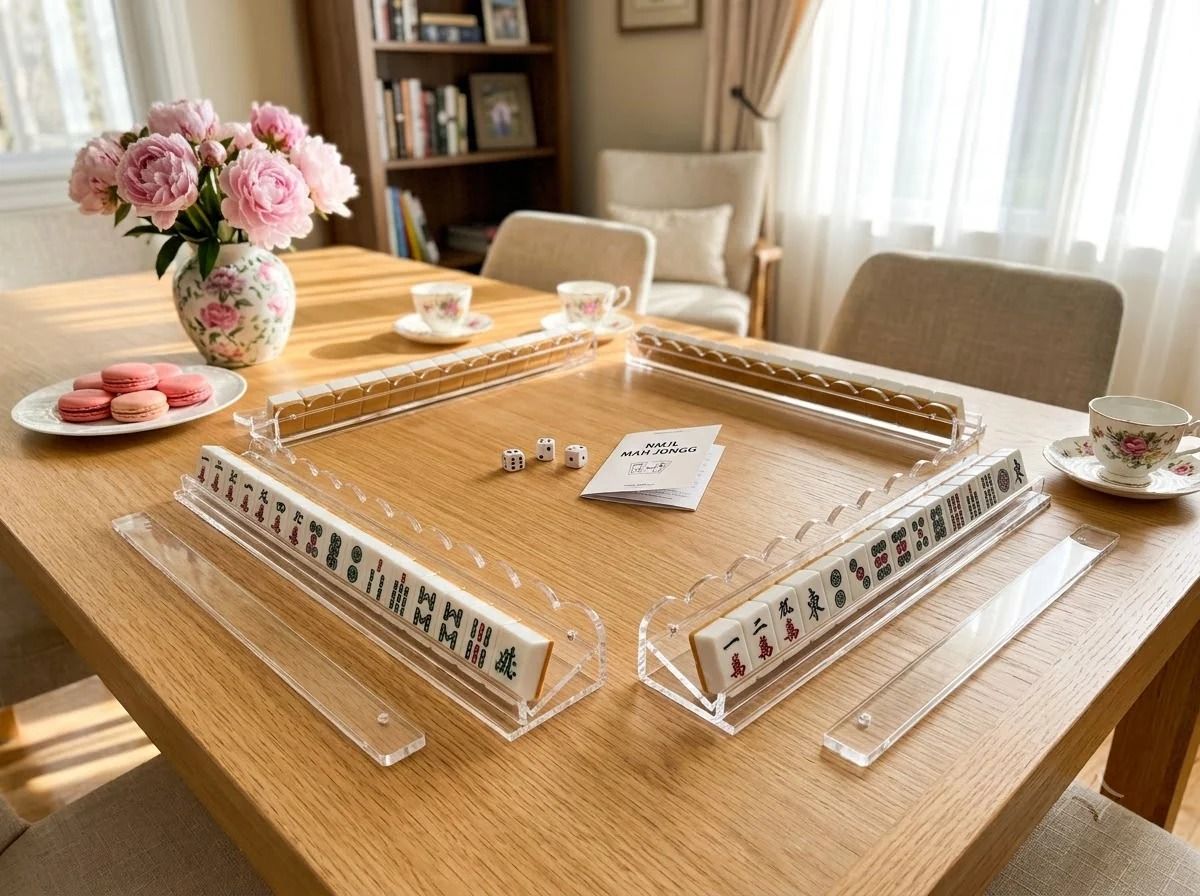
Integrated rack slots – Some mahjong racks with pushers include built-in card holders as part of the four-player rack assembly. Saves table space and keeps pushers, tiles, and reference in one system.
Each type prioritizes a different need: stationary vs. portable, permanent vs. temporary, solo vs. integrated setup.
Acrylic stand vs. binder vs. integrated rack—which is right for you?
Type | Best for | Durability | Portability | Cost basis |
Acrylic desktop stand | Weekly home games, permanent table | Highest—lasts years | Low; bulky to pack | Budget-friendly entry point |
Fabric sleeve/binder | Travel, casual play, backup | Moderate—wear on hinges | High; fits any bag | Lowest cost, replaces easily |
Integrated rack + card slot | Serious hosts, 4-player setups | High—one system | Moderate; rack + card move together | Higher upfront, replaces everything at once |
Choose acrylic stand if your game stays in one room and you want zero maintenance. Choose binder if you rotate between homes or travel. Choose integrated rack if you're buying a complete pushing-and-reference system from scratch.
🎁 See our most-loved mahjong sets & accessories →
What should a black card holder actually hold?
Your holder must accommodate the full 6×9-inch NMJL card—no smaller. Check the interior dimensions before ordering; a tight fit creases the card and defeats the purpose. The card should sit flat or angled without bending at the spine.
A quality holder also includes:
Non-glare acrylic or matte plastic face to reduce reflection under table lighting
Rubber or felt feet to grip the table without sliding
Angle adjustable to 30–45 degrees (for desktop stands) so all four players read without glare or neck strain
Open top or easy-swap slot so you can update the card each year without replacing the holder
Black is the most popular color because it doesn't compete with your tile colors and works with any table aesthetic. Avoid thin plastic frames that warp in heat or sunlight; they fail within a season.
What mistakes do we see hosts make with card holders?
Buying too small. A 5×7-inch frame forces you to fold the card or overlay sections—defeating the whole point. Measure the card first, then add 1 inch to your frame minimum.
Using a clear acrylic stand without a matte or anti-glare front. Sunlight or overhead lamps bounce off glossy acrylic and make the card unreadable. Test it under your table lighting before committing.
Forgetting the card updates every spring. Your holder is future-proof, but the card inside becomes obsolete. Plan to print or obtain the new card by early April each year, or your hands won't match.
Stacking tiles or racks on top of it. Acrylic cracks under pressure. Keep it off the tile-play zone and away from pushing hands.
Buying fabric sleeves for permanent tables. Binders age fast in humid game rooms; acrylic lasts longer in stationary setups.
When should you buy a card holder vs. just printing a second copy?
A single printed card is cheaper upfront but wears quickly under constant handling. After two seasons, creases, stains, and faded ink make it hard to read. A holder protects one card indefinitely, so you pay once and save on replacements.
For weekly games over five years, a holder pays for itself. For casual play twice a year, a printed backup card suffices. For hosts or players who own their own tile set, a holder is essential infrastructure—it signals you're serious about the game and speeds up play for everyone.
✨ Find your Mahstead set — free US shipping →
What to check before you buy
1. Interior dimensions – Measure your NMJL card (6×9 inches). Holder interior should be ≥6.5×9.5 inches to avoid creasing.
2. Angle adjustment or fixed tilt – Fixed stands work if your table height is standard; adjustable angles let you customize for different chairs and lighting.
3. Material weight and base grip – Acrylic should be ≥¼ inch thick; rubber feet should be non-slip and raised off the table to protect finish.
4. Matte vs. glossy front – Test under your actual table lamps. Gloss reflects; matte or lightly frosted acrylic reads cleanly in most home lighting.
5. Color match and aesthetic – Black works with any tile style. Check photos on the best-selling mahjong sets page to see card holders in context with actual setups.
6. Integration with your racks or mat – If you own mahjong racks with pushers or a mat, check whether a standalone holder or integrated slot makes more sense for your layout.
FAQ
Can I use a clear acrylic card holder, or does it have to be black?
Clear acrylic is functional but reflects glare under table lamps, making the card hard to read. Black acrylic absorbs light and is standard for game rooms. Either works if your lighting is indirect; test under your actual lamps before buying.
How often do I need to replace the NMJL card inside my holder?
Once every spring when the National Mah Jongg League releases the new year's card. The holder itself lasts years; only the card inside changes. Print or order the new card by early April to stay current.
Will a mahjong rack with an integrated card slot replace my need for a separate holder?
Yes, if you buy a four-player pushing rack with a built-in card slot. One unit holds pushers, tiles, and the card. If you use a mat or player-based racks instead, you'll still want a standalone card holder.
What's the best way to clean a black acrylic card holder?
Wipe the outside with a soft, dry cloth or microfiber cloth. For smudges or table dust, use a slightly damp cloth with mild soap and dry immediately. Avoid harsh chemicals or abrasive sponges, which scratch acrylic.
Can I use my card holder with a mahjong mat, or does it interfere with play?
Yes. Position it at the edge of the mat or off to one side so it doesn't block tile pushes or the mat surface. A mahjong mat is separate from the card holder—they work together without conflict.
Is there a card holder option for travel or portable games?
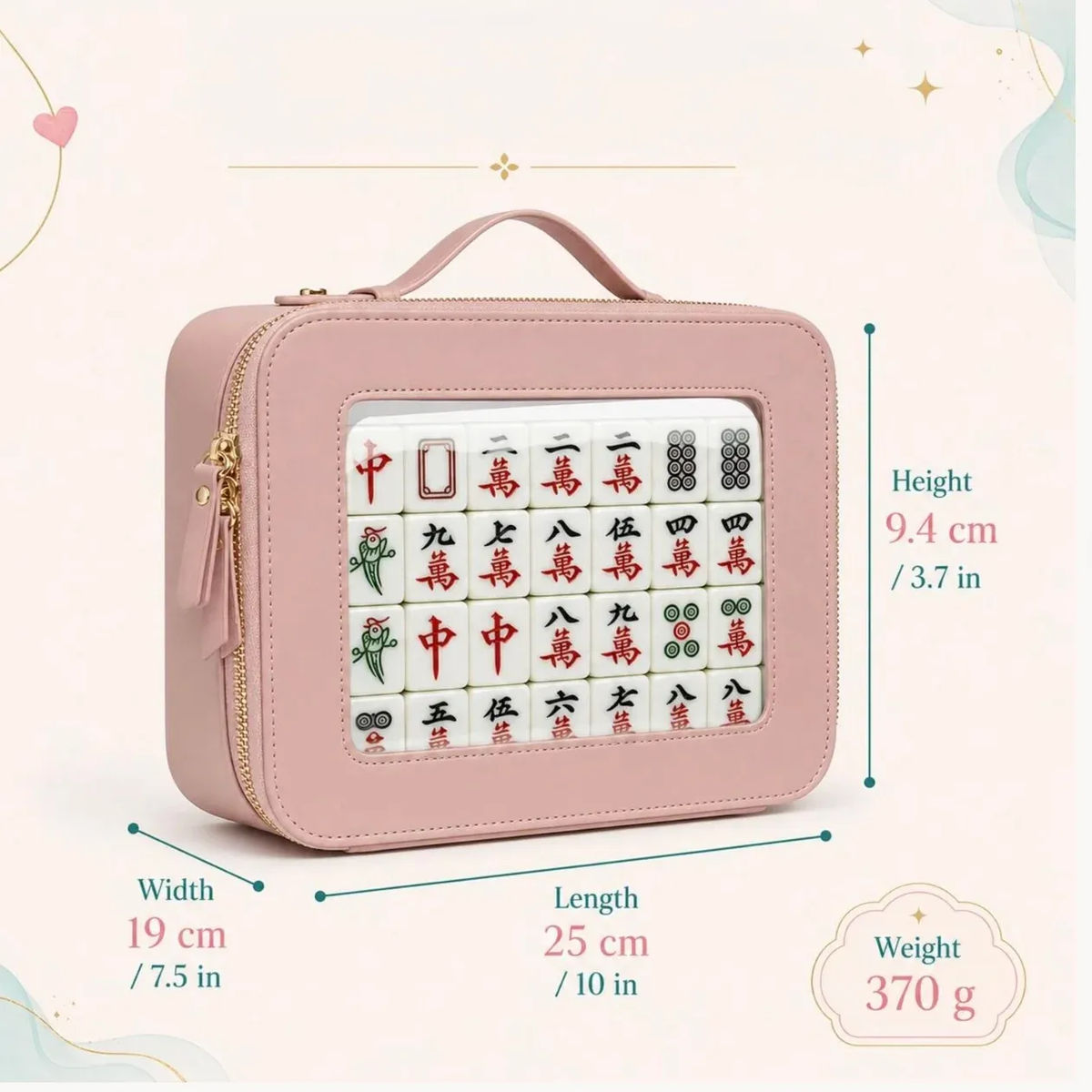
Yes. Fabric sleeves or three-ring binders are lightweight and fit inside a mahjong bag or case. They're less durable than acrylic but pack flat and cost less, making them ideal for rotating between homes.


View More
View More
View More
