
Best Mahjong Rack Bag: Compare Options for Travel & Storage
Last updated: Nov 23, 2026
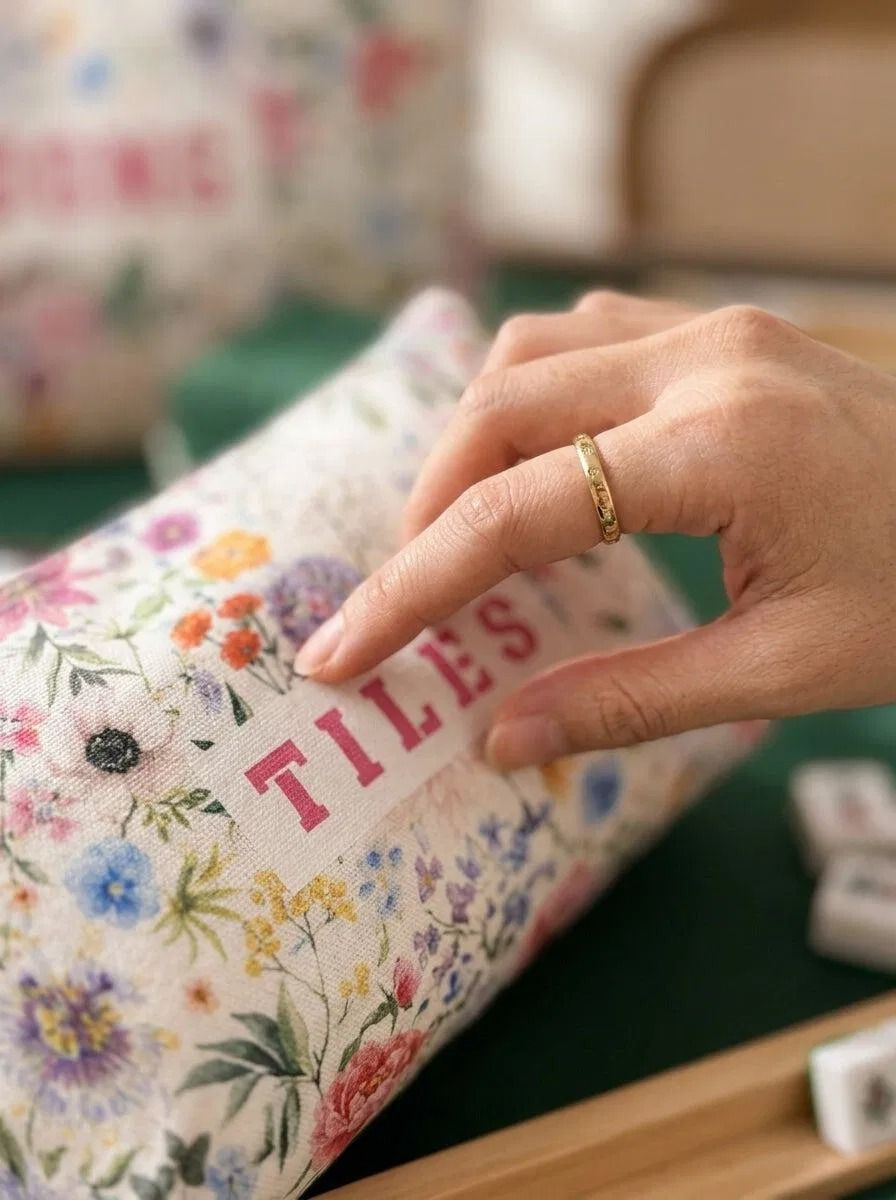
A mahjong rack bag is a protective carrier sized for a 160-tile American set, its racks with pushers, and often a mat rolled inside. You'll find two main types: soft-sided canvas or fabric bags that prioritize portability, and hard-shell cases that offer maximum protection for frequent travel. Soft bags weigh less and fold flat when empty; hard cases sit rigid and stack for storage. Most fit a single-player's racks and the playing set together, though some smaller bags hold tiles alone while oversized versions accommodate dice, scorepads, and extra accessories. A quality bag includes reinforced seams, padded dividers or pockets, and zipper closures to keep tiles from shifting during car trips or transit. Mahstead's travel bag collection offers custom designs to match your engraved set, and all ship free across the US—the choice depends on whether you play weekly at a friend's home or travel to tournaments.
A good mahjong rack bag is a protective carrier sized for a 160-tile American set, its racks with pushers, and often a mat rolled inside. You'll find two main types: soft-sided canvas or fabric bags that prioritize portability, and hard-shell cases that offer maximum protection for frequent travel. Soft bags weigh less and fold flat when empty; hard cases sit rigid and stack for storage. Most fit a single-player's racks and the playing set together, though some smaller bags hold tiles alone while oversized versions accommodate dice, scorepads, and extra accessories. A quality bag includes reinforced seams, padded dividers or pockets, and zipper closures to keep tiles from shifting during car trips or transit. Mahstead's travel bag collection offers custom designs to match your engraved set, and all ship free across the US—the choice depends on whether you play weekly at a friend's home or travel to tournaments.
What size bag do I actually need?
A standard bag holds a 160-tile set in its box plus four racks with pushers stacked flat. Measure your racks: most American racks run 12–14 inches long and 2–3 inches tall when stacked as a bundle. Your tile box (approximately 10 × 8 × 3 inches for a 160-tile set) sits beside or on top of the racks. If you also carry a mat, choose a bag with a zippered side pocket or roll the mat outside the main compartment and secure it with a strap. Oversized bags add room for scorepads, dice holders, and snacks—useful for weekly games, but bulky for quick car runs. For solo transport to one venue weekly, a compact bag works fine; for tournament play or hosting duty, go larger.
🀄 Shop best-selling mahjong sets →

Soft bag vs. hard case: Which fits your style?
Factor | Soft Fabric Bag | Hard-Shell Case | Best for |
Weight (empty) | 1–2 lbs | 3–5 lbs | Quick hand-carry or car storage |
Protection level | Good (padded seams) | Excellent (molded interior) | Frequent travel or tournaments |
Folds flat | Yes, stores anywhere | No, takes shelf space | Small homes or apartments |
Price basis | Mid-range | Higher | Budget or premium players |
Durability (years) | 3–5 with care | 5–10+ | Casual or serious players |
Best interior | Pockets or dividers | Foam inserts or trays | Organization preference |
Strap options | Shoulder or handle | Handle, wheels (some) | Commute mode or distance |
Soft bags win for weekly home games and car storage. Hard cases excel if you fly to tournaments, attend multiple venues in one day, or store tiles long-term. A hybrid option—soft bag with hard-shell divider trays—combines flexibility and protection but costs more upfront. Choose soft if you play in one climate-controlled home; choose hard if your tiles travel by plane, boat, or outdoor venues.
What features protect your tiles best?
Reinforced corner seams prevent tears where the bag bears weight. Interior dividers or elastic pockets keep the tile box from sliding into racks, which stresses both. Padded or quilted walls reduce impact from drops or bumps—especially important for acrylic tiles, which can chip if a heavy object lands on them. Zippered mesh pockets let you store dice and scorepads separately so they don't rattle or shift tiles. A moisture-wicking lining (common in canvas bags) prevents humidity buildup if the bag sits closed for weeks in damp basements. Look for bags with reinforced zipper tracks so the slider doesn't jam mid-game when you're rushed. Our best-selling sets come with quality tiles that deserve protection; match your bag to the investment.
🎁 See our most-loved mahjong sets & accessories →
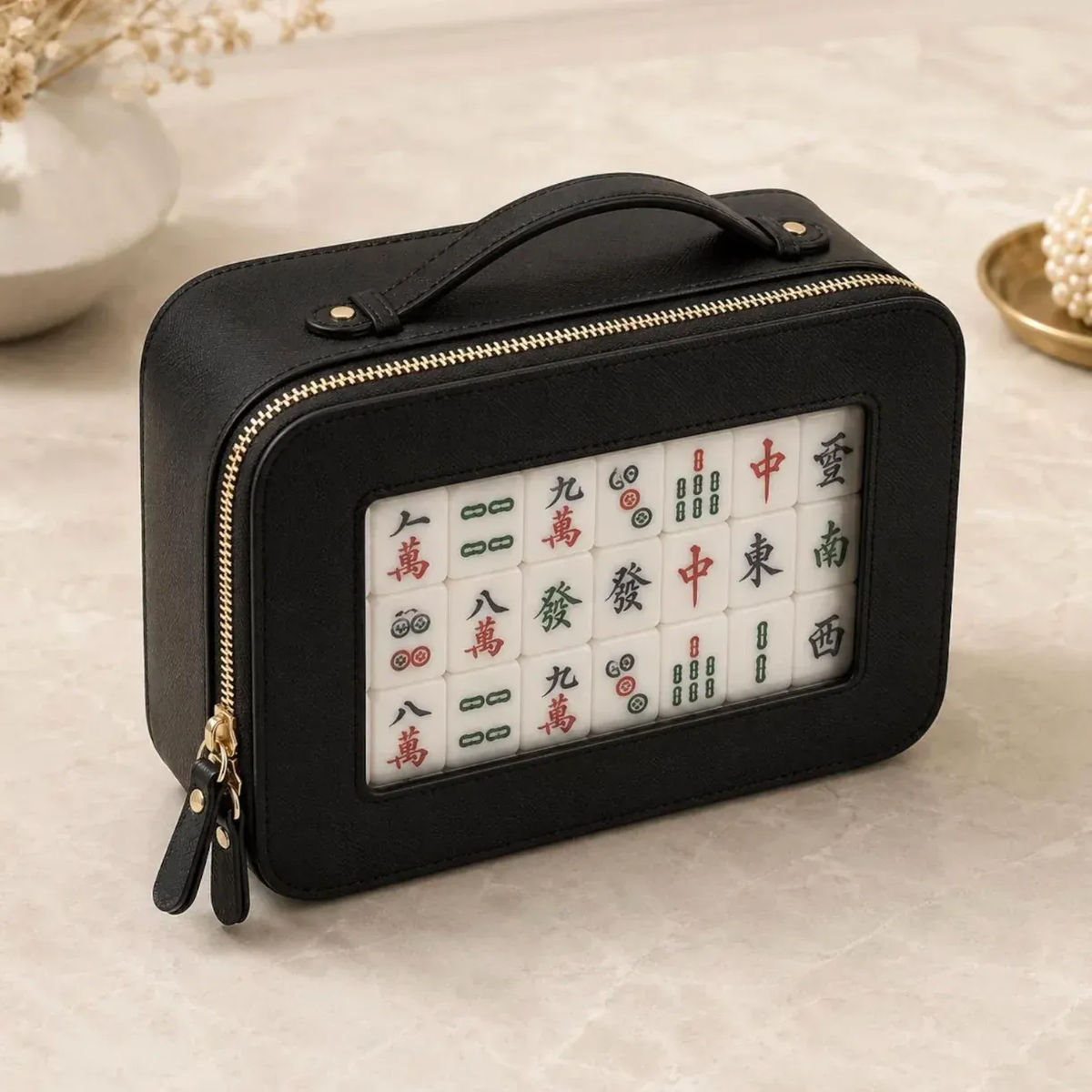
Can you fit a mat inside the bag, or does it need a separate roll?
Most standard bags don't have room to fold a mat inside alongside racks and tiles. A mat typically rolls to 14–16 inches long and 3–4 inches diameter, which eats half the bag's interior. Best practice: roll the mat separately and secure it to the outside of the bag with a strap or velcro, or tuck it under an arm. If you want everything in one bag, buy an oversized case (usually 20+ inches long) and accept that it won't fit under a car seat. Alternatively, store the mat at your host's home if you play at the same venue weekly. For details on choosing a mat that rolls compactly, see our mat selection guide.
How do I keep tiles from shifting during transport?
Pack dense to prevent movement. Place the tile box in the center or bottom of the bag, racks on top or beside it, and fill gaps with bubble wrap, thin foam, or a soft cloth. Secure the top of the tile box lid with tape or a velcro strap to prevent it popping open if the bag tips. If your bag has dividers, place one barrier between racks and tiles. Avoid overstuffing the bag so the zipper sits flat—a bulging bag stresses seams and zippers. For car trips under 30 minutes on flat roads, a standard bag is fine; for longer drives or rough terrain, use a hard case or add extra padding.
What to check before you buy
Interior dimensions: Measure your racks and tile box before ordering. A 16-inch-long bag accommodates standard racks; verify the depth fits four stacked racks plus the box height (typically 3–4 inches total stacked).
Weight capacity: If you carry the bag one-handed, soft is lighter; two-handed, weight matters less.
Zipper quality: Test that the slider glides smoothly in product photos or reviews. Cheap zippers jam when packed tight.
Handle reinforcement: Look for stitching at the handle base where it attaches to the bag. A reinforced handle won't tear under a full set's weight.
Strap adjustability: Shoulder straps should be padded and length-adjustable for comfort over a coat or to fit different body types.
Color and customization: Mahstead offers engraved bags that match your set's design. Check if custom lettering is available and if rush orders are possible.
Warranty or return policy: Confirm you can return or exchange the bag if it arrives with a defect. Ask before ordering.
✨ Find your Mahstead set — free US shipping →
For a complete look at how to outfit your game, explore mahjong racks with pushers, which many bags are built to hold, and browse our Christmas mahjong set collection if you're looking to give the full package to a friend who travels to games.

FAQ
Do I need a hard case if I only play at home?
No. A soft fabric bag is lighter, stores flat, and protects tiles from dust and accidental spills. Hard cases are worth the cost if you travel or move your set multiple times per week.
Will my engraved set fit in a standard bag from a general retailer?
Most likely, yes—engraving adds no volume, only design. But confirm the bag's interior length and depth match your tile box and racks. Mahstead bags are designed for 160-tile American sets, so fit is guaranteed.
Can I store my mat rolled inside a soft bag long-term?
Mats left rolled for months can develop creases, but it won't damage them. If you store for a season, lay the mat flat or hang it in a closet, and keep the bag for travel only.
What's the difference between a mahjong bag and a dice cup travel case?
A mahjong bag holds the entire set (tiles, racks, mat). A dice cup case is pocket-sized for shakers and dice. Use both if you carry dice separately from your main set.
How do I clean a fabric bag if it gets dusty or sticky?
Wipe the exterior with a damp cloth and mild soap. For spills inside, remove tiles first, wipe with a barely damp cloth, and air-dry completely (24 hours) before repacking. Never machine-wash; seams may separate.
Do Mahstead bags come with padding or dividers already installed?
Mahstead bags arrive ready to pack. Internal padding and zippered pockets are built in; no assembly required. Roll your mat, stack your racks, box your tiles, and go.


View More
View More
View More
