
Best Mahjong Bags for Travel: What to Check Before You Buy
Last updated: Nov 23, 2026
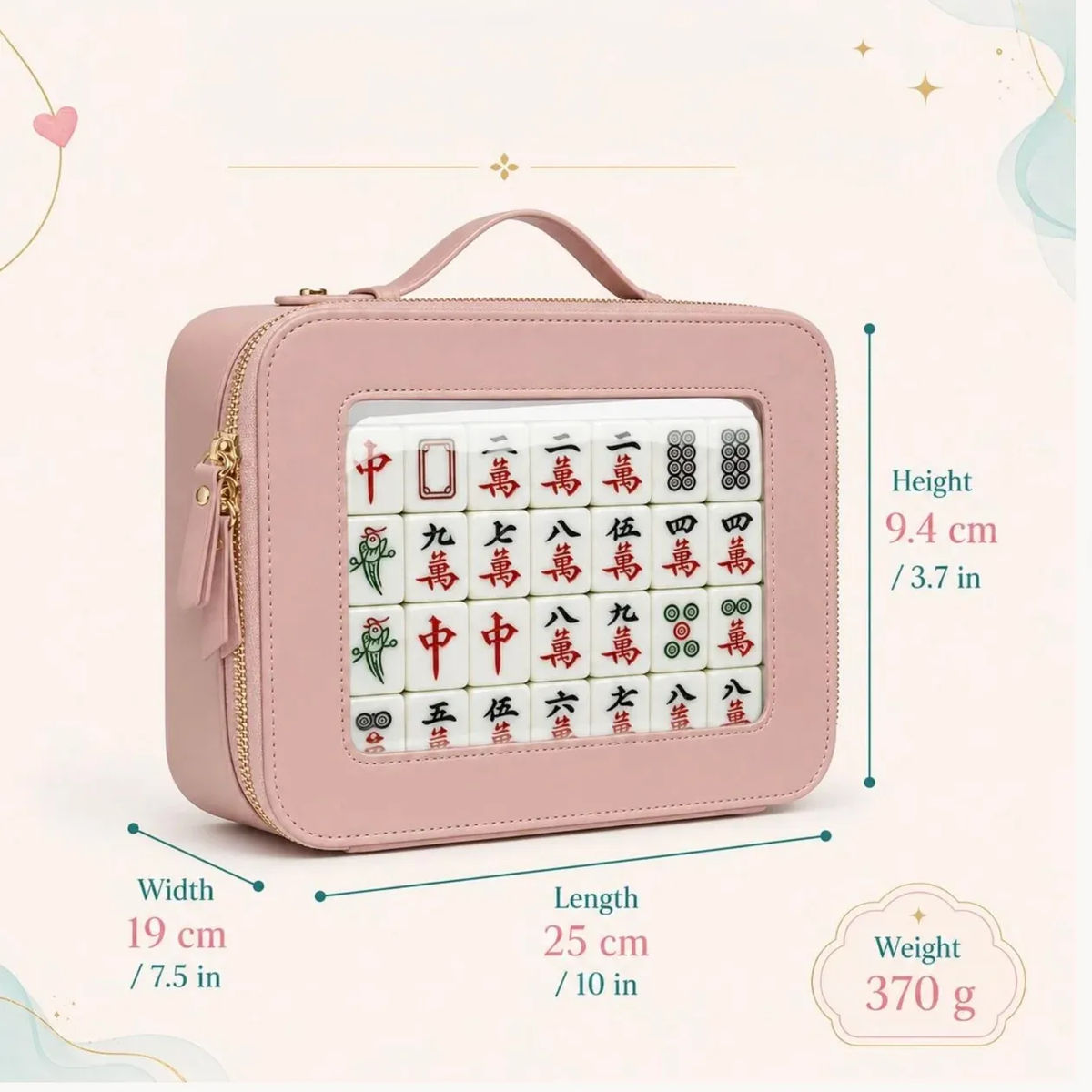
A mahjong travel bag is a padded or reinforced case designed to hold a 160-tile acrylic set (including rack, pushers, dice, and card holder) plus mats and extra accessories. They range from soft drawstring pouches to structured cases with compartments. Bags protect tiles from cracking during car trips, airline travel, or regular transport to game nights. Size matters: measure your set's storage footprint—most acrylic sets fit in bags 10–14 inches long. Padding thickness varies; thicker foam absorbs bumps better. Mahstead's travel bag collection includes options with reinforced handles, slip pockets, and tie-down straps. Prices reflect material and compartments; see current pricing on product pages. Choose based on how often you travel and whether you need room for a mat and score pads.
What size bag do you actually need?
Your bag must fit your set plus a mat and extras. Acrylic tile racks vary—some stack flat, others stay upright—so check your set's packed dimensions (length × width × height) before ordering. A bag labeled 12–14 inches long usually accommodates a standard American mahjong set with room for a drawstring pouch of jokers or dice. If you also carry a mahjong mat or a rigid score pad holder, add 2–3 inches to your length estimate. Soft bags compress; hard cases do not, so a hard case labeled 12 inches won't squeeze a 12.5-inch set inside. Measure twice, then check the bag's interior specs on the product page. Overstuffing damages tiles and strains zippers.

Soft drawstring vs. hard case—which one wins?
Bag Type | Best For | Protection Level | Portability | Storage at Home ---|---|---|---|--- Soft drawstring pouch | Weekly car trips, casual players, minimal gear | Good: padding absorbs jostling | Excellent: rolls up, fits backpack side pocket | Takes little shelf space Reinforced tote with compartments | Mixed travel (car + plane), organized players, mats included | Very good: padded walls, interior dividers | Very good: handles, shoulder strap | Needs closet or shelf Hard-shell case with handle | Frequent flights, tournament players, maximum durability | Excellent: rigid protection, locks available | Fair: heavier, bulkier | Needs dedicated storage Backpack-style (padded) | Bikers, hikers, hands-free commute | Good: distributed weight, rain cover often included | Excellent: hands free, ergonomic | Compact when empty
Soft drawstring bags are lighter and pack flat—ideal for players who drive to one regular game night weekly. Hard cases protect tiles best during rough airline baggage handling and keep gear organized in separate pockets, but they take up closet space year-round. Many of us rotate: we use a soft pouch for local car trips and invest in a hard case when we travel to mahjong tournaments or week-long vacations. The honest middle ground is a reinforced nylon tote with padding and a shoulder strap—durable enough for plane transport, compact enough to store, and affordable.
🀄 Shop best-selling mahjong sets →
How much padding do you need to stay safe?
Acrylic tiles crack if they hit hard objects or knock against each other during rough transport. Look for bags with ≥0.5-inch (half-inch) foam padding on the bottom and sides; this is visible in product photos and usually stated in descriptions. Padded compartments for the tile rack prevent tiles from sliding or tumbling inside the main cavity. Interior dividers or elastic straps that hold the rack upright add real protection during sharp turns or sudden stops while driving. Corner protection—reinforced or doubled fabric at the bag's bottom corners—extends its lifespan by absorbing the impact points that bags experience when set on car floors or baggage conveyor belts. Waterproof or water-resistant lining isn't essential in dry climates but saves you if a water bottle leaks or you get caught in unexpected rain walking to a game. Honestly, most players overkill the padding question: standard half-inch foam plus a reinforced rack pocket is enough for weekly travel; only frequent airline travelers need ultra-thick cases.
What's inside a Mahstead travel bag setup?
Our travel bag collection pairs well with best-selling mahjong sets that come with tile racks, pushers, and dice. When you order a set and a bag together, the bag's interior pocket size should accommodate your pushers (typically 4–5 inches long) and hold the National Mah Jongg League card flat or folded. Some bags include a small zippered mesh pocket for jokers or scoring chips; others rely on the tile rack's internal joker slot. If you play with a mahjong mat, choose a bag with a separate mat compartment or buy a bag large enough that a rolled mat fits alongside the set without crushing it. Bags with external slip pockets let you store the card or a pen without opening the main compartment. The best travel setups include your set, one mat, pushers, dice, the card, and a small pen—all fitting without overstuffing.
✨ Find your Mahstead set — free US shipping →
Should you buy a bag or a case with your set?
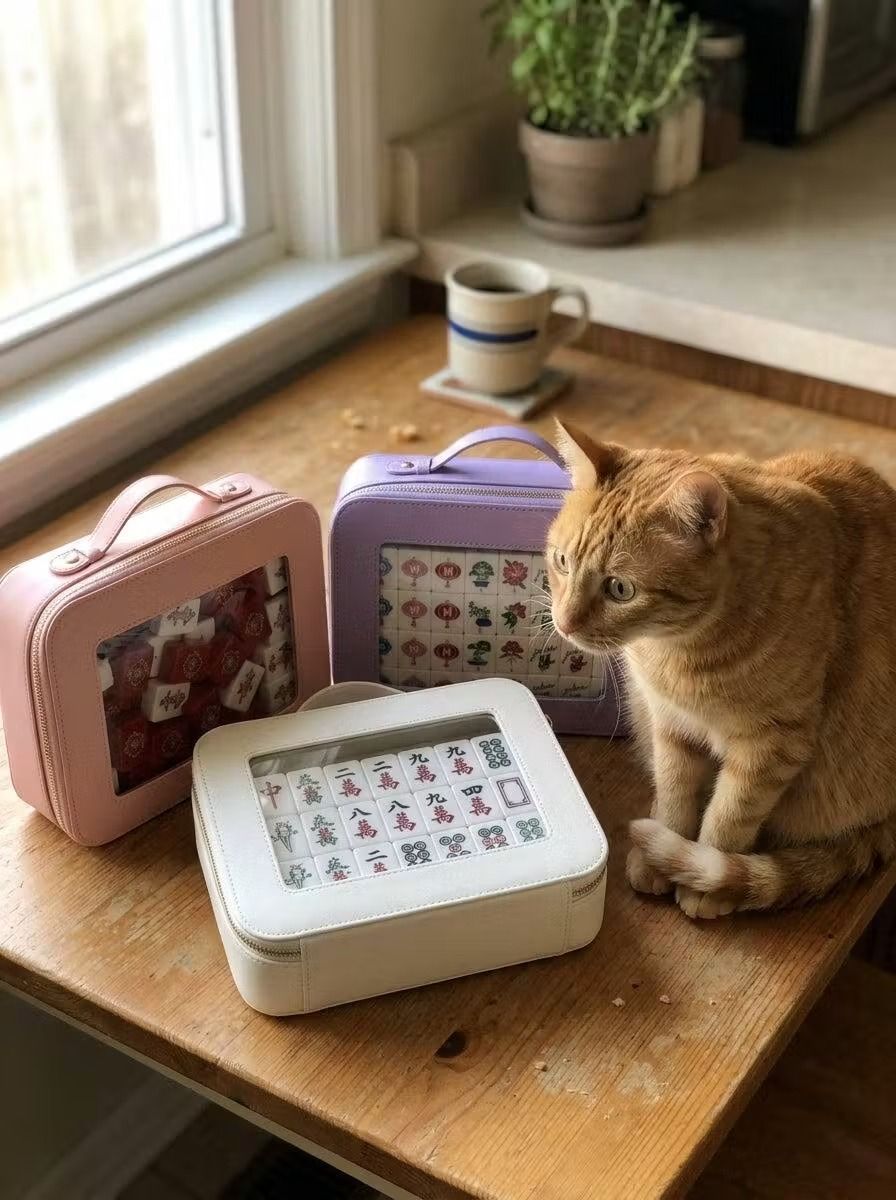
Many players buy a set and bag as a pair; others add a bag later. If you play weekly at the same location (home, a friend's house, a club), you might not need a dedicated travel bag—a simple cloth pouch works fine. But if you travel to multiple venues, fly to tournaments, or gift a set to someone who travels, a good bag becomes essential. Mahstead's travel bag designs include options that complement engraved American mahjong sets or Christmas mahjong sets—thematic bags that feel like a cohesive gift. Buy a bag at the same time as your set if you know you'll transport it; buy later if you're unsure. Bags wear out over years of use and travel, so buying a replacement bag years later is normal and affordable. Don't let a bag purchase delay getting your set—it's easier to order both now (they ship separately) and have backup protection ready.
What to check before you buy
Interior dimensions: Measure your set's storage box or rack length, width, and height. Compare to the bag's stated interior cavity. Leave 1 inch of clearance to avoid jamming.
Rack fit: Does your tile rack stand upright inside, or must it lie flat? Some racks are tall and thin; others are squat and wide. Check the product photo or description.
Zipper quality: Look for YKK or branded zippers in the product photos. Cheap zippers jam when overstuffed.
Handle durability: If you'll carry it weekly, reinforced handle stitching and a shoulder strap are worth the cost.
Water resistance: Not critical unless you live in a wet climate or commute by foot.
Weight limit: Hard cases and bags with metal frames are heavier. If you fly frequently, opt for lighter soft cases.
Return policy: Check Mahstead's return terms on the product page before ordering, especially if this is your first bag.
🎁 See our most-loved mahjong sets & accessories →
Why does mat fit matter in your bag choice?
Most weekly players carry a mat separately—it's bulky and doesn't need the same protection as tiles. But if you travel to tournaments or multi-day trips, cramming a mat into or atop your tile bag saves space. A rolled mahjong mat is roughly 3–4 inches in diameter and 36–40 inches long; it won't fit inside most tile bags. Choose a bag with an external mat strap or elastic loop, or buy a larger tote-style bag and pack the mat flat on top of the tile compartment. Some players buy two bags: a small hard case for tiles and a separate mat sleeve. This dual-bag approach costs more but keeps tiles and mats completely safe and makes games easier to set up. The honest trade-off is portability: one large bag is easier to carry to the car than two smaller ones.
Which travel bag is right for you? A decision tree.
Your situation | Bag recommendation | Why it works ---|---|--- Play at one home game, rarely move your set | Soft drawstring pouch | Cheap, minimal storage, adequate protection for stationary play Drive to 2–3 game nights per month | Reinforced tote with compartments | Compact, organized, handles weekly car transport well Fly to tournaments 2–3 times per year | Hard case with handle | Maximum protection during baggage handling, durable investment Backpack commuter (bike, walk, public transit) | Padded backpack-style | Hands-free, weight distributed, rain cover often included Gift a set to someone who travels | Bag + set bundle or matched set + bag | Feels complete, professional, recipient ready to play Collect multiple sets or play multiple games | Large duffel with multiple pockets | Holds 2+ sets, accessories, mats, one bag for everything
Why does Mahstead shipping matter for your bag choice?
We ship travel bags free across the US, which means you're not paying extra for protection or speed—that's built into the value. Most bags arrive within 5–7 business days. This matters when you're choosing: you don't need to overbuy padding or rush-ship to compensate for risk. If you're gifting a set and bag together, order both at once so they ship together or within days of each other. Tracking is standard, so you can plan your game night around the bag's arrival. No surprise fees or regional surcharges apply. That's one fewer thing to calculate when you're deciding whether a bag is worth it.

FAQ
Can I use a regular tote bag or laptop case for mahjong tiles?
Not safely. Laptop cases are hard-shelled but often too narrow; regular totes lack padding. Tiles crack easily without cushioning. Use a bag designed for mahjong or gaming sets, which have interior padding, reinforced corners, and compartments that prevent tiles from sliding.
What if my set already has a storage box—do I still need a bag?
If you never move your set, no. If you travel even occasionally, yes. Storage boxes are designed to protect tiles on a shelf, not absorb bumps during transport. A travel bag holds the box safely or lets you pack tiles loosely with extra padding for added security during car trips or flights.
How do I know if a bag will fit my specific mahjong set?
Measure your set's storage footprint in inches (length × width × height). Compare it to the bag's stated interior cavity dimensions on the product page. Add 0.5–1 inch of clearance. If the numbers are close, email photos of your set's rack and storage to the Mahstead team before ordering, and they can confirm fit.
Are soft bags as protective as hard cases?
For car transport and regular game nights, yes. For frequent flying or rough baggage handling, no. Hard cases are rigid and lock, protecting tiles if the case is crushed. Soft bags absorb impacts well but can be compressed. Choose soft for local travel, hard for airlines.
Should I buy a bag the same brand as my mahjong set?
Not required, but matching colors and aesthetics feels cohesive if it's a gift. Mahstead bags pair with our sets, but any quality mahjong bag will protect your tiles. Prioritize fit, padding, and handles over brand matching.
Can I wash or clean a mahjong travel bag?
Spot-clean with mild soap and water for soft bags and canvas exteriors. Wipe hard cases with a damp cloth. Don't machine-wash or submerge. Check the care tag or product description for specific material guidance before cleaning.


View More
View More
View More
