
Best Guangdong Mahjong App: Real Player Guide 2026
Last updated: Nov 23, 2026
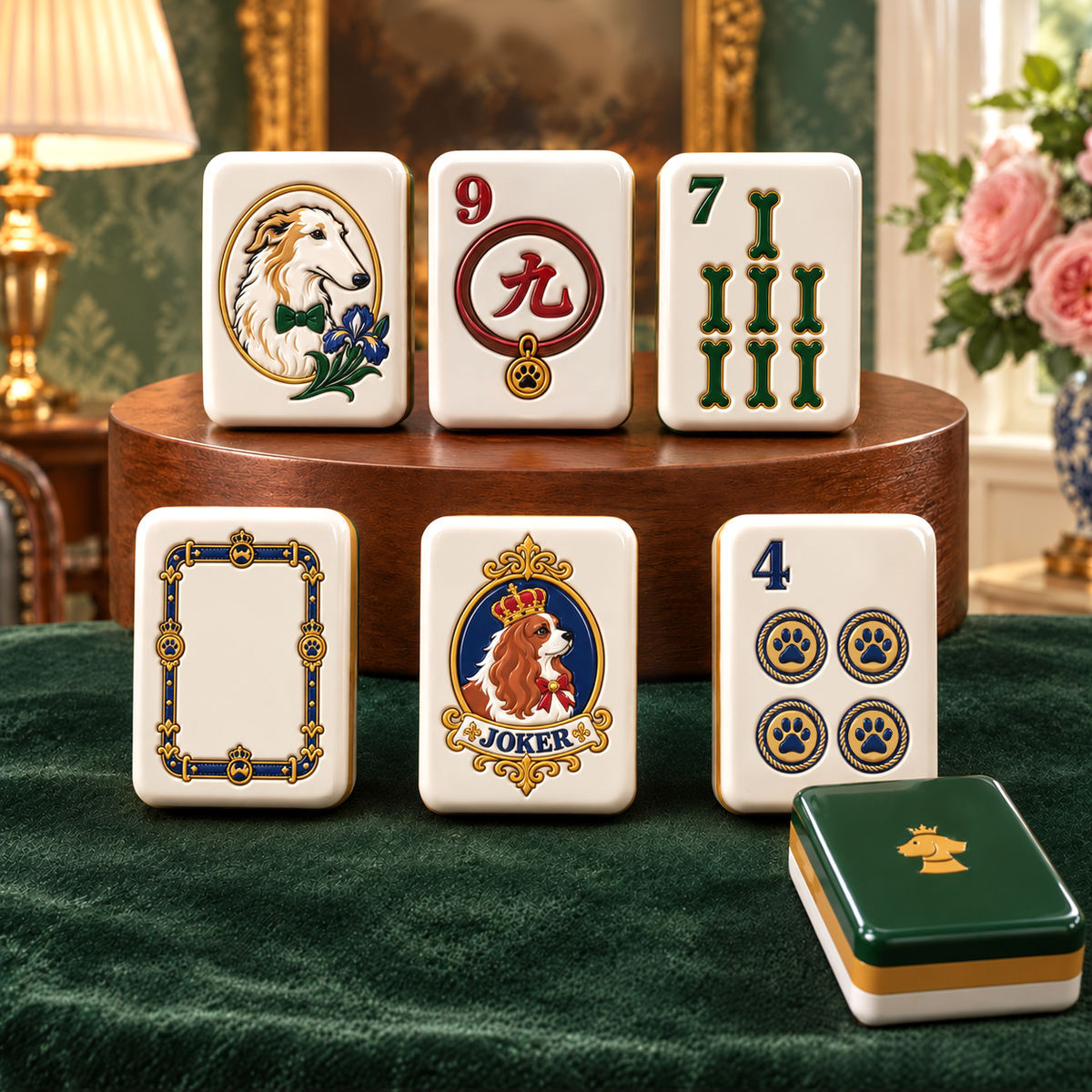
Guangdong mahjong apps—digital versions of the Cantonese-style game played across Southern China—let you play instantly against AI or online opponents without learning complex rule variations first. The most-recommended free options include apps available on both iOS and Android that teach you the 13-tile hand, rapid discard cycles, scoring by payout rather than point accumulation, and the aggressive winning conditions that make Guangdong fast-paced. Most apps include chat, replay review, and difficulty levels so you progress from beginner to competitive play. However, Guangdong apps lack the social texture of a real table: no smell of tile shuffling, no face reading, no side talk during the Charleston. Serious learners download an app to absorb rules, then buy a best-selling mahjong set to host weekly games—where the stakes feel real and the memory lasts.
How does Guangdong mahjong differ from the American game you probably know?
Guangdong uses a 13-tile hand instead of American's 14; hands are dealt one at a time over four rounds; there are no fixed hand patterns (no NMJL card), jokers, or Charleston passing ritual. Scoring is instant and payout-based, so a winning hand's value is settled immediately between players—money or points change hands on the spot. Discard pressure is relentless: one player's win often comes from another player's single careless tile. The game teaches rapid reading and memory because you must track 12+ exposed tiles while holding 13 in hand. If you've only played American, Guangdong feels smaller, faster, and more social because winning and losing happen every few minutes.

What are the most reliable Guangdong mahjong apps right now?
The most widely used free Guangdong mahjong apps are Mahjong Soul (available iOS/Android, also runs on web), which includes Guangdong rules alongside Hong Kong, Chinese classical, and other variants; 13 Mahjong (Android/iOS); and regional apps popular in Guangdong, Macau, and Hong Kong that you'll find by searching your app store for "Guangdong mahjong" or "麻雀" (the Chinese character). Most apps default to Chinese language, so English-language learners may face a steep menu-navigation curve on the first session. Mahjong Soul specifically offers bilingual settings and a large English-speaking player base, making it the easiest entry point for North American players learning Guangdong rules. Download one free app, play 5–10 hands, and see whether the pace and rules click for you before investing in a physical set.
Why would a real player still choose tiles over an app?
Apps cannot replicate the tactile rhythm of draw-and-discard, the table talk, or the ability to watch your opponents' faces in real time for tells. A phone screen shows 13 tiles in a line, but a physical mahjong rack—or even a fanned hand—lets you group by suit and number intuitively, process 13 options at a glance, and develop muscle memory for tile reading that translates to faster, sharper play. After 10 hours of app play, you'll understand Guangdong rules; after 10 table games with real tiles and real people, your instinct takes over. Many of our weekly players started on an app to learn rules, then bought a quality set to host friends at home because the game became their ritual.
🀄 Shop best-selling mahjong sets →

What should you learn from an app before buying a physical set?
Use an app to drill these non-negotiable Guangdong mechanics:
13-tile hand structure: Recognize pongs (three identical), kongs (four identical), chows (sequences: 1-2-3, 5-6-7, etc.), and eyes (a pair).
Winning shapes: A winning hand = four melds plus one pair (or a special pattern like "all simples" or "seven pairs").
Discarding under pressure: Practice throwing tiles the instant you know they're not useful; hesitation at the app teaches bad habits for the table.
Reading the discard pile: Memorize what's been thrown so you know which tiles are "safe" to play late in the hand.
Payout logic: Understand that a winning hand's score depends on its composition (simple hand = low payout; all honors = high payout), not a points card like American mahjong.
Most apps run through a tutorial; Mahjong Soul includes optional guided hands and a glossary. Spend 30 minutes on tutorials, then play against easy bots until you stop mis-clicking. Once you stop making rule mistakes, you're ready for the table.
Skill | App Fast-Track Time | Why It Matters at the Table |
Recognizing winning shapes | 15–30 min | You must call "win" instantly or lose it |
Reading discard pile | 2–3 hours of play | Safe discards keep you alive late in the hand |
Payout tiers (simple vs. honors vs. special) | 5–10 min + app reference | You need to know if a hand is worth pursuing |
Tile grouping instinct (mental sorting) | 5–8 hours of app play | Translates to faster decisions with physical tiles |
Recognizing melds at a glance | 10–20 hours | Speeds up your ability to spot winning opportunities |
The apps excel at teaching speed and pattern recognition. The table teaches pressure, people-reading, and the joy of play. Both matter.
✨ Find your Mahstead set — free US shipping →
Which app-to-table transition works best?
Start with an app, play 20–30 hands over a week or two, then attend a live Guangdong game or host one. If no local Guangdong game exists near you, look for Chinese community centers, libraries with mahjong programs, or ask in local Asian community meetup groups—many host casual drop-in games where newcomers can observe or play for free or a small buy-in. If you're hosting from scratch, buy a best-selling mahjong set designed for durability; invite two or three friends who've also played the app; and allow the first game to run longer than you expect (new tables move slowly). Expect the first hour to feel clumsy—counting to 13, checking your hand for winning shapes, re-learning layout—but by game two, the app knowledge clicks into muscle memory and you'll see why players prefer the table to the screen.
🎁 See our most-loved mahjong sets & accessories →
What to check before you buy a physical set after app training
Set completeness: Guangdong mahjong does not require jokers or American-style blanks, so a traditional 144-tile Chinese set (one suit × 1–9 in four copies, plus winds, dragons, flowers) works perfectly. However, if you want to play both Guangdong and American mahjong with the same set, you'll need a 160-tile set that includes jokers and extras.
Tile size and weight: After hours on a 2.5-inch phone screen, real tiles may feel surprisingly small or heavy on your first table. Most players prefer tiles about 0.75 to 0.8 inches wide and made of acrylic or bone (never plastic so thin it cracks). Handle a friend's set or visit a local mahjong shop to feel the difference before ordering online.
Mat and racks: A bamboo or felt mat keeps tiles from sliding; a rack with pushers makes hand-management intuitive and speeds up play. These aren't essential for casual games, but they transform the experience from awkward to fluid.
Language on tiles: Ensure tiles are labeled in characters you can read (simplified Chinese for Mainland apps, traditional for Hong Kong/Macau, or Arabic numerals if you're learning). Guadalcanal confusion happens fast when you're tired.

FAQ
Can I play Guangdong mahjong on an app with English speakers?
Mahjong Soul has a large English community and bilingual settings. Most other Guangdong apps default to Chinese, but the tiles are visual—numbers and suit symbols translate instantly. After one session, language becomes background noise.
Do I need jokers for Guangdong mahjong?
No. Guangdong uses 144 tiles (suits 1–9, winds, dragons, flowers, seasons). Jokers are an American innovation and aren't part of traditional Guangdong rules, though some casual tables add them for fun.
How long does it take to go from app-beginner to confident table player?
15–20 hours of app play teaches rules and pattern recognition. Your first live table takes 2–3 hours of real-time play. By game two or three, awkwardness fades and instinct kicks in.
What's the biggest mistake app players make at the real table?
Playing too slowly and overthinking every tile. Apps let you take 5–10 seconds per turn; live play expects 1–2 seconds. Play the app in "speed" mode or with a self-imposed timer to build the reflex.
Is a Chinese 144-tile set better for Guangdong than an American 160-tile set?
Both work. A 144-tile Chinese set is traditional and slightly cheaper; a 160-tile set gives you flexibility to play American mahjong, too. Choose based on whether you'll ever want American rules—if yes, go 160-tile.


View More
View More
View More
