
Automatic Mahjong Table for Beginners: Buy or DIY Mat?
Last updated: Nov 23, 2026
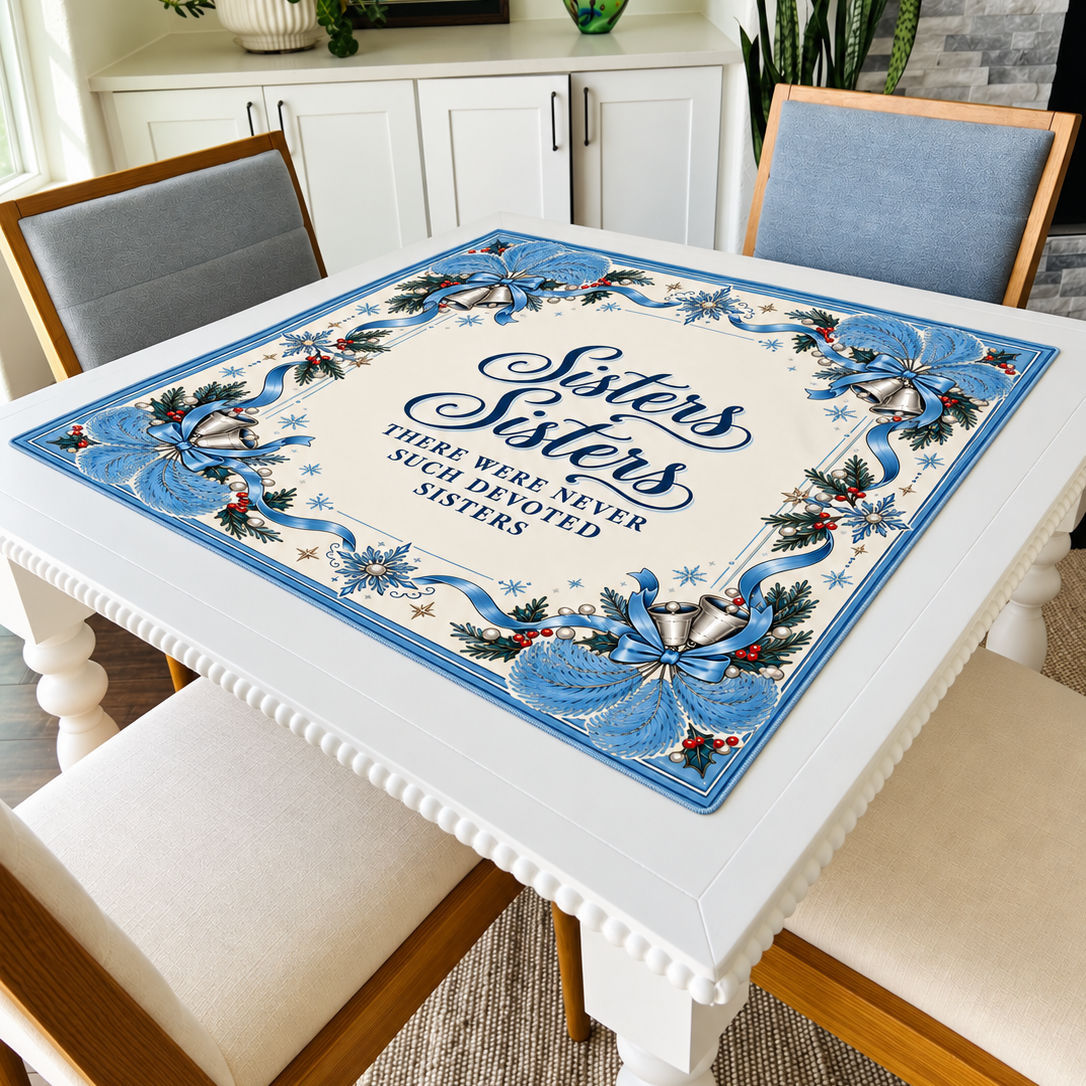
An automatic mahjong table is a motorized device that shuffles tiles, builds walls, and deals hands hands without manual work. Most sell for several hundred dollars and require electricity and floor space. For beginners, we recommend starting with a manual mat setup instead: it's faster to set up, teaches hand-building and wall-breaking fundamentals, costs a fraction of the price, and lets you host games anywhere. Automatic tables suit experienced players who run frequent four-player games in a dedicated space and want to skip the physical shuffle. A quality mahjong mat with pushers and racks gives you everything a beginner needs to play authentic American mahjong right away. 🀄 Shop best-selling mahjong sets →
Why Most Beginners Don't Need an Automatic Table
Automatic tables belong to a different game stage. When you're learning American mahjong for the first time, you need to understand wall-breaking, the Charleston, discarding logic, and hand-reading—all things that happen because players move tiles manually. Sitting passively while a machine deals teaches none of that. The physical motion of drawing from the wall, managing your rack, and passing tiles forces you to internalize the rhythm and rules. Most of our weekly players started with a mat and never felt they were missing anything. Cost also matters: a new table runs into hundreds of dollars; a mat runs from modest investment to premium depending on design. Space is another factor—tables need a dedicated spot, electricity, and maintenance. A mat rolls up and stores anywhere.
Mat vs. Automatic Table: What Fits Your Situation?
Factor | Quality Mat + Racks | Automatic Table | Winner for Beginners |
Learning curve | Teaches wall-breaking, hand-building | Passive—skips core skills | Mat |
Setup time | 2–3 minutes | 5–10 minutes (electrical, reset) | Mat |
Cost basis | Modest to premium per mat | Several hundred dollars | Mat |
Portability | Rolls up; plays anywhere | Requires dedicated space, outlet | Mat |
Maintenance | Wipe down, store flat | Motors, sensors, electricity | Mat |
Game frequency | Works for weekly players | Better for daily or tournament use | Mat |
Player count | Ideal for 4 players, flexible for 3 or 2 | Designed for standard 4 | Mat |
For a beginner household or a weekly game group, a mat with pushers is the clear choice. You'll play faster, learn deeper, and spend less. After two or three years of regular play, you'll know if an automatic table adds value to your group—or if the mat is exactly what you want to keep using.
🎁 See our most-loved mahjong sets & accessories →
What a Beginner-Friendly Mat Setup Includes
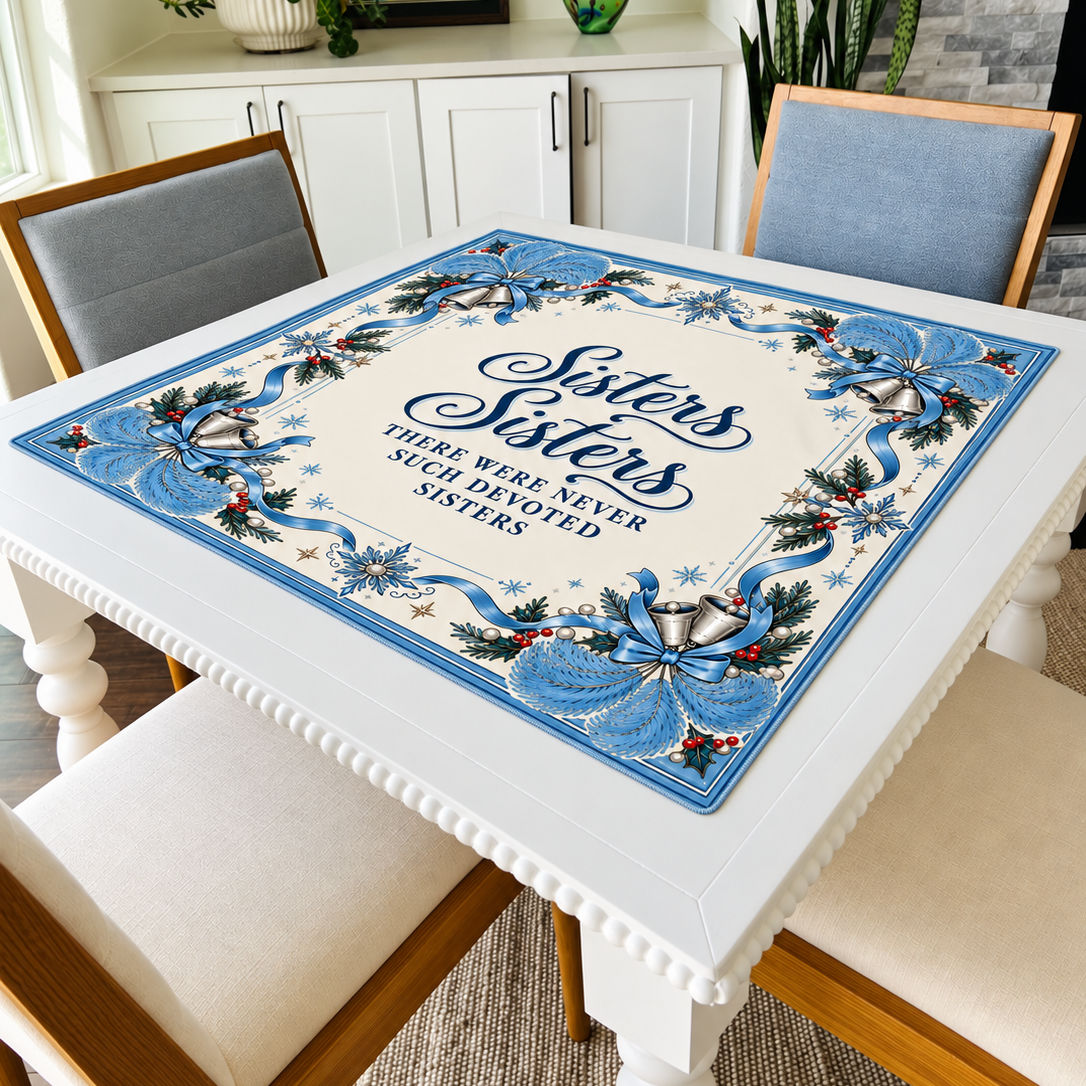
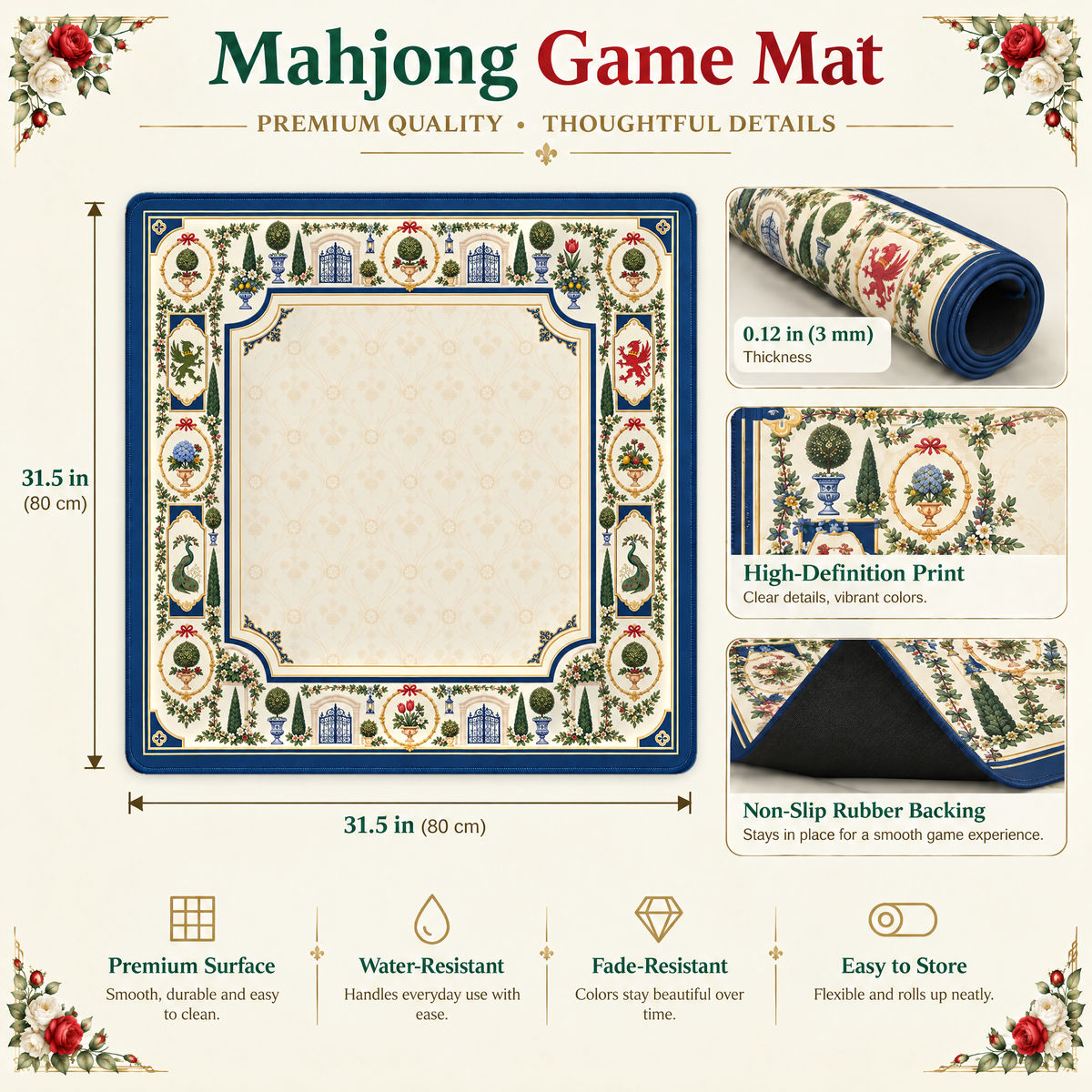
A quality mat is a padded cloth surface marked with four player positions, usually 36 inches square or larger, with a nonslip base. You pair it with tile racks (also called pushers or slides), which hold your 13 tiles upright and help you push discards to the center neatly. The best starter kits bundle a mat, four racks, and a 160-tile American mahjong set in an acrylic case. Some include a carrying bag for travel. The mat protects tiles, keeps play organized, and marks the discard area clearly so no one loses track of played tiles. Racks let newer players manage hand size without dropping or misaligning tiles. Both improve the pace of play and reduce fumbles. A full setup goes from zero to first game in under five minutes—compared to learning a table's menu system and waiting for it to initialize.
How to Pick the Right Mat for Your Group
Start by measuring your table or floor space. A 36-inch mat fits a standard dining table; 42-inch or larger suits a folding table or dedicated game surface. Check the mat's pile thickness (thicker means better cushioning for tiles) and base grip—nonslip backing prevents sliding during shuffles. Verify the markings are embroidered or printed clearly so you can see player positions and discard zones even under game lighting. Look for mats with pocket handles on two opposite ends for easy rolling and transport. Color matters if you play indoors regularly—lighter shades reduce eye strain; darker shades hide dust and tile marks better. If your group travels, choose a mat that folds or rolls tightly and fits in a standard mahjong travel bag. Read reviews from actual weekly players (not retailers) to see if the mat holds up to weekly shuffles and wears evenly. The pillar mahjong mats collection shows current options with real descriptions of materials and size.

When an Automatic Table Actually Makes Sense
An automatic table earns its place if you meet three conditions: you've played weekly for over two years, you have four regular players and a dedicated table space, and your group shuffles multiple games per session or plays tournaments. The motor handles rapid resets and reduces hand fatigue on long nights. If your weekly game sits around a standard dining table and you've been playing for under a year, an automatic table will collect dust. Tables also require a level, hard surface and electricity—they don't work on grass, in outdoor pavilions, or in cramped apartments. If you travel to play at different homes or venues, a mat is your only option. Tournament play uses manual mats and racks, not tables, so a table won't prepare you for competitive mahjong. Many experienced players own both—a mat for traveling and teaching, a table for home groups that meet four times a week.
What to Check Before You Buy Any Mat or Table
Before ordering: Confirm the mat fits your actual table length and width with two inches of overhang on all sides. Check that racks are included or bundled separately with a clear cost shown on the product page. Verify free US shipping applies to your order (all Mahstead mats qualify). Ask whether the mat includes joker storage or pockets for the current year's card. Check that your American mahjong set has all 152 tiles plus spares—a 160-tile set is standard.
On arrival: Unroll the mat and let it flatten for 24 hours if it arrived rolled. Inspect seams and markings for defects. Test rack positioning against your tiles to confirm they fit snugly. If the base doesn't grip your table, place a rubber mat or towel underneath. Practice one full shuffle and deal before inviting your group, so you're comfortable with setup timing.
For an automatic table: Ensure it sits level on a hard floor and that you have a clear outlet within cord distance. Test the shuffle and deal cycle twice with your full 152-tile set (plus 8 jokers) before game night. Check that the reset function clears all tiles back to the dealer, not just the surface.
✨ Find your Mahstead set — free US shipping →
Which Beginners Should Skip Straight to a Table?
Very few. The only realistic scenario: you're a household of four committed mahjong players with a dedicated game room and want to upgrade after owning a mat for two or more years. You know the rules, you've played dozens of games, and your group plays 3+ times weekly. In that case, a table removes repetitive physical motion and lets you focus on strategy and scoring. But even then, many groups stick with mats because they're nimble, portable, and lower-maintenance. If you're curious whether a table is for you, rent one from a local game club or supplier before buying—tables are a significant investment, and secondhand markets are thin. Most casual American mahjong players never feel the urge to own one.
FAQ
Can I use an automatic mahjong table to teach a beginner?
Teaching beginners on a table is inefficient because it hides the wall-breaking, wall-building, and shuffling logic they must learn. Use a mat for the first 10–15 games, then show them a table if your group owns one—they'll understand its purpose better after playing manually.
Do automatic tables work with American mahjong tiles?
Most do, but check the specs before buying. Tables designed for Asian mahjong (smaller tiles, 144-tile sets) may jam or misalign with standard American 160-tile acrylic sets. Contact the manufacturer with your tile dimensions.
How much space does a quality mat need compared to a table?
A mat needs only an existing table or flat surface big enough to unfold it (typically 36–42 inches square). An automatic table needs a dedicated floor footprint (usually 30 × 30 inches or larger), a level base, and an outlet nearby.
Can I move a mat to different rooms or houses for games?
Yes—that's one of the mat's main advantages. Roll it up, carry it in a bag, and play anywhere you have a hard table surface. Automatic tables are permanent installations.
What's the best mat size for four people learning together?
Forty-two inches square or larger. A 36-inch mat works, but four people crowded around it will bump elbows during shuffles. Larger mats let each player have clear space for their hand and rack.
Do mats wear out faster than tables during weekly play?
Quality mats last 5+ years of weekly play with proper care (roll, don't fold; store flat; wipe tiles before play). Automatic tables may need motor or sensor repairs after heavy use; parts are harder to source and more costly than replacing a worn mat.


View More
View More
View More
