
Are Urea Mahjong Tiles Good? A Player's Honest Review
Last updated: Nov 23, 2026
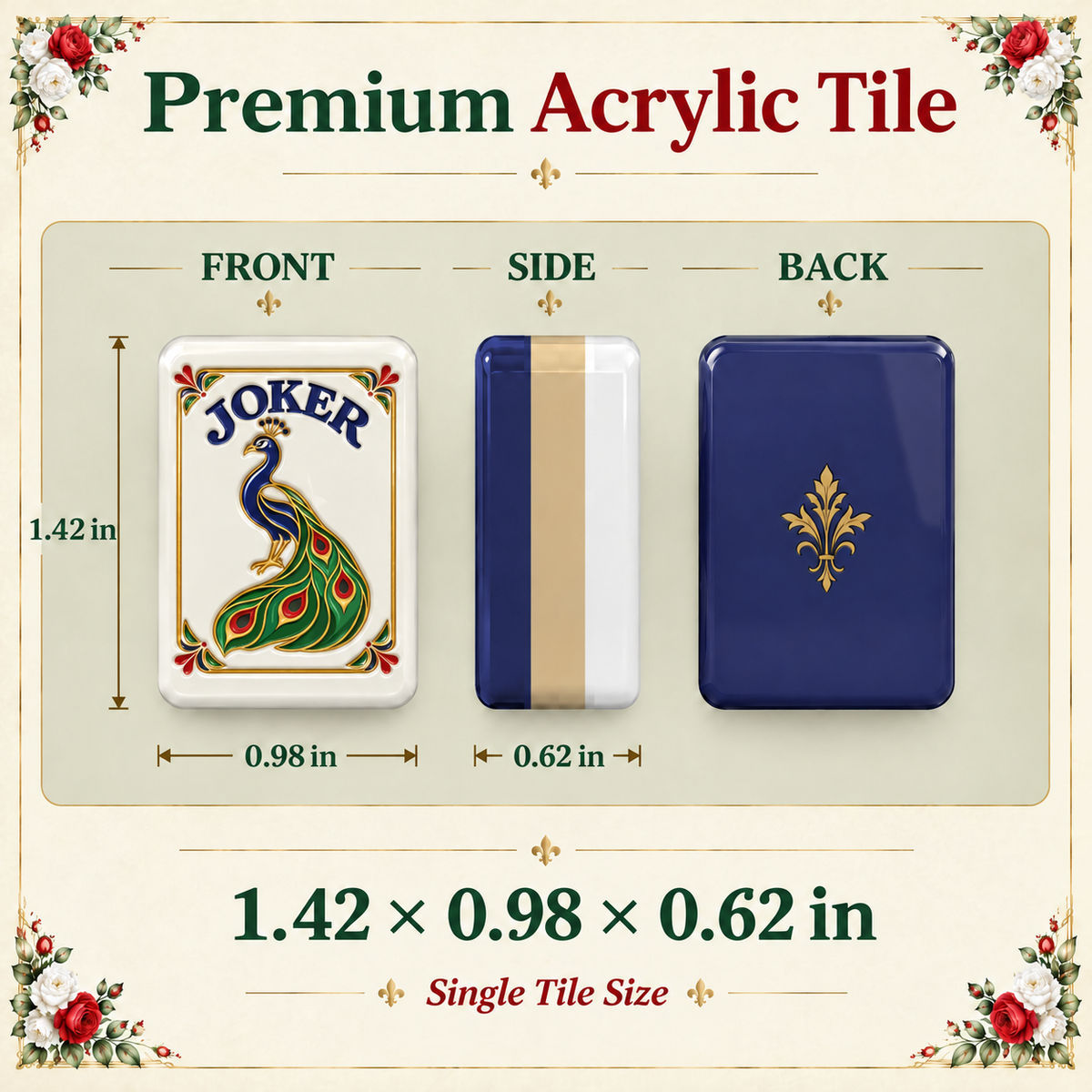
Urea mahjong tiles are decent entry-level pieces—lightweight, affordable, and reasonably durable for casual play. They're made from a thermoplastic polymer that resists chips better than paper-faced wood but doesn't match acrylic or bone for longevity or feel. After several years of weekly games, urea tiles can develop shine loss, slight warping, and creasing on jokers from handling. They're quieter than bone and slide smoothly on mats. For a set you'll play with once monthly, urea works fine; for a weekly table that values tactile feedback and lasting beauty, acrylic or bone outperform them. Mahstead specializes in engraved acrylic sets built for serious American mahjong players who want 10+ years of reliable play without degradation.
Urea tiles fill a real gap in the market: they cost less than bone, weigh less than acrylic, and feel nicer than laminated wood. We've hosted hundreds of games with all three materials in the room, and the question we hear most is whether urea tiles are worth the price difference over cheaper alternatives—or whether you should jump to acrylic. The honest answer depends on how hard your set will work.
What are urea tiles made from?
Urea mahjong tiles are molded from urea-formaldehyde resin, a thermoplastic that becomes flexible when heated and hardens into a rigid plastic. The material is non-porous, so it resists moisture and staining better than wood-based tiles. Colors and engravings are applied as part of the molding process or printed afterward. The result is a smooth, low-gloss finish that sits between paper-laminate tiles (fragile, dull fast) and acrylic tiles (glossy, indestructible). Urea handles humidity better than bone, which can swell or crack in dry climates, but urea doesn't have the same weight or prestige feel that bone players love.

How long do urea tiles actually last in regular play?
A set of urea tiles used weekly will show wear after 3–5 years: jokers develop creases from repeated shuffling and handling, tile faces lose their matte finish and become shiny in high-touch spots (corners, edges), and engravings can fade if they're printed rather than molded. Acrylic tiles, by contrast, resist creasing and shine loss through 10+ years of weekly play; the engraving stays crisp because it's laser-etched or painted into the resin. Bone tiles, if stored dry, last 20+ years but demand climate control. If your game meets twice a month or less, urea tiles will feel newer longer. If you play weekly and want a set that still looks sharp at your daughter's game night three years from now, acrylic outperforms urea on durability—and we've confirmed that through our own sets used in private games.
Urea vs. acrylic vs. bone: a side-by-side comparison
Aspect | Urea | Acrylic | Bone |
Weight | Light (easy to shuffle) | Medium (good control) | Heavy (premium feel) |
Durability | 3–5 years weekly | 10+ years weekly | 20+ years (if dry) |
Engraving longevity | Printed = fades; molded = holds | Laser or paint = sharp 10+ years | Hand-carved or inlaid = timeless |
Shine/patina | Develops shine in play | Stays consistent | Develops patina with age |
Humidity tolerance | Good (resists swelling) | Excellent (waterproof) | Poor (cracks/swells if damp) |
Joker crease risk | Moderate–high | Very low | Very low |
Cost per set | Entry-level | Mid–premium | Premium–luxury |
Feel at the table | Smooth, slightly plastic | Smooth, glassy, responsive | Warm, weighty, traditional |
The key insight: urea shines if you play casually and want something nicer than laminate without the cost of acrylic. Acrylic wins if you host weekly, want zero maintenance, and plan to keep your set for a decade. Bone wins only if climate control is reliable and tradition matters more than durability.
🀄 Shop best-selling mahjong sets →
Do urea tiles feel and sound right at the table?
Urea tiles produce a softer sound than bone when stacked or shuffled—no sharp clacking—which some players find pleasant and others miss. They slide smoothly on a mat, with barely more friction than acrylic. The tile-to-tile grip is good enough that tiles don't slip during a shuffle, but they're not as forgiving as bone if your racks are tilted. For jokers, urea's lighter weight and flexibility mean they're easier to remove from a rack one-handed, but that same flexibility is why they crease: repeated bending leaves permanent marks on the tile face, especially if a joker spends weeks wedged in a tight rack. Acrylic jokers, being stiffer, resist creasing almost entirely. If you shuffle tiles by hand (not in a rack), and your table keeps hands in good condition, urea jokers hold up better than you'd expect. If you leave a joker bent in a rack slot for weeks, urea will show the damage.

Common mistakes that shorten urea tile life
Storing tiles hot or dry. Urea doesn't warp in humidity the way bone does, but extreme dryness or heat can make it brittle. Keep your set in a cool closet, not on a windowsill or in an uninsulated garage. Leaving jokers bent. Never store a joker tile curved in a rack. Always straighten them and lay them flat. Shuffling by hand without a mat. Tile-to-tile grinding on a table surface dulls urea faster. Always shuffle on a padded mat or inside a rack. Using harsh cleaners. Urea's printed engravings (if not molded in) can fade under solvents. Wipe with a soft, damp cloth only. Mixing old and new sets. Urea tiles from different manufacturers or years often vary slightly in color and gloss. If you're tempted to top up a fading set with new tiles, the mismatch will be obvious.
Should you buy urea if you're a serious player?
If your game is weekly and you've hosted the same four players for three years, urea tiles aren't the best choice. You deserve a set that won't embarrass you or require replacement mid-decade. Our best-selling mahjong sets include acrylic options with real engravings (not printed decals) and jokers that stay flat year after year. If your group is casual—monthly games, beginners learning the ropes, or a fun holiday tradition—urea is solid. The real decision comes down to one question: will this set be used and stored the same way for five years? If yes, acrylic is the smarter buy. Urea works if you're trying it out, gifting to a skeptical friend, or rotating sets by season.
🎁 See our most-loved mahjong sets & accessories →
What to check before you buy any mahjong tiles
Before committing to urea—or any material—confirm these five things:
How often will it be played? Weekly → acrylic. Monthly → urea is fine. Yearly/occasional → urea, laminate, or bone all work.
Who stores it? One organized person → any material. Multiple households → avoid bone (humidity risk increases). Urea or acrylic are safer.
Is the engraving molded or printed? Molded (part of the tile) lasts 10+ years. Printed (glued or painted on) fades in 3–5 years on urea. Ask the seller.
Does the set include extra jokers? Jokers wear first. A 160-tile set from Mahstead includes spares so you can swap out creased ones without replacing the whole set.
What's your climate? Dry (under 30% humidity) or humid (over 60%)? Acrylic handles both. Bone hates damp. Urea tolerates both okay.
Where to find quality tiles of any material
Look for sets from makers who specialize in American mahjong and source tiles from established manufacturers. Avoid bulk imports or sets with obvious weight inconsistencies—they indicate poor quality control. Check that the mahjong tiles collection you're eyeing includes a full 152-tile standard (not a knockoff count) and that spares are included, not sold separately. Read reviews from players, not decorators. If the seller can tell you whether engravings are molded or printed, and what material the jokers are, that's a sign of expertise. Mahstead's mahjong sets are all acrylic with engraved (not printed) symbols, laser-etched details, and packed with spare jokers—built for players who plan to use them, not collectors who want a showpiece.
✨ Find your Mahstead set — free US shipping →

FAQ
Are urea tiles worth buying, or should I save up for acrylic?
Urea tiles are worth it only if you play casually (2–3 times monthly or less). For weekly play, acrylic offers better value over five years because it won't need replacing. Acrylic costs more upfront but saves money long-term through durability.
Can I mix urea tiles from two different brands if one set gets damaged?
Not visibly—urea from different makers varies in gloss, color tone, and thickness. Replacement jokers or a few spare tiles from the original seller work; a whole second set won't match. Buy spares or backup sets from the same maker.
How do I clean urea tiles to keep them looking new?
Wipe with a soft, dry cloth or barely damp microfiber cloth. Never soak or use solvents (they can fade printed engravings). Avoid heat and direct sunlight, which can discolor the plastic over time.
Do urea tiles have any health or safety concerns?
Urea-formaldehyde resin is safe when molded and cured properly. Quality-made tiles (not knockoffs) meet safety standards. Cheap imports sometimes have issues; stick with established makers who test their products.
What happens if a urea tile gets wet or sits in a humid room for weeks?
Urea is water-resistant and won't swell or crack like bone. However, excess humidity can cause the glue holding engravings (if printed) to weaken. Store urea in a cool, dry place—not a steamy bathroom or unventilated basement.
If I buy a urea set, how many years should I expect before jokers need replacing?
Jokers typically show creasing after 3–4 years of weekly play. If your set came with spare jokers (as Mahstead's 160-tile sets do), you can swap them out. Avoid bending jokers in racks, and they'll last longer.


View More
View More
View More
