
Japanese Mahjong for Beginners: Rules, Tiles & How to Start
Last updated: Nov 23, 2026
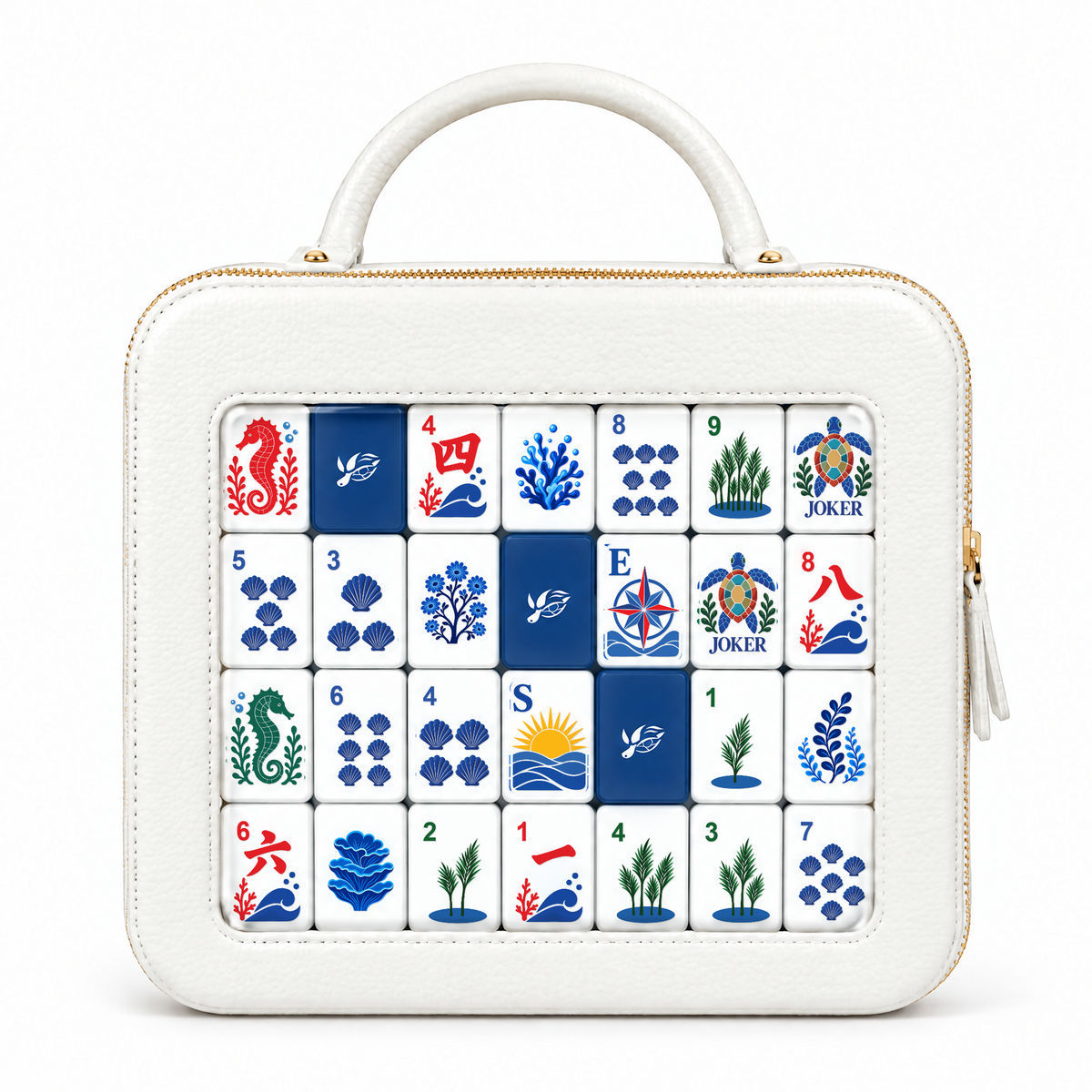
Japanese mahjong, or Riichi mahjong, uses 136 tiles across three suits (Bamboo, Characters, Dots) numbered 1–9, plus honor tiles (winds and dragons), played by four players aiming to form a winning hand faster than opponents. The game runs 16 rounds (two winds) per session, typically 90 minutes to three hours. Unlike American mahjong—which requires hands from a yearly card and forbids sequences—Japanese mahjong allows chows (sequences like 3–4–5), pungs (triplets), and kongs (quads) all in one hand, and winning happens when you declare Riichi (a locked, one-tile-away state) or draw a winning tile naturally. Hands follow fixed patterns; scoring is complex but standardized. You'll need a 136-tile set, a score sheet, and dice; many players adapt acrylic sets to play.
What tiles are in a Japanese mahjong set?
A Japanese mahjong set contains exactly 136 tiles: 108 number tiles (Bamboo 1–9, Characters 1–9, Dots 1–9, each suit four copies) plus 16 winds (East, South, West, North—four each) and 12 dragons (Red, Green, White—four each). There are no jokers and no flowers. Each suit's tiles are typically marked with distinct symbols; the 1 Bamboo often shows a bird. You draw from a wall of 34 stacks (two tiles per stack) called the dead wall, which reserves four tiles and two dice-result tiles for kan (kong) reveals. Japanese sets sold in the West often come as 144-tile or 148-tile sets with blanks or spares; if you're adapting an American set (which has 152 playable tiles plus jokers), you'll set aside the jokers and extra tiles before play.

How does the dealing and turn order work?
The game starts with honma (round assignment) using dice. The player in the Ton (East) position rolls two dice; the sum determines who receives the initial draw. That player draws 14 tiles; the three others draw 13 each. The East player then discards one tile face-up on the board. Play moves counterclockwise (South, West, North) with each player drawing one tile from the wall, checking for a win, then discarding. When anyone discards, the three waiting players can call the tile to form a pung, kong, or chow if it completes a legal pattern. Calling a tile interrupts the turn order. If no one calls, the next player in rotation draws. This cycle repeats until someone wins or the wall empties.
🀄 Shop best-selling mahjong sets →
What does Riichi mean and why does it matter?
Riichi is a declarative state where your hand is one tile away from a winning shape and you lock it by placing a bet tile (usually 1,000 points) perpendicular to your discard. You cannot change your hand after declaring Riichi; you must win or pay a penalty if the round ends without a win. Riichi signals aggression and confidence—other players know you're close to winning and will play defensively. You can declare open Riichi if you've already drawn three tiles from the wall (rare), but standard Riichi locks your hand immediately. Declaring Riichi early forces other players to assume you're dangerous and may speed up their own bids or cause them to fold. It's a bluffing and commitment mechanic absent from American mahjong.
What are the basic winning patterns and hands?
All Japanese mahjong hands follow the tanyao, chiitoitsu, or standard-pattern framework. The most common win is a tanyao (all simples: no honor tiles, no 1 or 9)—for example, four chows of 2–3–4, 4–5–6, 5–6–7, and 6–7–8, plus a pair of 5 Dots. A chiitoitsu (seven pairs) win uses only pairs and no chows or pungs; it scores lower but is faster to assemble. An all honors hand contains only winds and dragons plus a pair. A all terminals hand uses only 1 and 9 tiles. Honors and terminals score higher than simples. A yakuhai (dragon or seat wind) adds a pung of your seat wind or any dragon. Hands repeat across winners; learning five to ten patterns covers most games. Jokers are not used in Japanese mahjong, so no wildcards fill gaps—you must find exact matches.

How is scoring calculated in Japanese mahjong?
Scoring in Japanese mahjong is point-based and tied to hand complexity and who won. A mangan (basic hand) is worth 2,000 points; a haneman (half-limit) is 3,000; a baiman (full limit) is 4,000; a sanbaiman (three-fold limit) is 6,000; and a yakuman (hand limit) is 8,000 or more. Points scale by who paid: if East wins, non-East players each pay the full amount to East; if a non-East player wins, East pays 1.5× and non-East players pay 1×. If East pays, non-East winners receive 1.5× from East and 1× from each non-East loser. Ties and draws also have scoring consequences. A score sheet (pencil and paper, or digital app) tracks cumulative points per player across all 16 rounds; the player with the highest total at the end wins. Scoring tables are memorized or consulted from a printed guide; no set calculation exists, so beginners often use a smartphone app or scorekeeper.
Aspect | American Mahjong | Japanese (Riichi) Mahjong |
Tile count | 152 (+ 8 jokers) | 136 (no jokers) |
Suit tiles | 3 suits, 1–9 | 3 suits, 1–9 |
Honors | 16 winds, 12 dragons | 16 winds, 12 dragons |
Sequences allowed? | No (chows forbidden) | Yes (chows are core) |
Exposed sets | Pungs, kongs, quints, sextets | Pungs, kongs, chows, rare quints |
Hand source | National Mah Jongg League card (yearly) | Fixed patterns (memorized) |
Winning mechanic | Match hand to card pattern | Match pattern + win call (Riichi, tsumo, ron) |
Game length | 1–2 hours (8 rounds) | 2–3 hours (16 rounds) |
Joker use | Yes, core mechanic | No |
Scoring | Points + multipliers by hand type | Mangan, haneman, yakuman tables |
🎁 See our most-loved mahjong sets & accessories →
What should beginners avoid when learning Japanese mahjong?
Confusing hand types with American card patterns. American hands are fixed; Japanese patterns are principles. Don't expect a "card" to dictate your hand—you build from instinct and memory. Forgetting that Riichi locks your hand. If you declare Riichi, you cannot adjust strategy; you win or lose on the next 18 tiles or so. Declare only when certain. Misunderstanding call timing. You can call a tile only immediately after it's discarded. Once the next player draws, the window closes. Mixing up wind and dragon bonuses. A pung of your seat wind (East, South, West, North) scores; so does any dragon. Don't assume a dragon pung always wins. Playing too conservatively. New players often hoard tiles and never declare Riichi, letting aggressive players win repeatedly. Riichi signals intent and speeds up rounds—use it. Not tracking the dead wall. The dead wall tiles are removed from play; if someone draws a kan, a tile is revealed from the dead wall, so keep track of what's off-limits.
How do I find a Japanese mahjong group to play with?
Community centers, libraries, and cultural organizations (particularly Japanese cultural associations in larger cities) often host open-play or beginner sessions. Search online for "[your city] mahjong club" or check meetup boards; many groups welcome newcomers and provide beginner instruction. Universities with East Asian studies programs may run casual games. Online platforms and apps also offer live or asynchronous play, though in-person groups are friendlier for beginners. Once you've learned the basics here, ask about house rules—some groups play with variations—so you know what to expect. Many groups have spare sets; you won't need to buy your own to try a session.
What equipment do you need to start playing?
You need a 136-tile set (ideally marked clearly with suits and numbers), two six-sided dice, a score sheet or scorekeeper app, and four players. Most Japanese mahjong sets are compact and travel well. If you're adapting an American set, you'll use 136 of the 152 tiles and set aside jokers and spares. A mat or table cover protects the playing surface from tile noise and wear; many players use one even at home. Racks or push-sticks (optional but helpful for organizing your hand, especially on a mat) make discards clearer and gameplay smoother.
✨ Find your Mahstead set — free US shipping →
What to check before you buy:
Tile clarity. Ensure suit symbols and numbers are crisp and readable; worn or faded tiles slow the game.
Tile weight and feel. Plastic is lighter and quieter; bone/bamboo composite is heavier and more satisfying but pricier.
Set completeness. Confirm you have all 136 tiles (or 152 if adapting an American set). Count suits: 36 per suit (4 of each 1–9).
Case or bag. A good case protects tiles during storage and transport; check that your set includes one or budget for travel bags and cases.
Dice and score sheet. Some sets include these; if not, source them separately.

FAQ
Can I use an American mahjong set to play Japanese mahjong?
Yes. An American set has 152 tiles; Japanese mahjong uses 136. Set aside the 8 jokers and 8 blanks/spares, then use the remaining 136 tiles (3 suits, 16 winds, 12 dragons). Jokers have no function in Japanese mahjong. Ensure tile symbols are clear so you don't misread suits.
What's the difference between Riichi and other Japanese mahjong styles?
Riichi is the international standard with standardized rules and scoring tables. Local variations (Kanto, Kansai) differ in honor-tile scoring or penalty rules. For beginners, learn Riichi first; it's what most clubs and apps teach.
How long does a typical game take?
A full 16-round session (two winds) takes 90 minutes to three hours depending on player speed and skill. Experienced players finish faster. A single round takes 5–15 minutes on average.
Do I need to memorize all the winning hand patterns?
No. Beginners learn 5–10 common patterns (all simples, seven pairs, honors, terminals, yakuhai) covering 80% of hands. Rare patterns can be looked up; your group will likely provide a reference sheet.
Is Japanese mahjong harder than American mahjong?
Different, not harder. Japanese mahjong has fewer tile types (136 vs. 152) and no jokers, so luck plays less of a role. American mahjong requires matching a yearly card; Japanese mahjong requires memorizing patterns. Both are strategic.
Can I play Japanese mahjong online?
Yes. Apps like Mahjong Soul and Riichi City offer live or AI opponents with tutorials. Online play is great for learning rules, but in-person clubs offer social depth and faster learning from experienced players.


View More
View More
View More
