
2 Dot Mahjong Tile: Symbol, Role & Why It Matters
Last updated: Nov 23, 2026
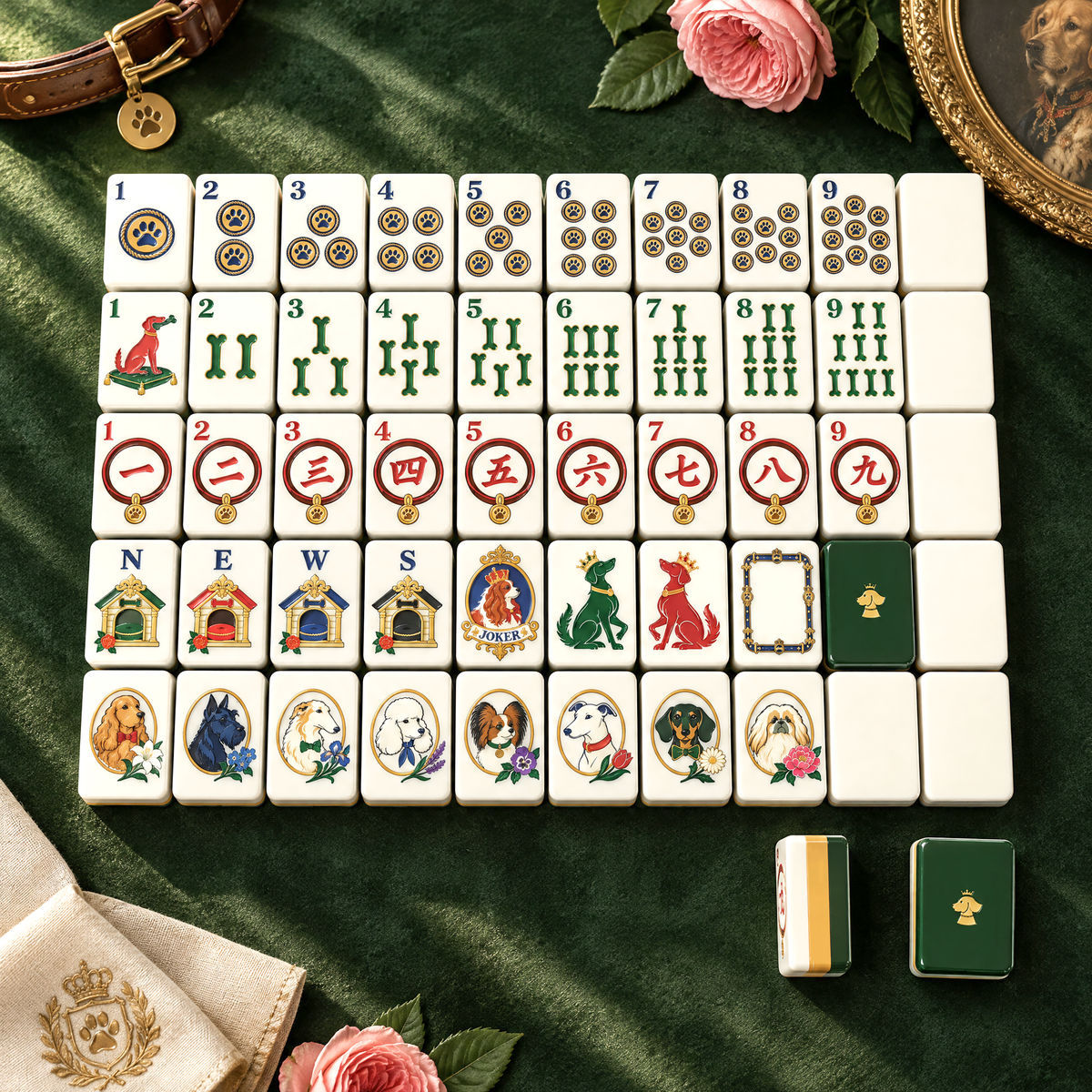
The 2 Dot tile belongs to the Dots suit—one of three numbered suits in American mahjong. It displays two red circles (pips) on its face and exists in four identical copies per standard 160-tile set. The Dots suit numbers 1–9; the 2 ranks second, appearing alongside 1 Dots through 9 Dots to form pungs (three identical tiles), kongs (four identical tiles), and other melds on the current year's National Mah Jongg League card. You'll find 2 Dots in your rack during the draw and discard phases; it cannot form sequences (only identical pungs or kongs are exposable in American mahjong). Like all numbered tiles, the 2 Dot contributes to your tile count and helps you build hands that match patterns on the card. A complete what's in an American mahjong set explains how the 2 Dot fits into the 152-tile structure and why you need exactly four copies. 🀄 Shop best-selling mahjong sets →
What does the 2 Dot symbol look like?
The 2 Dot tile displays two red circles (called pips) arranged vertically or diagonally on a cream or white background. The symbol is simple: two filled dots, no characters, just the visual count. This matches the design of all number tiles in the Dots suit—the higher the number, the more pips appear. The 2 Dot is printed or engraved on both sides of the tile (since tiles can flip during play), and the back is blank or has a standard backing. In acrylic sets, the pips are often translucent red; in bone or bamboo sets, they are inlaid or painted red.

How is the 2 Dot different from 2 Bam and 2 Crak?
The three suits—Dots, Bams, and Craks—each have a 2 tile, but they look and play distinctly. The 2 Dot shows two red circles; the 2 Bam shows two stick-like marks (bamboo symbol); the 2 Crak shows two Chinese characters (cracked-rice pattern). You cannot mix them in a meld—a pung must have three identical 2 Dots, never a 2 Dot plus 2 Bam plus 2 Crak. Each suit is treated separately in your hand and on the National Mah Jongg League card. This separation is core to American mahjong strategy: you learn the card's patterns by suit, and you organize your rack by suit to spot melds faster. Beginners often struggle to distinguish the three 2 tiles at a glance, especially under poor lighting or with worn tiles.
Why does the 2 Dot appear four times in a set?
American mahjong uses exactly 152 tiles for play: 36 Dots (numbers 1–9, four copies each), 36 Bams (same), 36 Craks (same), 16 winds (four each: N, E, W, S), 12 dragons (four each: Red, Green, White), 8 flowers, and 8 jokers. Four copies of each numbered tile ensure every player at the table can draw the same tile in the same hand. If a hand on the current year's card calls for two 2 Dots in one meld and another 2 Dot elsewhere, a fourth copy exists so no conflict arises. This redundancy protects fairness: you're never locked out of a hand because someone else drew the only copy. Best-selling mahjong sets come complete with all four copies of every tile, plus spare jokers and blanks (the full set totals 160 tiles).
How do you use 2 Dots to build a hand?
You use 2 Dots by matching it with other tiles on the current year's National Mah Jongg League card. A pung is three identical 2 Dots; a kong is four. You may also draw a 2 Dot and hold it in your rack waiting for other tiles to complete a larger meld or hand. Jokers can substitute for 2 Dots in a pung or kong (e.g., two 2 Dots + one joker = a playable pung). You cannot form a sequence like 1 Dot–2 Dot–3 Dot and call it (American mahjong has no chows); sequences exist only as hidden melds in certain hand patterns on the card. When you discard the 2 Dot face-up, other players may call it to complete a pung or kong if their hand matches the card. The card changes every spring, so the 2 Dot's role shifts slightly—sometimes it's more common in hands, sometimes less.
Common mistakes players make with 2 Dots
Mistake 1: Confusing the 2 Dot with other suits. Under dim table lighting or with worn tiles, a 2 Dot's pips can blur into a 2 Bam's bamboo marks. Always glance at the full tile—Dots are circles, Bams are sticks, Craks have characters. Organize your rack by suit columns to catch errors before you discard or call.
Mistake 2: Trying to form a sequence with 2 Dots. New players often think 1 Dot–2 Dot–3 Dot is a valid meld (like dominoes). It is not in American mahjong. You can hold a sequence hidden, but you cannot expose it or call it. Only pungs and kongs can be exposed. Read the current year's card carefully to learn which hand patterns use sequences.
Mistake 3: Forgetting the 2 Dot is one of four copies. If you draw all four 2 Dots into your hand early, your odds of seeing another 2 Dot drop to zero. Track how many 2 Dots are out; if three are visible, the fourth is with someone at the table or in the remaining tiles.
Mistake 4: Discarding carelessly when 2 Dots are common. In some seasons, the card may feature many hands with 2 Dots. If you discard a 2 Dot early, you risk someone calling it immediately. Study the card's "hot" tiles (those appearing in many patterns) before play starts.
Use a mahjong mat with clear suit markers and dedicated discard zones to organize your thinking. Many mats have pockets or embroidered sections for each suit, which helps you sort tiles faster and spot the 2 Dot without confusion.
🎁 See our most-loved mahjong sets & accessories →

Why the 2 Dot matters to your game strategy
The 2 Dot is not "special," but it is constant. Because four identical copies exist, it will appear in nearly every hand you play. Learning its symbol instantly—red circles, Dots suit, number 2—is part of mastering tile recognition. Fast recognition leads to faster rack organization, which leads to faster hand spotting on the card. In competitive or social play, players who know their tiles deeply win more often and enjoy the game longer. The 2 Dot is your foundation for suit fluency.
When should you keep vs. discard the 2 Dot?
Keep the 2 Dot if:
Your hand on the card needs one or more 2 Dots.
You already have one or two 2 Dots and the card pattern suggests a pung or kong is close.
No one has discarded a 2 Dot yet, meaning it's safer to hold.
Discard the 2 Dot if:
Your hand has no room for it (all four melds are complete without it).
Three other 2 Dots are already visible or discarded (the fourth is locked).
Another player has discarded a 2 Dot face-up and not called—a signal that 2 Dots are less useful this round.
Study the card's frequency before play. Count how many of that season's hands include 2 Dots. If it's high (say, 15+ patterns), hold your 2 Dots longer. If it's low, discard faster.
Comparison: 2 Dot vs. Joker as a substitute
Feature | 2 Dot Tile | Joker Tile |
Real tile? | Yes (4 per set) | Yes (8 per set) |
Can form a pair? | Yes | No (never) |
Can form a pung? | Yes (all three identical) | No (only in pungs with real tiles) |
Can be discarded? | Yes, face-up | No (never discarded) |
Called by opponents? | Yes | No |
Substitutes for any tile? | No | Yes (any tile in a pung/kong/quint/sextet) |
Jokers are wildcards; the 2 Dot is literal. You'll use both, but strategically: save jokers for hard-to-find tiles, hold 2 Dots when the card favors them.
✨ Find your Mahstead set — free US shipping →
What to check before you buy a mahjong set
Tile clarity: Can you see the 2 Dot pips clearly under normal table lighting? Inspect a sample or read reviews on tile contrast.
Suit separation: Do Dots, Bams, and Craks look visibly different? Test the set at a friend's house if possible before committing.
Tile count: Confirm the set includes 152 playing tiles (all four 2 Dots plus complete Dot suit 1–9, and other suits). A 160-tile set adds spare jokers; do not confuse spares with playable tiles.
Material: Acrylic, bone, or bamboo? Each has different grip and sound. Acrylic sets tend to be clearer for symbol recognition.
Wear resistance: Over time, engraved or printed symbols fade. Choose a finish suited to your play frequency.

FAQ
Is the 2 Dot the same in Chinese, Hong Kong, and Riichi mahjong?
No. Chinese mahjong uses different suits and symbols entirely. Hong Kong mahjong uses the same Dots suit but plays by different rules (chows are allowed; no separate flowers or winds in some variants). Riichi (Japanese) has different symbols and hand patterns. American mahjong's 2 Dot is specific to the National Mah Jongg League card. Always confirm the ruleset before play.
Can I form a meld with 2 Dots and jokers?
Yes. A pung can be two 2 Dots + one joker (the joker stands in for the third 2 Dot). A kong can be three 2 Dots + one joker, or two 2 Dots + two jokers. The real tiles determine the meld; jokers fill gaps. Never use a joker as one half of a pair (pairs must be identical real tiles).
What happens if all four 2 Dots are drawn before I finish my hand?
You cannot draw a 2 Dot that is already in someone's hand or yours. If three 2 Dots are visible and you need the fourth, it is either with another player or in the undrawn tile wall. You must find another hand on the card that does not require 2 Dots, or use a joker to substitute.
Why do some mahjong sets have different-looking 2 Dot tiles?
Older or artisanal sets may have hand-painted or slightly irregular pips. Newer acrylic sets (like Mahstead's engraved sets) use uniform machine engraving or printing for consistency. If tiles look mismatched, inspect them closely—flaws can confuse play.
How do I teach a beginner to spot the 2 Dot quickly?
Show them side-by-side comparisons: 2 Dot (two red circles) vs. 1 Dot (one circle) vs. 3 Dot (three circles). Have them sort a shuffled Dot suit by number. Practice for 5–10 minutes before each game. Use a mahjong rack with pushers to organize tiles vertically; it makes symbol recognition easier than a flat spread.


View More
View More
View More
