
What Set Do You Need for Sichuan Mahjong
Last updated: Nov 23, 2026
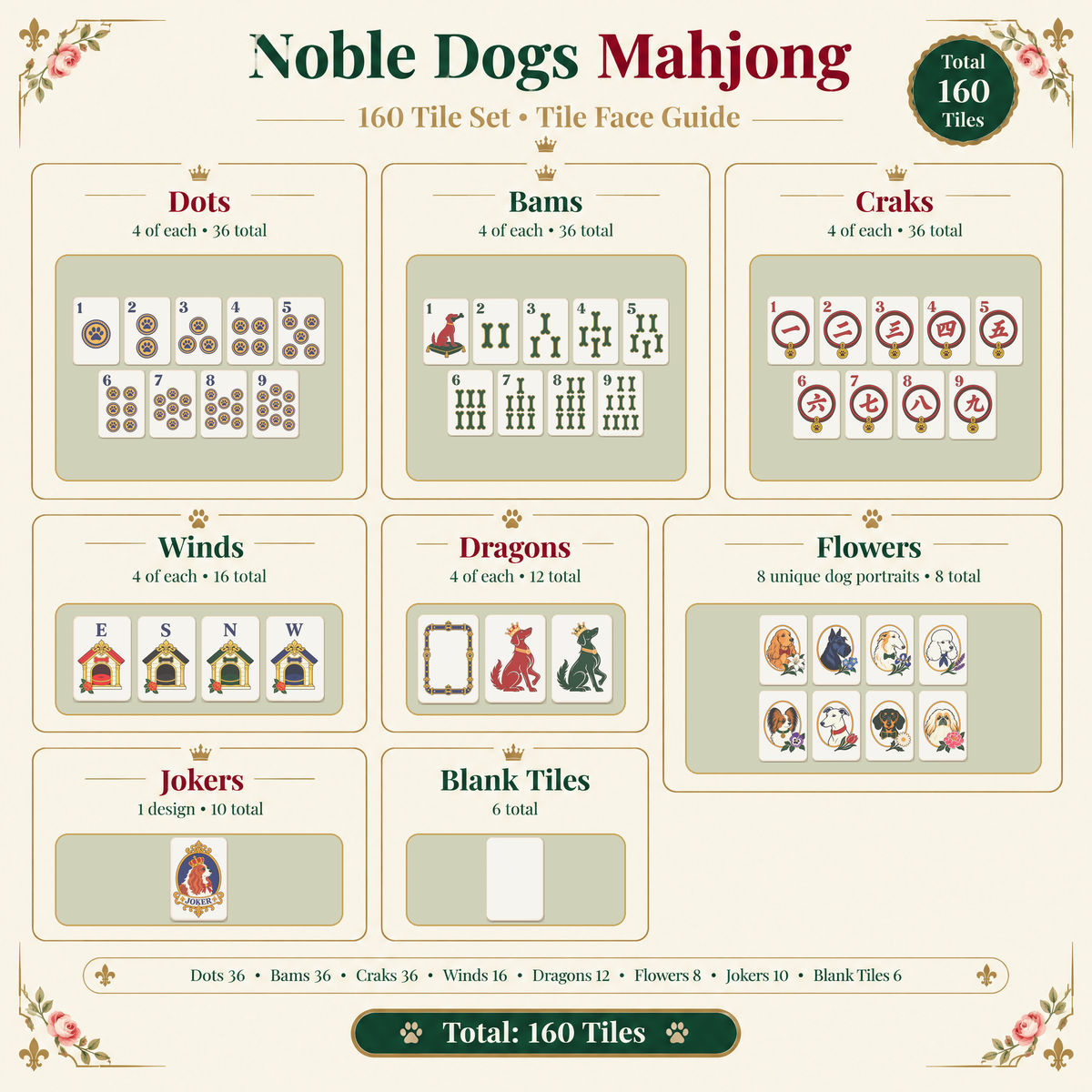
Sichuan mahjong uses a standard 108-tile Chinese set (three suits, 1–9 in each, four copies per tile; no flowers, winds or dragons in basic play) or sometimes a 144-tile set with bonus tiles. It is not compatible with American mahjong sets, which contain 152 playing tiles with winds, dragons and flowers. Sichuan play emphasizes speed, concealed hands and rapid melds; most games use no jokers. You will need tiles printed with simplified Chinese numerals and suit symbols (a 108-tile Chinese set costs far less than an American set). If you live in a Sichuan expat community or a major US city with Chinese game shops, you can source a proper Chinese set locally; otherwise, international online retailers stock them. Our store specializes in American mahjong sets and mats, so for Sichuan play you'll want to source from a Chinese games vendor instead. 🀄 Shop best-selling mahjong sets →
How is Sichuan mahjong different from American play?
The core rules diverge sharply. American mahjong locks you to hands from the current year's National Mah Jongg League card; Sichuan play has no card—you build hands freely by traditional Chinese patterns (straight sequences and identical groups). American tiles include winds, dragons and flowers; Sichuan uses only the three suits (Bams, Craks, Dots). American hands must be exposed (pungs, kongs, melds called and laid face-up); Sichuan games often keep hands concealed until a win. The tile count differs too: Chinese Sichuan uses 108 tiles (or 144 with bonuses), while American requires exactly 152 tiles plus 8 jokers per game.

Why can't you use an American mahjong set for Sichuan play?
An American set contains tiles that don't exist in Sichuan mahjong—four winds, three dragons and eight flowers—making up about 28 tiles that would sit unused. More critically, American tiles are marked with Arabic numerals and Latin suit abbreviations (1–9 Bam, Crak, Dot); Sichuan tiles use simplified Chinese numerals and traditional suit symbols. A player expecting Chinese characters and finding English letters will struggle to read the hand. Also, American sets come pre-packaged at 160 tiles; a Sichuan player needs only 108 or 144, and buying an oversized set wastes money and storage space. For serious Sichuan play, sourcing from a Chinese games retailer ensures correct markings and tile counts.
Where should you buy a Sichuan mahjong set in the US?
Check community options first. Major cities with large Chinese populations—New York, San Francisco, Los Angeles, Houston, Chicago—often have physical game shops in Chinatowns or Asian business districts that stock Sichuan sets. Call ahead; ask staff for a 108-tile or 144-tile bamboo or plastic set labeled for Sichuan/四川麻将. Online, specialty Chinese game retailers and international marketplaces carry them; search "Sichuan mahjong tile set 108" or ask in local Sichuan expat Facebook groups or WeChat for vendor recommendations. Shipping from China adds time and potential customs delays, so domestic Chinese game shops (if you can find them) are faster. Our store focuses on American mahjong—if you're interested in learning American mahjong instead, we carry best-selling sets designed for US play.
🎁 See our most-loved mahjong sets & accessories →

What's inside a typical Sichuan mahjong set?
A 108-tile Sichuan set contains 36 Bam tiles (marked 1–9, four of each), 36 Crak tiles (same numbering) and 36 Dot tiles (same), with no bonus or honors tiles. Many sets come in a cardboard or wooden box; tiles are usually plastic or bamboo with a melamine face. You won't find racks with pushers as standard; Sichuan players often arrange tiles by hand in a line. Some sets include two dice (for determining position or the start wall in traditional play). Unlike American mahjong, no jokers are needed—Sichuan play uses only the base 108 tiles. Premium sets add a tile-drawing wall or bamboo rack, but these are optional. If you move between Sichuan and American play, buying one set of each is simpler than trying to adapt: the two games are too different to share equipment.
Sichuan vs. other Chinese variants: which set do you actually need?
Variant | Tile Count | Unique Tiles | Jokers? | Set Source |
Sichuan | 108 | None (Bam, Crak, Dot only) | No | Chinese retailers |
Hong Kong | 144 | Winds, dragons, flowers | 0–2 | Chinese retailers |
Taiwanese | 144 | Winds, dragons, flowers | 0–8 | Chinese retailers |
Riichi (Japan) | 136 | Winds, dragons, flowers | 0 | Japanese import shops |
American | 152 | Winds, dragons, flowers + jokers | 8 | Mahstead, US retailers |
Bottom line: Sichuan is the most minimal Chinese variant; it has no honors tiles at all. If your game group plays Sichuan exclusively, buy a 108-tile set from a Chinese vendor. If you want to learn multiple Chinese variants (or American mahjong), a 144-tile Chinese set covers Hong Kong and Taiwanese play; a separate American set covers US play. Don't mix them—each has its own tile symbols and counts.
✨ Find your Mahstead set — free US shipping →
What to check before you buy a Sichuan set
Tile count: Confirm 108 or 144 tiles, not 136 or 152. Ask the seller explicitly.
Character markings: Verify tiles show simplified Chinese numerals (一 二 三…) and suit symbols, not English letters or Arabic numerals.
Material: Plastic or bamboo is standard; avoid brittle resin. Ask if tiles are scratch-resistant.
Completeness: Check that all four copies of each number-suit combination are present. Open the box before committing.
Storage: Confirm the set includes a sturdy box or bag (not a flimsy carton that splits after one month of play).
Shipping time: If ordering online from China, expect 3–6 weeks; domestic US retailers are faster.
Return policy: Ask if the seller accepts returns for missing or broken tiles; some do not.
If you're an American player curious about Sichuan mahjong but want to stick with your home game, our best-selling American mahjong sets are optimized for US play and ship free across the country. If you're teaching Sichuan mahjong to a group, consider a mahjong mat to define the play area—even Sichuan players benefit from a clean surface and drawn dealer position markers.

FAQ
Can I play Sichuan mahjong with an American set if I ignore the extra tiles?
No. American tiles use English letters and Arabic numerals; Sichuan players need Chinese characters to read fast-paced play. Learning to ignore 28 extra tiles adds confusion, not convenience. Buy a Sichuan-specific set; it costs less and plays faster.
How many people play Sichuan mahjong in the US?
No exact count exists, but significant Sichuan expat communities exist in major cities, especially among recent arrivals from Chengdu and surrounding provinces. Local community centers and Chinese cultural organizations often host games.
Is Sichuan mahjong harder to learn than American mahjong?
They require different strategies. Sichuan is faster and allows more hand freedom (no card), so beginners find it simpler rule-wise; American mahjong requires learning the annual card but offers more structured, slower play. Start with whichever matches your game group.
Do I need special racks or pushers for Sichuan mahjong?
No. Sichuan tiles are traditionally held and arranged by hand. Racks are optional; if your group uses them, any standard tile rack works. American mahjong players often prefer racks with pushers to manage 152 tiles smoothly.
Where can I find other Sichuan players in my city?
Search local WeChat Moments or Douyin groups, visit Chinese senior centers and community centers (many host weekly games), ask at dim sum restaurants, or post on Nextdoor or Meetup. Many groups are word-of-mouth; persistence pays off.
If I want to learn American mahjong instead, what do I need to start?
A 160-tile set, the current year's National Mah Jongg League card, and three other players. Our best-selling collections include sets designed for American play, and we ship free across the US.


View More
View More
View More
