
Vintage Mahjong Set vs. New: What's Worth Your Money
Last updated: Nov 23, 2026
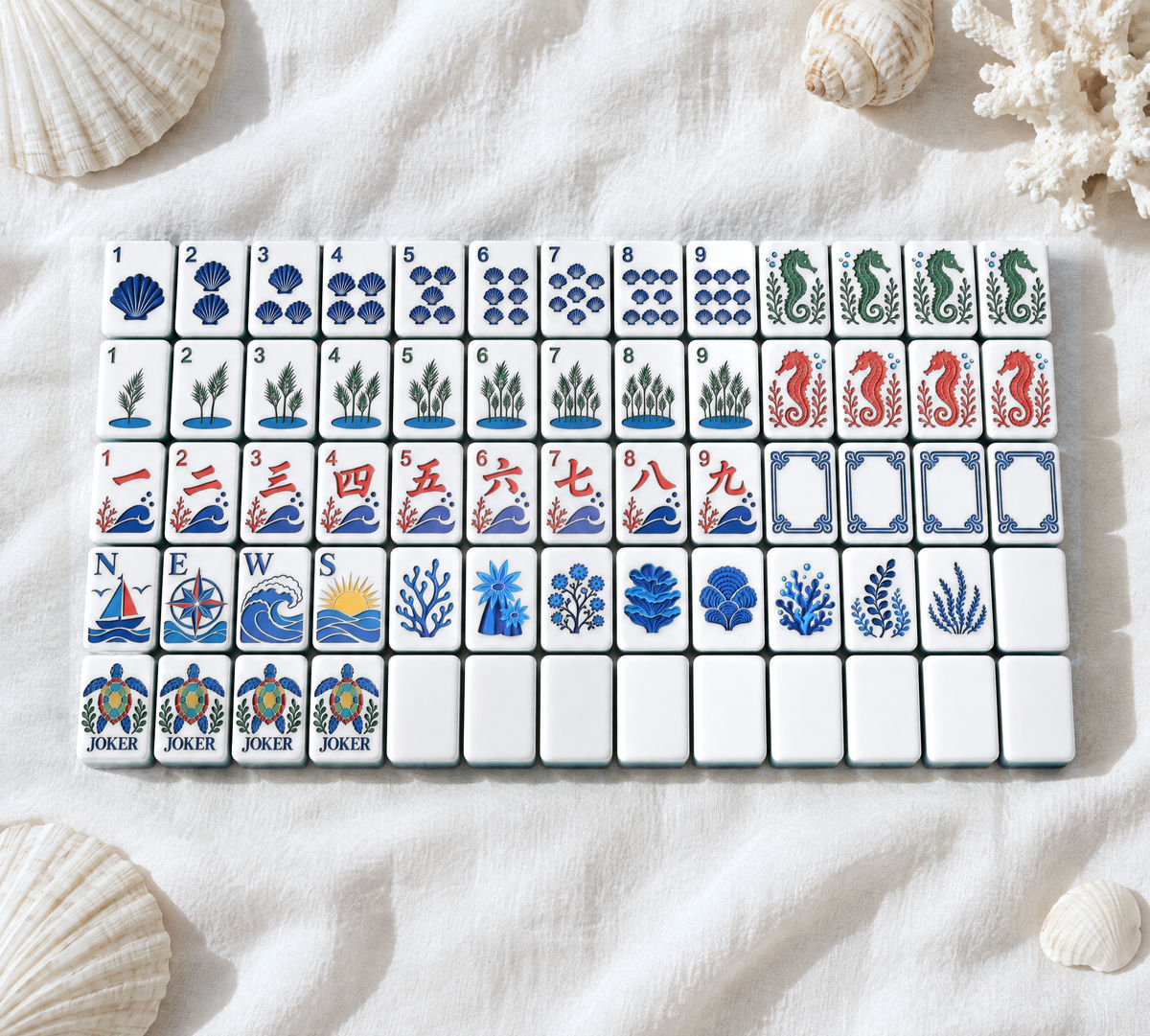
A vintage mahjong set—typically bone, bamboo, or heavy clay tiles from the mid-1900s—offers authenticity and aesthetic appeal but often carries hidden costs: missing tiles, worn faces, warped racks, and incompatibility with modern American mahjong rules. New sets, usually acrylic or resin, are designed to NMJL standards, include all 152 tiles plus spares, ship complete, and last decades with minimal wear. Vintage suits collectors and occasional casual play; new suits weekly game hosts, tournament players, and anyone who wants tiles that scan clearly under the card, jokers that never crack, and no surprises mid-game. We find most serious players start with new, then add vintage as a second set for display or nostalgia play. Mahstead's engraved American mahjong sets are made to spec—all 152 tiles verified, acrylic-cast, pushers included—and ship free across the US.
Why do vintage sets feel different to play?
Vintage tiles are heavier—bone or bamboo weighs 40–60% more than acrylic—and the click sound is louder, sharper, more resonant. Bamboo absorbs humidity and can warp; bone yellows and develops micro-cracks over decades. Racks are often shorter, narrower, misaligned. The psychological reward is real: holding a set your grandmother played with, or one from 1960s Hong Kong, connects you to mahjong's history. But weight and nostalgia don't guarantee a complete, playable set; we've opened vintage boxes with 148 tiles, missing pushers, or dragons that don't match American tile designations. If you love the feel of vintage but need reliability, a new set is the practical choice—you'll play weekly without anxiety.

What playability problems do vintage sets have?
Most vintage sets predate American mahjong standardization (1937 onward, formalized by NMJL in 1961) or come from Chinese, Hong Kong, or Japanese variants with different suit order, dragon symbols, or flower designations. A vintage "white dragon" might show a character instead of a blank space; jokers, if present, are often hand-painted or unmarked. Tiles wear unevenly—some show numbers clearly, others are faded or scratched, making it hard to read under dim table light or to verify your hand against the current year's card. Pushers, if original, may not grip tiles securely; replacement sets are hard to source. We've seen players struggle mid-game because a borrowed vintage set had no jokers, or only four instead of eight—game-stopping errors. New sets built to American spec avoid these traps: all tiles are uniform, current-year legal, jokers are molded and matched, and replacement parts (pushers, racks) are always available.
🀄 Shop best-selling mahjong sets →
When is a vintage set worth buying?
Vintage sets make sense if you're a collector, a museum interpreter, or you play occasionally with a tight group that accepts non-standard tiles. If the set is complete (all 152 tiles), tiles are legible, racks are sound, and the price reflects its age and condition, a vintage set is a reasonable second or tertiary set. Buying vintage as your first set is a gamble: you might inherit a gem or unpack a 10-tile shortfall that ruins your opening game. Authenticity has resale value—a 1940s bone-and-bamboo set in good condition might hold or gain value over years—but liquidity is low; you'd need to sell to enthusiasts or antique dealers, not casual players. We recommend new for weekly games, tournaments, or teaching; vintage for occasional play, display, or sentimental reasons. Check before buying: ask the seller for a tile count (should be stated as 144, 152, 160, or 166), a photo of pushers and racks, and whether the tiles are from an American, Chinese, or mixed standard.

How does cost compare: vintage vs. new?
Aspect | Vintage Set | New Acrylic Set |
Typical condition | Unknown; may be missing tiles, worn, warped | Complete, verified 152 tiles + spares |
Sound & feel | Heavier, louder click; authentic aesthetic | Lighter, consistent tone; modern design |
Tile readability | Often faded, inconsistent lighting, variant symbols | Crisp, engraved, NMJL-standard designations |
Racks & pushers | Frequently damaged or loose; hard to replace | Matched, aligned, replacement available |
Durability | 50+ years old; wood/bone absorb humidity, crack | Acrylic lasts 20+ years with daily play, minimal wear |
Legal for NMJL play | Rarely, due to tile variant or missing count | Yes, built to spec, playable on current card |
First set for weekly game | ❌ Risk of incomplete or unplayable | ✅ Reliable, hassle-free, immediate play |
Display or nostalgia | ✅ High aesthetic, sentimental value | — |
Our experience: new sets cost less up front, save hours of troubleshooting, and let you play the same night you open the box. Vintage costs more if you have to source replacement tiles or racks, and that hunt can take weeks. If you value predictability and weekly games, new wins. If you prize history and occasional play, vintage is defensible if inspected and priced fairly.
🎁 See our most-loved mahjong sets & accessories →
What should you check before buying either type?
For vintage:
Ask for exact tile count (list any missing tiles).
Request photos of pushers, racks, and tile faces (faded? scratched?).
Confirm the set's origin (American, Chinese, Hong Kong, Japanese) and whether tiles match your local game variant.
Check if all eight jokers are present and clearly marked.
Inspect for warping (hold a rack level to light; check for bows or gaps).
Ask about storage conditions (humidity, light, pests).
For new:
Verify all 152 tiles are included plus spare jokers.
Confirm tiles are acrylic or resin (not plastic or composite).
Check that pushers and racks are included and aligned.
Look for engraved or screened tile faces (not hand-painted, which wears).
Confirm free shipping if ordering online.
Review the maker's return or replacement policy for missing or defective tiles.
We pack every Mahstead set with a packing slip listing all tiles, pushers, and jokers—so you'll know immediately if anything's short. Vintage sellers rarely offer that transparency; if they won't detail the contents before sale, walk away.
✨ Find your Mahstead set — free US shipping →
The honest verdict: vintage or new?
Start new if you play weekly, teach newcomers, or enter tournaments. A new acrylic set is ready on day one—no surprises, no missing tiles, no worn faces holding you up mid-hand. Invest in vintage if you've played for years, love the history, and have vetted the set's completeness and legibility. The best players we know own both: a new set that lives on the table, and a vintage set that sits in a cabinet and gets handled with reverence on a monthly "nostalgia night." Neither is objectively better—it depends on your commitment level, budget, and tolerance for risk. If you're torn, begin with new, play a season, and then hunt for vintage to round out your collection.

FAQ
Can I use a vintage set for NMJL tournament play?
Only if the tiles match the current year's card, the set includes exactly 152 tiles, all jokers are clearly marked, and the tile faces are legible. Most vintage sets are not NMJL-legal due to variant symbols, missing tiles, or faded designations. Check with the tournament director before bringing a vintage set.
How do I know if a vintage set is complete?
Ask the seller for an exact tile count. American mahjong requires 152 tiles: three suits (Bams, Craks, Dots) with one through nine in four copies each, 16 winds, 12 dragons, eight flowers, and eight jokers. If the seller can't list the contents, assume it's incomplete.
Are vintage sets a good investment?
Only if you buy a complete, well-preserved set at a fair price and enjoy owning it. Vintage bone-and-bamboo sets retain value over time, but resale is slow and requires finding an enthusiast buyer. Buy vintage for the game and the story, not as a financial bet.
What's the most common problem with vintage tiles?
Missing or mismatched tiles. A 1960s set might have 148 tiles, or the dragons might not correspond to American Bams, Craks, and Dots. We recommend a complete tile count from the seller before purchase.
Why do new acrylic sets last so long?
Acrylic is non-porous, doesn't absorb humidity, resists UV fading, and won't crack under normal indoor play. Bone and bamboo are organic and degrade over decades, especially if stored in fluctuating temperature or humidity. New sets stay playable for 20+ years of weekly games.
Can I mix tiles from a vintage set with a new set?
Not if you're playing NMJL-legal American mahjong. Tiles must all come from the same design standard so they're uniform under the card and in appearance. Mixing creates confusion and breaks the game rules.


View More
View More
View More
