
Vietnamese Mahjong with 2 Players: Rules & Setup
Last updated: Nov 23, 2026
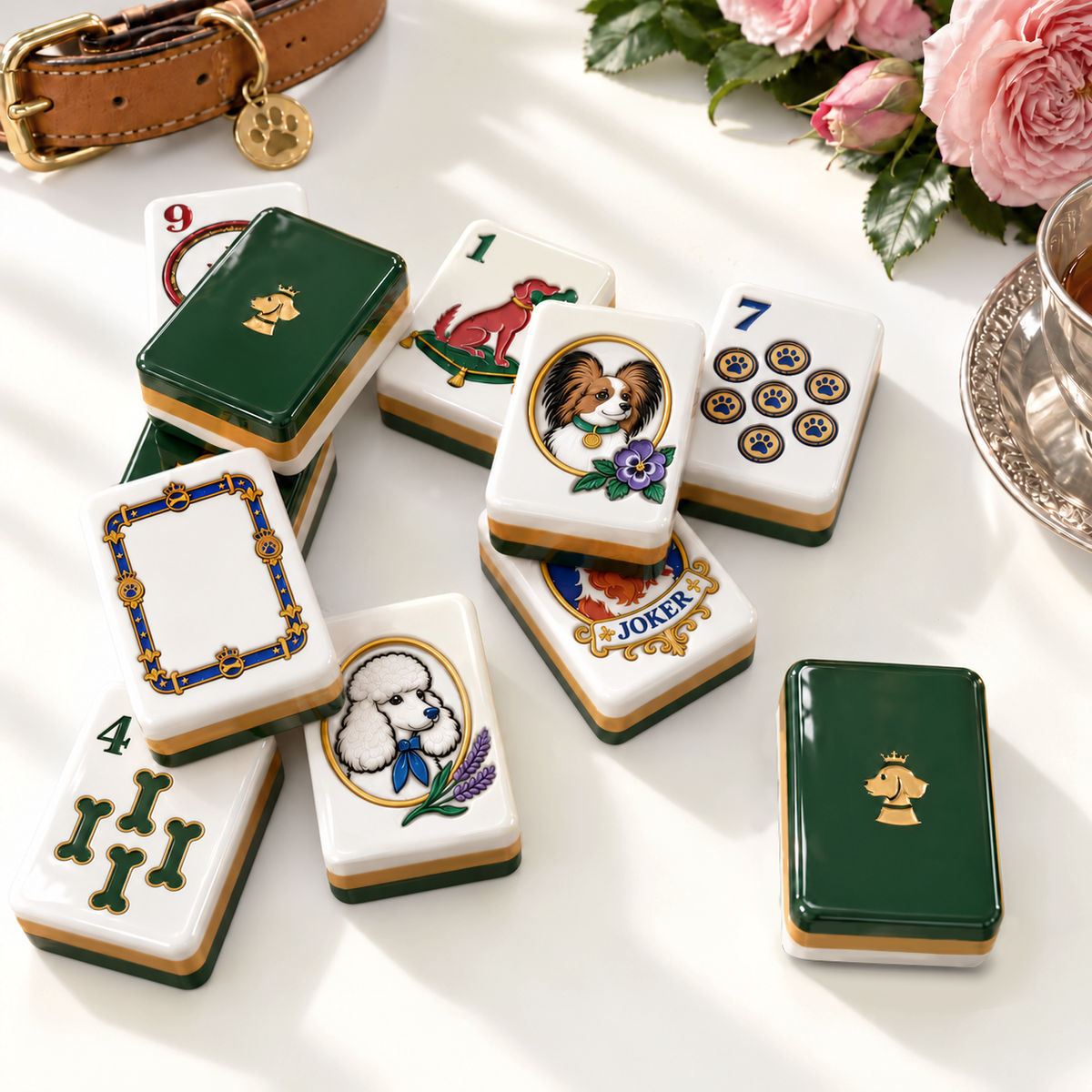
Vietnamese mahjong (also called Xì Dách in some regions) is a two-player variant played with a 108-tile Hong Kong-style set: three suits (Bams, Craks, Dots, numbered 1–9, four copies each) plus 16 winds, 12 dragons, and 8 flower tiles. The game uses only the standard 108 tiles—no jokers or blanks—and relies on Hong Kong hand patterns (chows, pungs, kongs). Players draw and discard one tile per turn, aiming to complete a winning hand of 14 tiles: four groups of three (melds) plus a pair, or variant patterns depending on house rules. A typical hand lasts 15–30 minutes. Two-player Vietnamese mahjong emphasizes defense, memory of discarded tiles, and reading opponent intent; many players use best-selling mahjong sets with clear markings to avoid tile-reading errors under pressure.
What tiles are in a Vietnamese two-player set?
Vietnamese mahjong uses exactly 108 tiles: three number suits (Bams, Craks, Dots), each 1–9 with four copies per number; 16 winds (four each: North, East, West, South); 12 dragons (four each: Red, Green, White); and eight flower tiles (two each of four flowers). No jokers, no blanks. Each player begins with 13 tiles and draws one to reach 14 at win. Because there are only 108 tiles shared between two players (versus 144 in a four-player game), discards cycle faster, making memory and speed crucial. Most Vietnamese players use Hong Kong-style tile sets with embossed or printed characters so tiles remain legible after repeated shuffles.

How does the tile deal and pass differ from American mahjong?
Vietnamese mahjong has no Charleston (American tile-passing ritual). Instead, one player shuffles all 108 tiles face-down, and the other chooses a wall section and a starting position by randomly pointing. Tiles are dealt in pairs: East player receives tiles from position one, South from position two, alternating until each holds 13. The East player then draws one tile (to reach 14) and immediately discards face-up. South draws the discard or from the wall, discards, and play continues. There is no "break" between dealing and play, and no pre-game tile exchange. This streamlined approach suits two players by cutting dead time and jumping straight into tactical decisions—a feature many players prefer when hosting intimate games with custom-engraved sets.
🀄 Shop best-selling mahjong sets →
What hand patterns win in two-player Vietnamese mahjong?
In two-player Vietnamese mahjong, a winning hand ("Hu" or "Ping") consists of 14 tiles: four melds (each a chow—three consecutive numbers, e.g., 3-4-5 Dots; a pung—three identical tiles, e.g., three 7 Bams; or a kong—four identical tiles) plus one pair (two identical tiles). Unlike American mahjong, chows are legal and common; they are called or melded openly as you form them, reducing your concealed hand and adding melds to the board. Winning hand types vary by house rule—some permit only simple melds, others add bonus patterns such as all one suit ("Flush"), all terminals (1s and 9s), all honors (winds and dragons), or all melded sets (no concealed hand). The player who completes their winning hand first calls "Hu" and scores; if two players complete simultaneously, the player whose turn it is wins. Before playing, confirm your group's specific hand catalog, as regional variants differ sharply.

Why is two-player Vietnamese mahjong harder than four-player?
Two-player Vietnamese mahjong intensifies because half the tiles in play go to each player, and discards cycle twice as fast. In four-player games, you can rely partly on luck and probabilities; in two-player, your opponent sees your discard pattern immediately and adapts. Crucially, with only two players, you cannot safely discard a tile a player once threw—they may have changed their hand shape or now be fishing for a different winning pattern. Reading your opponent's intent from discard order becomes essential: early discards signal safety, late discards often indicate hunger for a specific tile. Concentration lapses cost points quickly. Memory of the wall's remaining tiles and the opponent's visible melds determines whether you can safely hold a tile or must discard it. This psychological dimension is why many serious two-player groups use mahjong racks with pushers—the physical act of sliding tiles in and out keeps your hand organized and your mind in the game.
Aspect | Two-Player Vietnamese | Four-Player American | Difference |
Tile count per set | 108 (no jokers) | 152 (8 jokers included) | Two-player is smaller; American jokers = wildcards |
Hand pattern | Chows + pungs + kongs + pair | Pungs/kongs/quints/sextets + pair (no chows) | Vietnam allows sequences; America forbids them |
Discard cycle | Fast (half the tiles in play) | Moderate (quarter of tiles per player) | Two-player punishes memory lapses |
Tile passing before play | None (point-and-shuffle deal) | Charleston ritual (14 tiles exchanged) | American adds ritual; Vietnamese jumps straight in |
Scoring basis | House-specific patterns | National Mah Jongg League card (annual) | American standardized; Vietnamese local |
Melds shown during play | Yes, melded sets exposed | Mostly concealed (open only exposed melds) | Vietnam broadcasts strategy; America hides it |
What equipment makes two-player Vietnamese mahjong easier?
Two-player Vietnamese mahjong requires a 108-tile set (standard Hong Kong size), a small mat or play surface, and ideally two racks. A mat protects tiles from spilling and reduces noise during rapid shuffles—useful in homes where sound matters. Racks keep your hand organized and readable; without them, tiles scatter and you lose the hand-at-a-glance advantage that speeds decision-making. Many players also use a small notepad for scoring (since two-player games often play multiple rounds and points accumulate). Because Vietnamese mahjong tiles are often smaller and more finely carved than American tiles, ensure your racks accommodate the narrower profile; some American-sized mahjong racks may require tiles to be angled. A travel bag or case is worthwhile if you rotate between venues or travel to weekend games. For keeping tiles protected and organized in storage, a padded case prevents warping from humidity and dust, extending set life.
🎁 See our most-loved mahjong sets & accessories →
Common mistakes and how to avoid them
Forgetting discard order. In two-player games, players rarely write down discards, so tracking what your opponent threw is memory-only. If your opponent discards a 5 Dot in turn two and a 5 Crak in turn six, they may no longer want 5s, or they may now. The safest rule: never repeat a discard your opponent just played unless you are certain your hand allows it. Keep a mental stack of the last five to eight discards per player.
Misreading hand completion timing. In two-player, the first to complete a hand wins; there is no pass or delay for courtesy. Many new players hesitate or announce slowly. If you complete your hand, call "Hu" immediately and flip your tiles to prove the win. Delays can blur the turn order if both players claim completion.
Assuming American mahjong rules apply. Common pitfall: expecting chows to be illegal (they are legal in Vietnamese). Another: thinking jokers exist (they do not in the 108-tile Hong Kong set). A third: looking for a National Mah Jongg League card to validate hands (does not exist in Vietnamese; hands are house-defined). Confirm your group's exact rulebook before the first game.
Tile visibility in racks. If your rack is too tall or angled, your opponent may glimpse your hand. Vietnamese mahjong is played largely face-down; a three-tile-high rack with a forward tilt helps you see your tiles while keeping them opaque to your opponent.
What to check before you buy
Set size: Confirm the seller provides exactly 108 tiles (not 144 or 152). American sets include jokers; Vietnamese Hong Kong sets do not.
Tile size and thickness: Vietnamese sets are often carved with finer detail than American tiles. Verify that your existing racks (if you own any) will hold the tiles without jamming.
Material: Bamboo and ivory (or bone and bamboo composite) sets develop patina and age well. Acrylic sets are durable and colorfast but may feel lighter in hand; resin sets vary widely. Felt-bottomed tiles reduce table noise.
Markings clarity: Under dim lighting, can you distinguish 5 Bams from 5 Craks? Buy a set you can read instantly without squinting.
Packaging for travel: If you play at multiple venues, a padded case prevents tiles from shifting and cracking in transit.
✨ Find your Mahstead set — free US shipping →

FAQ
Can I play Vietnamese mahjong with an American mahjong set?
No. American sets have 152 tiles (including 8 jokers) and are designed for four-player games with pungs and kongs only; chows are forbidden. Vietnamese two-player uses 108 tiles with no jokers and requires chow melds. The tile distribution and legal patterns are incompatible. You need a Hong Kong-style 108-tile set.
How long does a two-player Vietnamese mahjong game take?
A single hand typically lasts 15–30 minutes, depending on player speed and hand complexity. A "match" (best of three or five hands) takes 45 minutes to two hours. Players new to two-player format often play longer because they pause to verify hand legality.
Is there a standard scoring system for two-player Vietnamese mahjong?
No. Vietnamese mahjong scoring is almost entirely house-defined; there is no national league card like American mahjong. Common house rules award points based on hand type (simple vs. complex melds), bonus patterns (flush, all honors), winning method (self-draw vs. discard), and waiting patterns (open vs. concealed). Agree on scoring before play starts.
What happens if both players complete a winning hand at the same time?
The player whose turn it is wins. Turn order matters absolutely. If East completes their hand after drawing and calls "Hu" before South acts, East wins. If South claims completion simultaneously, most groups award the win to the player whose turn it is by the game clock.
Can I use a mahjong mat designed for American four-player games?
Yes, but it may be oversized. American mats are typically 30–36 inches square to seat four players. A two-player game needs only 12–18 inches of clear playing surface. A smaller mat or table cover saves space and reduces shuffling distance. If you own an American mat and play two-player, simply use one section of it.
Do I need jokers for Vietnamese two-player mahjong?
No. Vietnamese mahjong uses only the 108 base tiles; jokers do not exist in the game. Buying American mahjong sets with jokers wastes money for two-player Vietnamese play. Look for Hong Kong-style 108-tile sets without jokers or blanks.


View More
View More
View More
