
Riichi vs. Taiwanese Mahjong: Key Differences Explained
Last updated: Nov 23, 2026
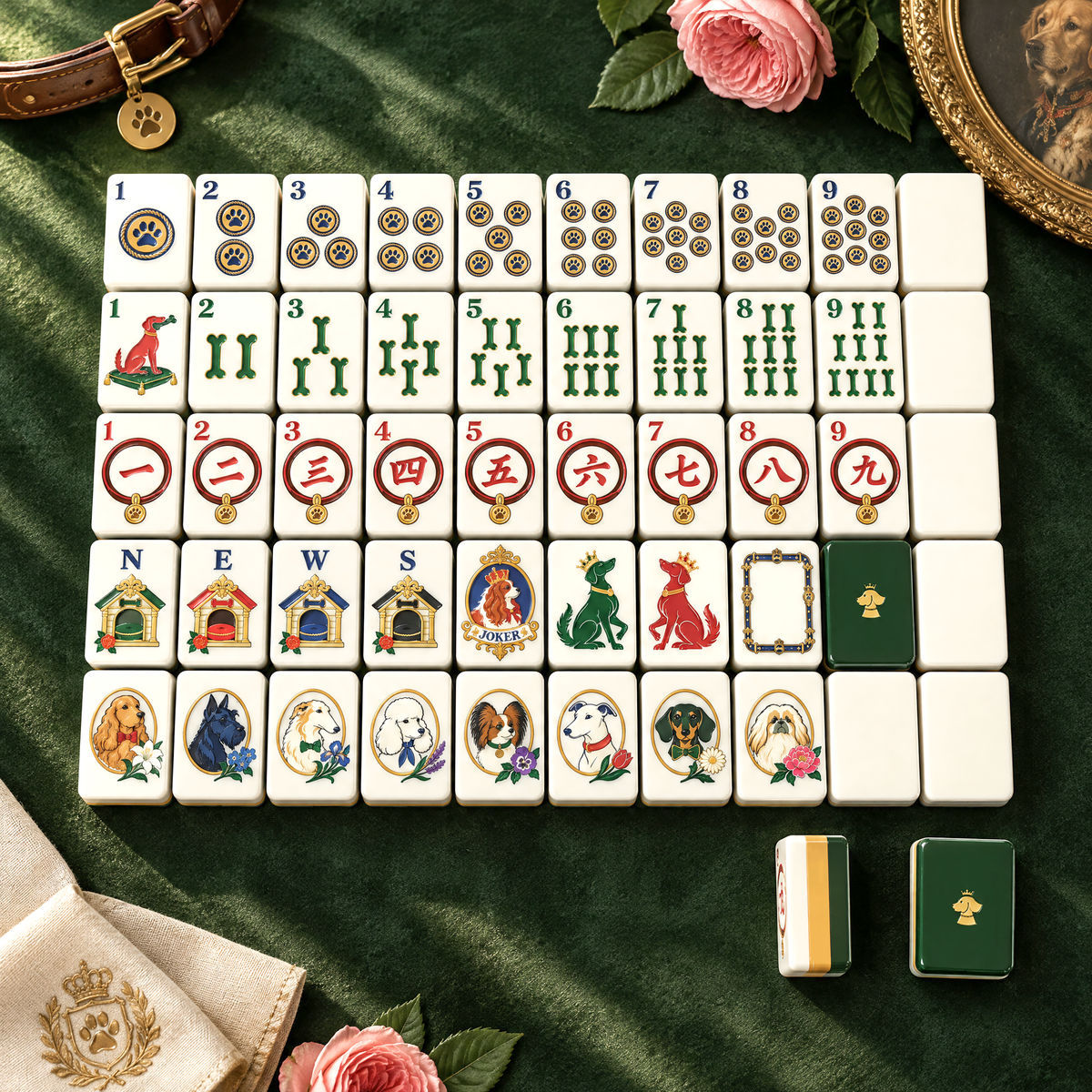
Riichi mahjong, Japan's national variant, uses 136 tiles (34 tiles × 4 copies across four suits) and requires you to call "riichi" when one tile away from winning—triggering bonus scoring. Taiwanese mahjong, popular across Taiwan and Southeast Asia, uses 144 tiles and emphasizes betting and rapid discards with strict hand patterns rooted in classical Chinese play. Both use winds and dragons but score entirely differently: Riichi calculates points based on hand complexity and winning conditions; Taiwanese relies on specific pattern matches and multipliers. Neither variant uses the American mahjong card or jokers. If you've only played American mahjong, expect a steeper learning curve with both—they're closer to each other than to American rules, but they're not interchangeable. Choosing between them depends on your local community, patience with hand memory, and whether you prefer mathematically elegant (Riichi) or pattern-driven (Taiwanese) play.
Riichi and Taiwanese mahjong diverge at nearly every level—tile count, hand structure, scoring philosophy, and table culture. Both are skill-based games, but the mental demands and strategic payoffs are different. Understanding these differences helps you decide which to learn and which set to buy.
What tile sets do Riichi and Taiwanese mahjong use?
Riichi uses 136 tiles: four copies each of three number suits (1–9, 108 tiles), four winds, and three dragons (28 tiles total). Taiwanese uses 144 tiles: the same honor tiles as Riichi, but also includes an additional flower/season set (eight tiles) and often adds jokers or blank tiles depending on regional house rules. This extra tile matters—if you switch between games on the same night, you'll be physically swapping sets. A best-selling mahjong set built for American play (152 tiles) won't work for Riichi or Taiwanese without modification, so it's worth owning dedicated sets if you play more than one variant regularly.

How do winning hands differ between Riichi and Taiwanese?
Riichi hands follow strict structural rules: you need exactly one pair and four melds (triplets, sequences, or kongs), totaling 14 tiles. A meld can be a triplet (pung), a sequence (chow: 1-2-3, 2-3-4, etc.), or a kong. Crucially, Riichi allows sequences—something American mahjong explicitly forbids. Taiwanese hands also demand one pair and four melds but offer more flexibility in which patterns score; regional rules and betting tables define what "counts." In Riichi, a hand that doesn't fit the 1 pair + 4 melds frame is no hand at all, period. In Taiwanese, pattern recognition matters more than pure structure—two pungs and two chows might score high one round and not count the next, depending on what's on the betting chart. This fundamental difference makes Riichi easier to teach but Taiwanese more culturally nuanced.
What's the scoring system for each game?
Riichi scoring is point-based and heavily weighted toward bonus conditions. You earn base points for hand complexity (simple triplets are worth less than a difficult sequence pattern), then multiply by factors tied to winning method—self-draw (tsumo) earns more than claiming a discard—and whether you've called riichi (which locks your hand early and triggers a 1,000-point bonus if you win). The dealer (East wind) pays double. A winning hand might be worth 2,000 points if it's basic, or 8,000+ if it's complex and dealer-won. Taiwanese scoring uses tables and betting chips; you earn a fixed payout per winning hand based on the pattern (1x, 2x, 4x, 8x your stake), with additional payments if you've declared a "big hand" early or met specific rare conditions. Riichi rewards hand difficulty and psychological play (riichi psychology forces opponents to guess your strength); Taiwanese rewards speed, pattern knowledge, and chip management. A Riichi player tracking points mentally; a Taiwanese player tracking chips and tables on a chart.
How do the discard mechanics and play flow differ?
In Riichi, discards follow a fixed order: you draw one tile, then decide what to discard before the next player's turn. If someone claims your discard for a meld, play pauses—but only for pungs, kongs, or declared chows. The claiming player melds face-up and discards a new tile. This means you see other players' hands building openly. Taiwanese play is faster and more chaotic—discards fly down the center of the table, and players call claims immediately (sometimes overlapping). Chows and pungs can both be claimed, and the table rhythm feels almost musical if you're used to it. Riichi rewards patience and reading half-visible hands; Taiwanese rewards reflexes and attention span. A new Riichi player spends three turns just absorbing what's visible; a new Taiwanese player gets overwhelmed by the speed but gradually finds the rhythm.

What's the role of riichi, and does Taiwanese have an equivalent?
Riichi is a Riichi-specific mechanic: when you're one tile away from winning, you can call "riichi," place a 1,000-point stick on the table, and lock your hand—you can't change your melds or discard pattern. If you win, you gain the riichi bonus (and all sticks on the table). If someone else wins after you've called riichi, you pay an extra penalty. This is high-stakes bluffing: opponents learn to fear a riichi call but also to recognize when someone's bluffing a weak hand. Taiwanese doesn't have a direct equivalent, but many regional variants include a "big hand" or "going for a big win" declaration where you announce you're betting for a high-multiplier pattern—usually 4x or 8x—and forfeit lower payouts if you fail. The psychology is similar (risk vs. reward), but the mechanic is different (Riichi locks you; Taiwanese declarations multiply your payout). A Riichi table buzzes with tension after each riichi call; a Taiwanese table rises and falls with big hand declarations.
Aspect | Riichi | Taiwanese |
Tile count | 136 | 144 |
Hand structure | 1 pair + 4 melds (fixed) | 1 pair + 4 melds (flexible patterns) |
Sequences allowed? | Yes (required for variety) | Yes (pattern-dependent) |
Scoring method | Points + multipliers | Chip payout × multiplier table |
Bonus mechanic | Riichi call (1,000 pt.) | Big hand declaration (2x–8x) |
Winning call | "Tsumo" (self-draw) or "Ron" (claim discard) | "Hu" or table-call (varies regionally) |
Dealer advantage | Pays double (East) | Often pays less or equal |
Learning curve | Medium (hand memory, patterns) | Steep (speed + pattern + betting table) |
Best for | Strategic patience, precision | Reflexes, social play, chip thrills |
🀄 Shop best-selling mahjong sets →
Which variant should you learn first?
If you're coming from American mahjong, Riichi is the gentler entry point: it uses the same sitting-and-thinking pace, and the hand structure (1 pair + melds) mirrors what you already know—except Riichi allows sequences, which actually simplifies some hands. Taiwanese demands you unlearn American patterns entirely and relearn speed and betting; it's a cultural reset more than a variant. If your local community plays one variant strongly, pick that one—network matters more than difficulty. If you're choosing cold, pick Riichi if you enjoy hand puzzles and quiet strategy; pick Taiwanese if you thrive in rapid social games with chips and table stakes. Both are beautiful; neither is objectively "harder," just different. Many serious players learn both, using engraved mahjong sets branded with the variant name to keep them mentally separate.
What to check before you buy a set for Riichi or Taiwanese
Tile count: Confirm your local club's standard. Riichi almost always uses 136; Taiwanese sometimes uses 144 or includes regional jokers, so ask. Tile size and weight: Riichi players often prefer smaller, lighter tiles (standard is about 22 mm); Taiwanese players lean toward slightly larger tiles (24–28 mm) for better handling in fast play. Engraving clarity: Riichi and Taiwanese use the same suit symbols (bamboos, characters, dots), but if you're buying an engraved set, confirm the engravings are crisp enough to read in dim lighting—Taiwanese games often happen in faster, noisier settings where you need instant tile recognition. Case design: If you're traveling between clubs, a sturdy travel bag or case with compartments (one for Riichi, one for Taiwanese, if you own both) saves setup time and prevents tile mixing. Racks:Mahjong racks with pushers help with hand organization, especially in Riichi where keeping your melds visible and organized is crucial; Taiwanese players vary more on racks depending on house style.
🎁 See our most-loved mahjong sets & accessories →
Where do you find Riichi and Taiwanese mahjong communities?
Riichi clubs exist in most major North American cities and are easy to find online—search "riichi mahjong [your city]" or check university game clubs; Riichi has strong academic and organized play structures. Taiwanese communities are more tied to Taiwanese diaspora neighborhoods: check community centers, Chinese cultural associations, and informal family networks in areas with large Taiwanese or Southeast Asian populations. Both communities welcome newcomers, but Riichi clubs often have English rulebooks and beginner nights; Taiwanese games may default to home play or closed circles, so getting a personal intro helps. Once you're in, table culture matters: ask before your first game whether players use racks, whether tiles are face-up or hidden, and whether the pace is beginner-friendly or tournament-speed.
✨ Find your Mahstead set — free US shipping →

FAQ
Can I use the same tile set for both Riichi and Taiwanese mahjong?
Riichi uses 136 tiles; Taiwanese uses 144. You could remove 8 tiles from a Taiwanese set and play Riichi, but you'd lose track of your tiles. It's cleaner to own two sets if you play both regularly—especially if one is engraved with the variant name to avoid confusion mid-game.
Is Riichi harder than Taiwanese?
They're hard in different ways. Riichi demands hand memory and scoring calculation; Taiwanese demands speed and pattern recognition under social pressure. Most players find Riichi has a gentler learning curve but a high ceiling for strategy; Taiwanese feels fast and chaotic at first, then intuitive with practice.
Do Riichi and Taiwanese use jokers?
Standard Riichi does not use jokers. Some Taiwanese regional variants include them, but it's house-rule dependent—ask your club before buying a set. American mahjong is the only major variant that requires jokers for legal play.
What's the minimum number of players for Riichi and Taiwanese?
Both are four-player games and don't have standard two- or three-player formats (unlike American mahjong). Some informal variants exist, but they're rare and non-standard.
How long does a round take in each game?
A Riichi hand typically takes 10–15 minutes; a Taiwanese hand averages 5–10 minutes because the pace is faster and hands declare sooner. A full session (multiple rounds, settling scores) usually runs 1–2 hours for either.
Can I learn Riichi and Taiwanese simultaneously?
Not recommended for beginners. The hand structures and calling patterns overlap just enough to confuse you. Learn one to fluency (4–6 weeks of regular play), then transition to the other—the core tile concepts transfer, but the muscle memory and mental model differ.


View More
View More
View More
