
Riichi Mahjong Special Hands: Scoring Patterns and Strategy
Last updated: Nov 23, 2026
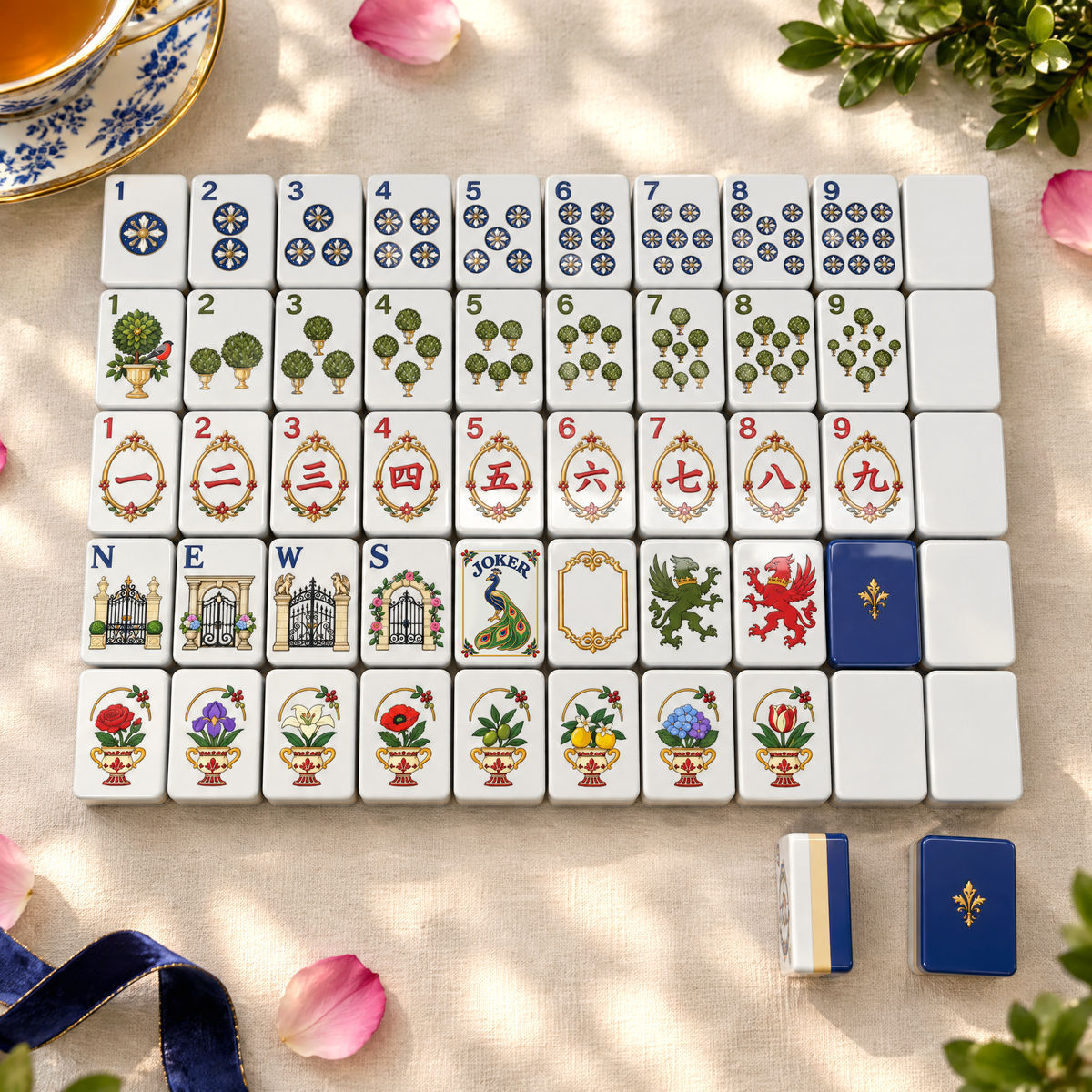
Riichi mahjong special hands, called yakus, are named tile patterns that unlock scoring multipliers and bonus points. A yaku is a hand requirement—you must declare riichi (ready to win on one tile only) and complete a specific combination like a all-simples hand, all-terminals hand, or all-honor hand to earn the yaku's point value. Unlike American mahjong, which uses an annual card, riichi hands are rule-based and consistent year-round. Yakus range from 1-fan (1× multiplier, worth 1,000–8,000 base points depending on when you won) to 13-fan limit hands (payment capped at the maximum). You'll need a mahjong set with clear tiles, pen, and score pad; many competitive players also use racks with pushers to manage hand visibility and speed. 🀄 Shop best-selling mahjong sets →
What is a yaku and how does it differ from American mahjong?
In riichi mahjong, a yaku is a scoring pattern baked into the ruleset—not a hand card. To win, you must have at least one yaku in your winning hand. American mahjong lets you use any hand from the year's card; riichi forces you to know and recognize fixed patterns. This makes riichi strategy pattern-focused rather than card-focused. Each yaku has a fan rating (1–13 fan), which multiplies your base points. Without a yaku, you cannot win—even a hand of four perfect melds is dead if it has no yaku. This rule creates a very different tempo and teaches tile recognition over memorization.

Which yakus score 1 fan and are easiest to achieve?
One-fan yakus form the foundation of riichi play. All Simples (Tanyao): hand contains only 2–8 in any suit, no terminals (1, 9), no honors. Seat Wind (Jikaze): a pung or kong of your wind (East, South, West, North). Dragon (Yakuhai): a pung or kong of Red, Green, or White dragon. Prevailing Wind (Bakuaze): a pung/kong of the round wind (East for most of a session). These yakus appear frequently early in a hand and help beginners build confidence. Seat Wind and Dragon are the most common 1-fan wins in casual play because they require only one visible pung, giving newer players a natural ladder to stronger patterns.
What are 2- and 3-fan yakus and when should you pursue them?
Two-fan yakus reward stronger tile discipline. Half Flush (Honitsu): one complete suit plus honors only—no other suits. Straight (Itsuk): three melds forming a 1–9 ladder (e.g., 1–2–3, 4–5–6, 7–8–9). Two Sets of Identical Melds (Iipeikou): two separate runs or pungs of the same sequence. Three-fan yakus demand excellent hand shape early: All Terminals and Honors (Honroutou): only 1, 9, and wind/dragon tiles. All Pungs (Toitoi): four pungs or kongs plus a pair. Little Three Dragons (Shosangen): two dragon pungs and a dragon pair, or any two dragon pungs plus a third dragon in a meld. You pursue these when you draw strong tiles in that suit or honors within the first 6–8 draws; pivoting mid-hand wastes tempo.
Yaku | Fan | Tile Requirement | Difficulty | Best When |
All Simples | 1 | 2–8 only, no 1/9 or honors | Easy | Early in hand; tiles flow naturally |
Seat/Dragon | 1 | One pung of your wind or dragon | Very Easy | Any time; nearly guaranteed |
Half Flush | 2 | One suit + honors | Moderate | You collect one suit early |
All Terminals/Honors | 3 | Only 1, 9, winds, dragons | Hard | Strong 1–9 and honor draws |
All Pungs | 3 | Four pung/kong + pair | Hard | You block simples from riichi early |
How do limit hands work and what are the highest-scoring patterns?
Limit hands, or mangan and above, cap scoring at a maximum value regardless of fan count. Limit hands are 13-fan or higher and include five named patterns that guarantee top payment: All Honors (Kokushi): one of each terminal, wind, and dragon tile, plus a pair of any of them—extremely rare. Big Three Dragons (Daisangen): three complete dragon melds plus any hand. All Green (Ryuuiisou): only tiles 2, 3, 4, 6, 8 Bam and Green dragon—challenging but possible. All Terminals (Chinroutou): all melds and pair from 1 and 9 only. Blessing of Man (Tenhou for dealer): winning on your draw with no calls (East only). Limit hands pay a fixed sum (typically 12,000–16,000 points depending on dealer/non-dealer and when you won) and are the goal of serious riichi players. Most casual games never see one.
How does riichi declaration change your hand value?
A riichi declaration is your formal announcement that you are one tile away from winning and your hand shape is locked. To declare riichi, you must have a closed hand (no melds called from opponents), lay 1,000 points into the center as a riichi stick, and state "riichi." You then can only win on one specific tile or a very small set of tiles—you cannot change your hand shape. If you win after riichi, you earn a 1-fan riichi bonus, stacking with your existing yakus. If someone discards your winning tile after you've declared riichi, they pay you extra. Declaring riichi early signals strength and locks in yaku bonuses—but if your tile doesn't come, you lose momentum and may not afford the 1,000-point stick next hand. Advanced play uses riichi as both offense (pushing for a big hand) and psychology (forcing opponents to play safer).
🎁 See our most-loved mahjong sets & accessories →

Four-fan yakus: when to chase middle-strength patterns
Four-fan yakus represent mid-to-high-reward plays. Pure Straight (Juntyantsu): 1–2–3, 4–5–6, 7–8–9 all in one suit. Flush (Chinitsu): entire hand one suit only—no honors. Little Four Winds (Shosuushii): melds of three winds plus a wind pair. Quad-Straight (Sanshoku Doukou): same pung in three different suits, e.g., three 5-Bam pungs plus a 5-Dot pung. These hands reward players who commit early to a suit or honor type. They appear in roughly 1 in 20–30 competitive hands because they require both luck and discipline. Never chase a 4-fan if you're already close to riichi on a 1–2-fan hand—the risk of busting (getting stuck with an unusable hand) outweighs the reward.
What mistakes do riichi players make with yakus?
Mistake 1: Chasing yakus without riichi. New players try to build a 3-fan hand "just in case," keeping too many tiles, and never declare riichi. Riichi forces your opponents to play safer and triggers bonus points if you win. Mistake 2: Calling melds too early. Each time you call a meld, you lose a tile and your hand becomes visible—opponents guess your yaku and discard safely. Closed hands are powerful; use calls only when you're confident in your yaku. Mistake 3: Not counting your outs. Before declaring riichi, count how many unique tiles win your hand. If only two tiles win (e.g., 3-Bam or 4-Bam), your odds are slim. A good riichi hand has 6+ unique winning tiles. Mistake 4: Ignoring discards. Once riichi is declared, opponents watch every discard for clues. If they see three 5-Dots and you discard a 5-Bam, they know your 5-Dot pung is waiting. Study the discard pile (called the wall) constantly.
Setting up for riichi: tools and practice
Playing riichi well requires clear tile visibility and quick hand evaluation. Mahjong racks with pushers let you organize your tiles in suit order and spot patterns instantly—invaluable when you're mentally counting yakus. A quality mahjong set with large, engraved characters ensures you never misread a tile in a critical moment. Keep a pen and paper nearby to record point totals (payments) and yaku names. When learning, many players study yaku flashcards or apps before playing live; this builds muscle memory so you recognize patterns mid-game without hesitation.
What to check before you buy:
Does your set have large, clear tile markings? Riichi play moves fast; hard-to-read tiles cost you time and points.
Are the tiles balanced and uniform? Cheap acrylic sets sometimes have printing flaws that muddy suit colors (Bam, Crak, Dot look different under lights).
Will you play with racks? If yes, confirm your set's tile size fits standard racks. Mahstead's acrylic sets are compatible with universal pushers and racks.
Do you have a score pad or app? Riichi scoring is fast and exact; tracking payments by hand prevents disputes.
Why riichi strategy differs from American mahjong
American mahjong uses an annual card; riichi uses fixed rule-based yakus. American play focuses on finding valid hand patterns from the card; riichi play focuses on pattern recognition and risk management. In American mahjong, jokers are wild and tile sequences (chows) are exposed; in riichi, jokers don't exist and sequences (melds) in your hand are invisible until you call. This makes riichi a pattern and psychology game, rewarding players who memorize yakus and read opponents' discards. If you play both games, you'll notice riichi is slower, more cerebral, and more dependent on hand discipline. American mahjong rewards card speed and visual memory; riichi rewards tile strategy and patience.
✨ Find your Mahstead set — free US shipping →
How to learn riichi yakus step by step
Start with 1-fan yakus. Memorize All Simples, Seat Wind, Dragon, Prevailing Wind. Play 10–20 hands focusing only on these; get comfortable recognizing them mid-game.
Add 2-fan yakus. Half Flush and All Pungs are next. Play another 20 hands adding these patterns.
Study yaku combinations. Some hands have two or three yakus stacked (e.g., Half Flush + Dragon = 3 fan total). Write down examples as you see them.
Practice riichi declaration. Learn when to declare riichi (you have 6+ winning tiles and a yaku), and learn when to pass (fewer than 6 outs, or no yaku yet).
Play in a live game. Recruit a friend or join a local club. Live play teaches you tempo, psychology, and how opponents react to your riichi stick.
Most players spend 2–4 weeks of regular play before yakus feel natural. Flashcard apps and YouTube walkthroughs speed this up, but nothing beats live reps.

FAQ
Can I win a riichi hand without declaring riichi?
Yes, but you miss the 1-fan riichi bonus and your hand becomes easier for opponents to block. Non-riichi wins (called dameten or "peaceful win") are valid but less rewarding.
What happens if I declare riichi and my winning tile never comes?
You lose the 1,000-point stick you laid down, and your hand stays locked. You cannot change your pattern. If the hand ends without your tile, you've spent 1,000 points for nothing—a real cost.
Does having two yakus in one hand score double the points?
No; yakus stack additively by fan. A hand with All Simples (1 fan) plus Seat Wind (1 fan) scores 2-fan total—not double. The fan count multiplies your base points, but multiple yakus increase the fan count, not the multiplier.
Is Blessing of Man a 13-fan limit hand in all rule variants?
Not always. Blessing of Man scores 13-fan in standard tournament riichi but is sometimes listed as 12-fan in casual play. Check your group's ruleset before playing. Mahstead players often house-rule; clarify before starting.
How many tiles do I need to practice riichi yakus?
A standard Chinese or Japanese mahjong set (136 tiles) has enough. You need four copies of each tile, all four winds, three dragons, and eight flower/season tiles. Our best-selling mahjong sets include everything needed for riichi play.
Can I use jokers in riichi mahjong?
No. Riichi mahjong uses only the 136-tile set; jokers are American mahjong only. Do not add jokers to a riichi game.


View More
View More
View More
