
Riichi Mahjong Chinitsu Rules: Winning One-Suit Hands
Last updated: Nov 23, 2026
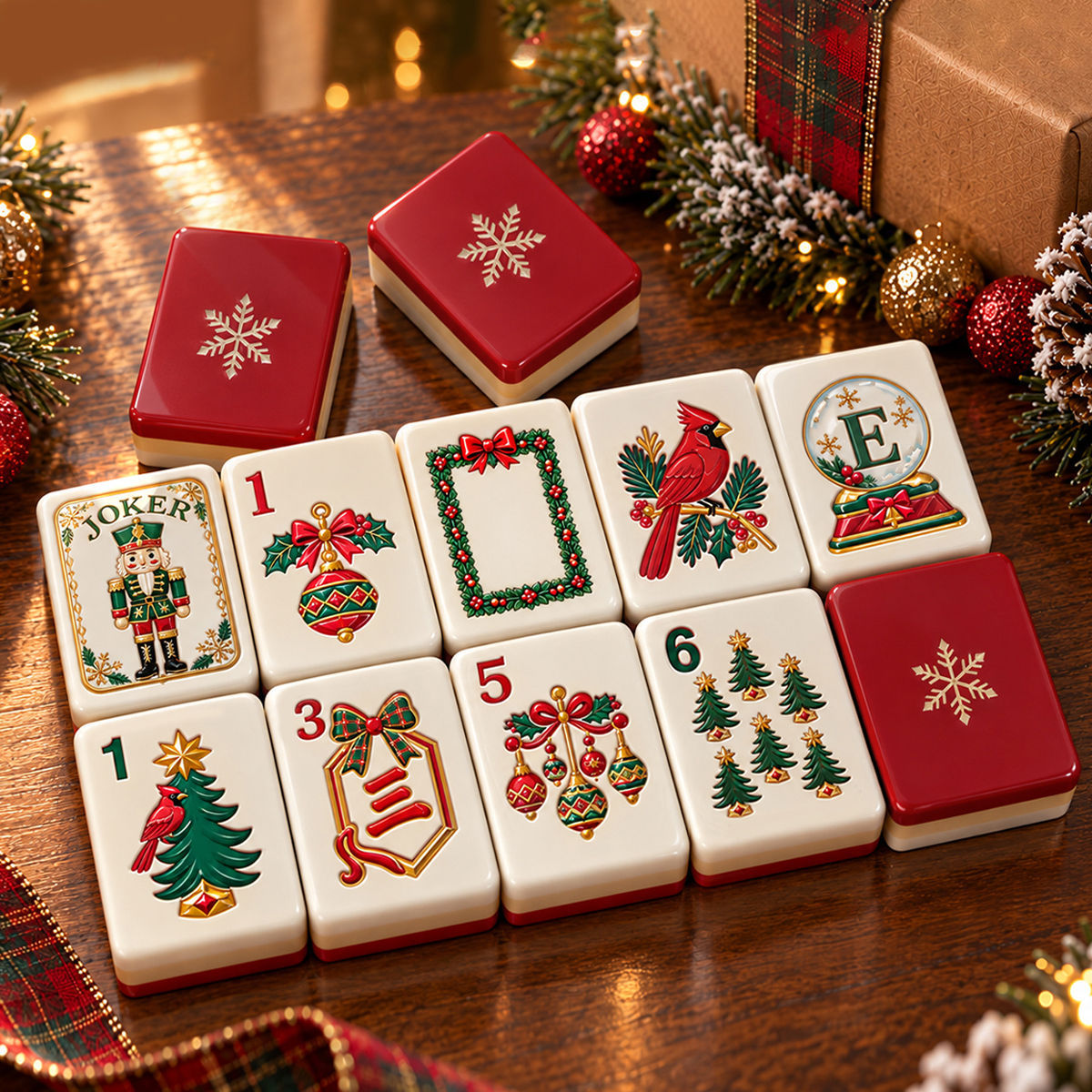
Chinitsu is a Japanese riichi mahjong hand composed entirely of tiles from one suit (Craks, Bams, or Dots) plus any number of honor tiles (winds or dragons), with no tiles from the other two suits. In riichi scoring, chinitsu is worth 6 han (counting units) if open, or 7 han if concealed—making it a premium hand worth 2,000–4,000 base points before multipliers. You win by drawing or calling the final tile to complete a legal combination: four melds (each a pung, kong, or sequence) plus a pair. Chinitsu differs radically from American mahjong, which uses no sequences, has no han-scoring system, and draws hands only from an annual card; riichi players build hands freely, can call chows (1-2-3 sequences), and score by han count and the caller's seat. The strategy centers on blocking opponents' honor-tile access while securing a pure suit run—slow early, aggressive late in the round.
Riichi mahjong rewards specialized hands over American's tile-matching principle. Chinitsu stands as one of the game's most elegant and demanding victories: you must eliminate two entire suits from your win, turning scarcity into strength. We've hosted riichi nights alongside our regular American games and learned that chinitsu separates casual players from strategic ones. Here's how to build, recognize, and score it.
What exactly is a chinitsu hand?
Chinitsu (清一色, meaning "pure single color") requires all tiles in your winning hand—melds and pair alike—to come from one suit only. You can use any number of honor tiles (East, South, West, North winds, or Red/Green/White dragons) alongside your chosen suit, but the moment a single tile from a second suit enters your hand, chinitsu is dead. Example: a winning hand of all Craks plus three White dragons and one South wind qualifies; add even one Bam and you lose chinitsu. The hand still needs four complete melds plus a pair (14 tiles total) in standard riichi rules, and you must declare chinitsu when you win to score it.

How does chinitsu scoring work in riichi mahjong?
Chinitsu contributes a fixed 6 han if you win openly (your melds are exposed before the winning draw) or 7 han if concealed (all melds hidden until you draw the final winning tile). In riichi scoring, han convert directly to base points: 6 han = 2,000 base points; 7 han = 2,400 base points before multipliers. The dealer pays 1.5× multiplier; non-dealers pay 1×. A non-dealer's chinitsu payout ranges from 2,000 to 4,000 points; a dealer concedes 3,000 to 6,000. Contrast this to American mahjong, where hand patterns earn fixed payouts from a published card (no han system), and scoring depends on the pattern name rather than tile counts. Riichi players accumulate han from multiple yakus (yaku = a scoring pattern), so chinitsu often combines with other yakus for even larger payouts.
Can you combine chinitsu with other yakus?
Yes—riichi mahjong allows overlapping yakus to stack han. A chinitsu hand that also forms honitsu (all one suit plus honors, but different scoring condition), for example, cannot double-count; however, chinitsu + tanyao (all simples, 1–8 no honors) yields a rare pure hand worth 7 han minimum. Common chinitsu combos include: chinitsu + dora (wild tiles matching a drawn indicator), which adds 1 han per dora; chinitsu + ippatsu (win on first draw after declaring riichi), adding 1 han; chinitsu + menzen tsumo (win by self-draw with no called melds), adding 1 han. Each yaku stacks, so a dealer's chinitsu with two dora and menzen tsumo totals 10 han, often paying the full limit (mangan or haneman tier). American mahjong hands cannot combine yaku; each hand is evaluated as a single named pattern from the card.
What's the strategic difference between building chinitsu and American mahjong hands?
American mahjong players follow the published League card and hunt for specific tile patterns—their win is predetermined before play starts. Riichi chinitsu demands the opposite: you choose your suit strategy during the round based on what tiles flow and what opponents discard. Early-game chinitsu strategy means collecting low-honor tiles (simples 1–7) from your chosen suit while monitoring what the other two suits appear in opponents' discards—if you see many Craks early, switching to Bams or Dots keeps you alive. Mid-game, you begin exposing melds (if playing open chinitsu) to signal your suit, pressuring opponents to avoid your suit in their discards. Late-game, you play aggressively: call any completing tile for your melds, declare riichi if your hand is one tile away, and accept chows if they keep your suit pure. American players, by contrast, stay silent about their hand, build only from the card pattern, and risk nothing by waiting for the exact tile sequence. Riichi's chinitsu requires reading discard patterns, adapting suit mid-hand, and calculating probability—it's reactive storytelling versus American's fixed puzzle.
What are common mistakes when aiming for chinitsu?
Contaminating too late. Many new riichi players commit one tile from a second suit early (a dragon, or a simple) telling themselves they'll discard it later—then find themselves forced to keep it because their winning hand shapes require it. By turn 5–6, if you haven't discarded all non-suit tiles, your pure-suit odds plummet. Solution: commit to a suit by turn 3 and discard all other suits ruthlessly.
Chasing dora carelessly. Dora tiles (indicated by a drawn tile at the game start) are wild high-scorers in riichi. A player chasing dora from a forbidden suit can accidentally abandon chinitsu. If your chosen suit is Dots but dora is a Crak, do not take the Crak just because it scores extra han—it kills chinitsu. Stick to your suit; chinitsu's guaranteed 6 han beats a gamble on dora overlap.
Misreading closed-hand timing. Concealed chinitsu (7 han) beats open chinitsu (6 han) by 1 han—tempting players to hide their hand and win via self-draw. Yet hiding signals nothing to opponents; they discard your suit freely. Open chinitsu forces fear into discarders and often secures your tile faster via call. Judge the table: if two players are aggressive, open chinitsu stalls them; if passive, close and wait for self-draw.
Forgetting honor limits. You can use any number of honor tiles in chinitsu, but there are only 16 winds and 12 dragons total. If you need three East winds and two Red dragons in your winning hand, check that enough remain undiscarded by late game—honor tiles deplete quickly in competitive rounds.
🀄 Shop best-selling mahjong sets →

How does chinitsu compare to other Japanese mahjong yakus?
Yaku | Han (hidden) | Han (open) | Suit Requirement | Difficulty |
Chinitsu | 7 | 6 | One suit only | High—two full suits banned |
Honitsu | 6 | 5 | One suit + honors | Medium—one full suit banned |
Tanyao | 1 | 1 | All simples 2–8 | Low—no terminal/honor tiles |
Yakuhai | 1 | 1 | Three of a kind (winds/dragons) | Low—common dragons appear early |
Toitoi | 2 | 2 | All melds are pungs/kongs | Medium—no sequences allowed |
Iipeiko | 1 | — | Two identical sequences | Low-medium—only concealed |
Chinitsu ranks in the premium tier (6–7 han); it's harder to build than single-yaku hands like tanyao but more common than limit hands (13 han+). If your suit is flowing freely and opponents' honor-tile strategy is passive, chinitsu outpaces lower-han yakus both in frequency and payout.
What do you need to play riichi mahjong with chinitsu potential?
Riichi mahjong uses the same 136-tile core (Craks, Bams, Dots, winds, dragons) as American mahjong, but riichi players need a different mental toolkit: comfort calling tiles from opponents' discards (chuukan denki—announcing a meld after an opponent discards), tracking dora (indicated tile), and reading the abeyabu (win-declaring tile). You'll want a set with clear suit symbols, durable tiles (acrylic or ceramic withstand constant handling), and a mat or cloth to organize your melds. Our best-selling collection includes acrylic sets designed for both American and riichi players—look for sets with bold suit colors so your chosen suit is visually distinct when you begin opening melds mid-game.
For serious riichi play, invest in mahjong mats that mark meld zones clearly; this is critical when you're calling tiles frequently and need to lay out four melds + pair without fumbling. Acrylic racks with pushers aren't mandatory in riichi (many players hold tiles in hand), but racks with pushers keep tiles hidden from neighbors during the opening draw and let you organize your suit visually before declaring your strategy.
🎁 See our most-loved mahjong sets & accessories →
How do riichi chinitsu hands compare to American mahjong single-suit patterns?
American mahjong recognizes certain single-suit patterns (called "suited" or "all same suit" on the annual card) but treats them as one of many equally valid patterns—a single-suit American hand has no special bonus or higher payout than a mixed-suit hand of the same pattern type. Riichi chinitsu, by contrast, is a dedicated yaku worth 6–7 han specifically because it achieves purity; the bonus is explicit and large. American players can accidentally build single-suit hands and score them as a regular pattern; riichi players intentionally build toward chinitsu for the premium payout. Additionally, American hands are static—you commit to a pattern before the game starts by memorizing the card—while riichi chinitsu is dynamic—you decide mid-game whether your suit flow supports a pure run. If an American player's drawn tiles don't match the card's patterns, they discard and wait next game; a riichi player switches suit strategy on the fly and still wins with chinitsu if the tiles cooperate.
What to check before you buy a set for riichi play
Tile size and grip. Riichi demands frequent calling and tile pickup; ensure acrylic tiles are 25–28 mm and slightly textured (not slick) so you can distinguish suits quickly by touch.
Suit color contrast. Can you instantly tell Craks (red/coral) from Bams (green/teal) from Dots (yellow/white) from across the table? Weak contrast kills chinitsu strategy—opponents won't fear your suit, and you'll waste turns verifying your own melds.
Honor tile legibility. Wind and dragon characters must be crisp and large; in late-game speed, you'll call tiles without reading them aloud first. Acrylic sets with silk-screen printing hold clarity through hundreds of games.
Storage for 136 tiles. Riichi uses fewer tiles than American (136 vs. 152), but your bag or case should store them separated by suit so you can practice chinitsu drills. Travel bags and cases designed for riichi often include interior dividers.
✨ Find your Mahstead set — free US shipping →
Practice: building a sample chinitsu hand
Let's walk through a realistic chinitsu scenario. You're East (dealer), the round is mid-game (turn 8), and your tile draws so far: 2 Crak, 4 Crak, 5 Crak, 6 Crak, 7 Crak, 9 Crak, East wind, South wind, White dragon, Red dragon, and a 3 Bam (discarded by South, you called it early—mistake one, noted). Your strategy: purge the Bam and the extra honors, keep Craks 2–9, and aim for two or three Crak pungs plus one Crak sequence, two honor tiles, and a pair.
Turn 9, you draw: 4 Crak (second copy). Your hand now: 2, 4, 4, 5, 6, 7, 9 Craks, E, S, W dragons, 3 Bam. Discard the Bam immediately—chinitsu is dead unless you dump it now.
Turn 11, you draw: South wind (second copy). Melds forming: pung of 4 Craks (once you get a third 4), potential chow 5-6-7 Craks, pair of South winds. Your hand: 2, 4, 4, 5, 6, 7, 9 Craks, E, S, S, W dragons. Discard East—too many honors waste pure-suit slots.
Turn 14, West calls your discarded 6 Crak. You don't care (not your suit conflict). You draw: 5 Crak (second copy). Potential shift: pung of 4, pung of 5, chow 6-7-8 (if you draw an 8). Your hand: 2, 4, 4, 5, 5, 6, 7, 9 Craks, S, S, W dragons. Discard 2 Crak—preserve flow.
Turn 18, you declare riichi (one tile away from winning). You win on turn 21: opponent discards a 7 Crak. You call it and reveal: pung of 4 Craks, pung of 5 Craks, chow 6-7-8 Craks (wait, you have 6, 7, 9—abort; instead: pung of 6, pung of 7, chow 2-5-9? No.). Revise: you have 2, 4, 4, 5, 5, 6, 7, 9, S, S, W. If 7 Crak is your win, melds are: (4, 4, ?), (5, 5, ?), (7, winning draw), (S, S, W from honors). This fails—you need four melds. Rewind: riichi hands need exactly four melds + pair. If you're holding seven pure Craks + three honors, your melds might be: (4 4 4), (5 5 5), (6 7 8), (S S S), but you only have two S's. Let's restart cleanly: a valid chinitsu win is (4 4 4 Craks), (5 5 5 Craks), (6 7 8 Craks), (W W W dragons), pair (S S winds)—that's 14 tiles, all Craks or honors, no other suits. You draw a 4 Crak on turn 21 to complete the first pung, and you're riichi-ready.
This example shows why chinitsu beginners often lose focus: honor tiles feel safe, but they occupy win slots. Allocate at most two or three to your hand; the rest must be your chosen suit.

FAQ
What's the difference between chinitsu and honitsu?
Chinitsu (7 or 6 han) bans two entire suits; honitsu (6 or 5 han) bans only one. Honitsu allows Craks + all honors, for example. Chinitsu is rarer, worth more han, and more restrictive. Honitsu is a strategic fallback if your second-suit tiles arrive too strongly mid-game.
Can you win chinitsu with a self-draw (tsumo)?
Yes. Chinitsu + tsumo (menzen tsumo, 1 han self-draw bonus if closed hand) stacks, raising the total to 8 han if concealed. Tsumo is not mandatory; you can win chinitsu via opponent's discard too, but tsumo adds extra payout.
How many dora can a single chinitsu hand include?
As many as exist in the tile set and remain undiscarded. Dora tiles (matched to a drawn indicator) are wild; each dora adds 1 han. A chinitsu hand with three dora totals 6 (base) + 3 (dora) = 9 han, often hitting a mangan payout ceiling depending on the table's ruleset.
Is chinitsu allowed in all riichi rulesets?
Yes, chinitsu is standard in Japanese riichi, Hong Kong mahjong, and Taiwanese variants, all of which allow yaku stacking. It's rare or absent in American mahjong because American hands come from an annual card and don't use han-based scoring.
What if I accidentally draw a tile from a forbidden suit after declaring riichi?
You cannot un-declare riichi. If you draw a tile that contaminates your suit (e.g., a Bam when you're pure Craks), you must adjust your melds to avoid the forbidden tile, or accept a loss. This is why riichi players verify their hand before declaring—chinitsu must be one tile away and suit-pure before you announce riichi.
How long does it typically take a beginner to win their first chinitsu?
Most riichi learners win a chinitsu within their first 10–15 games after grasping suit discipline. The constraint is cognitive (remembering to dump off-suits early) rather than luck; suit flow speeds up considerably once you treat the other two suits as enemy territory from turn 1.


View More
View More
View More
