
Mahjong Mat for a Mahjong Group: What to Choose
Last updated: Nov 23, 2026
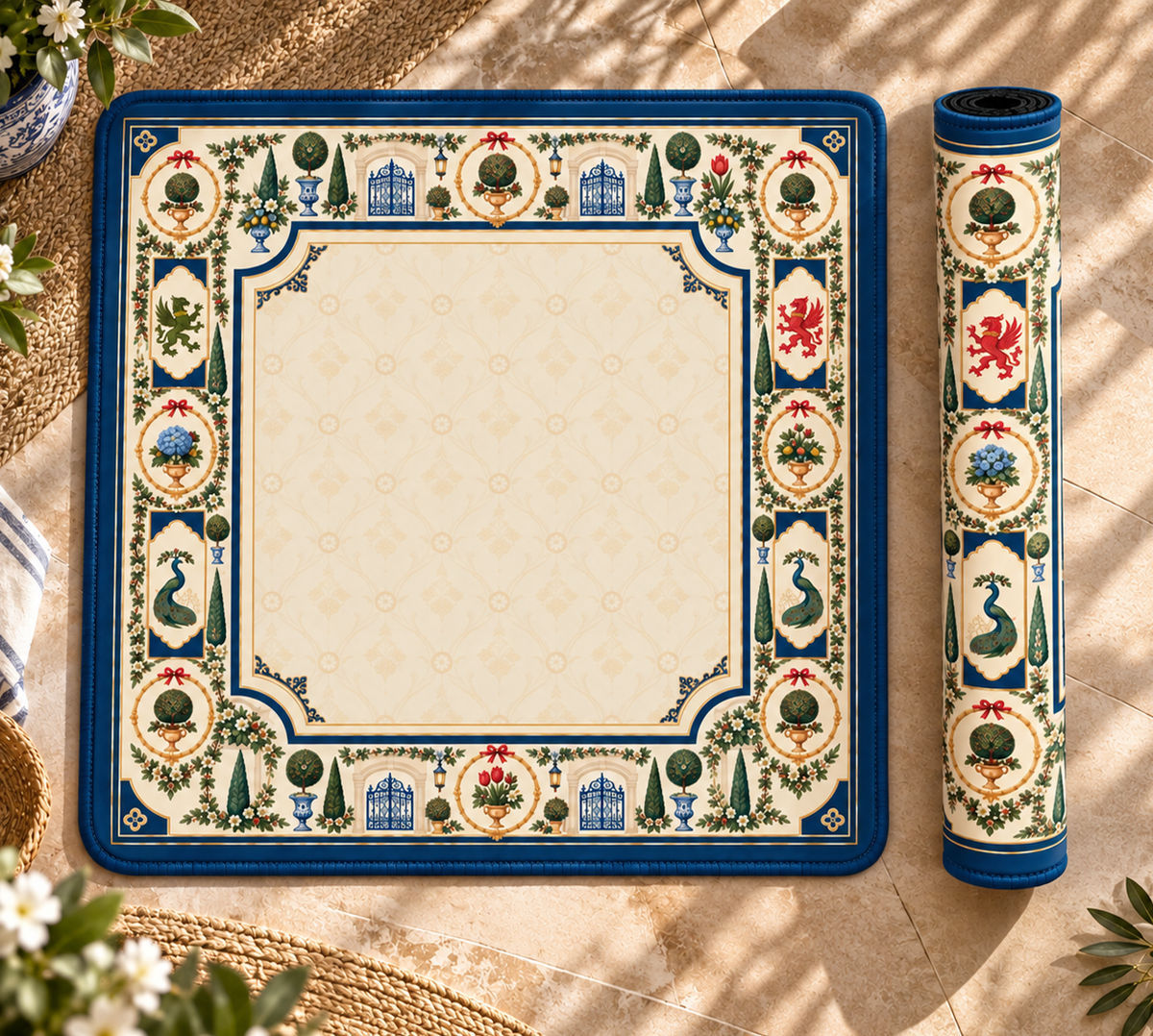
A mahjong mat is a padded or reinforced fabric surface (typically 27–36 inches square) laid over your table during play to cushion tiles, reduce noise, and define the game boundary. For a regular group, you need one that handles weekly use without fraying, grips tiles so they don't slip during the Charleston, and rolls up easily for storage or transport. Most mats sold as part of our best-selling mahjong sets come in two styles: reversible neoprene with corner pockets for racks and pushers, or quilted cotton with embroidered scorekeeping corners. Thickness ranges from 1/8 inch (lightweight, portable) to 1/4 inch (more cushion, more weight). For a group that meets weekly, prioritize grip, durability of the backing, and whether you'll carry it—reversible neoprene outlasts cotton in high-traffic settings. Mat quality directly affects tile longevity and game comfort.
What size mat does your group actually need?
A standard mat runs 27–36 inches square. Most groups play at a 36-inch table, so a 32–34-inch mat leaves a frame of bare table around the edges. Smaller groups or tight spaces work fine with 27-inch mats; they expose less tile, but if you're hosting four players plus scorecards, 32 inches is the real minimum. Measure your table before ordering—an undersized mat forces tiles to hang off the edge and wobble during the Charleston. Oversized mats bunch at corners and don't fit standard storage bags. If you play at multiple venues, choose the smaller option for portability; if your mat stays in one spot, go larger for maximum coverage and stability.
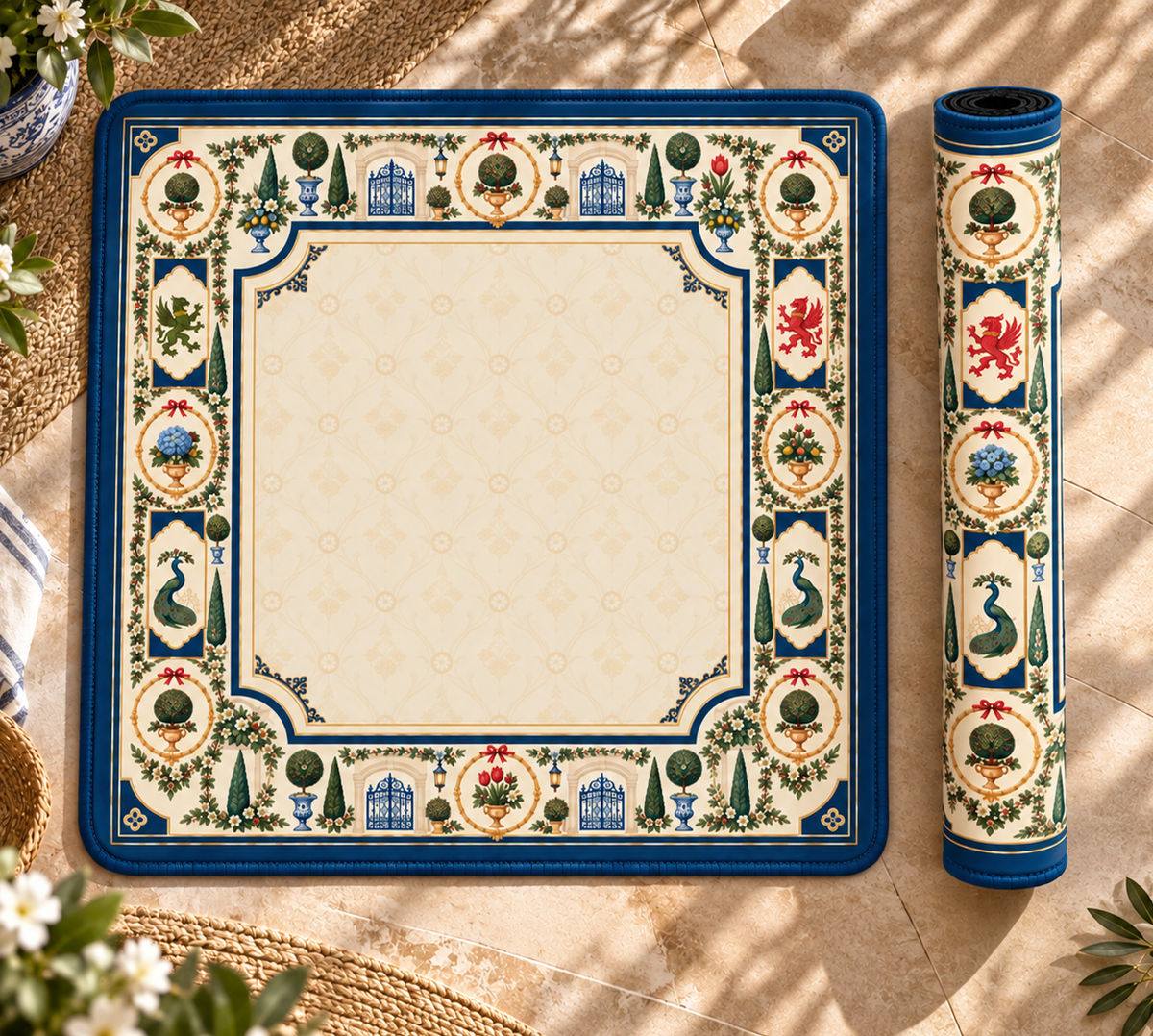
Should you pick a mat with pockets or corners?
Pockets sewn into the four corners hold rack bases, dice, and spare jokers so they don't roll off during play. Corner embroidery (scorekeeping marks or traditional motifs) serves no mechanical function but helps players track East and West position without thinking. Pockets are essential if your mahjong racks with pushers don't fit neatly on a bare table edge—they prevent racks from sliding toward the center or falling during draws. Embroidered corners work for groups that already know compass positions by seating habit. Honest choice: if you're setting up for relative newcomers or rotating seats, pockets matter more. For experienced players playing at the same spot every week, either works.
Feature | Pocket-Style Mat | Embroidered-Corner Mat |
Best for | Groups using racks; frequent setup/teardown | Experienced players; consistent seating |
Durability | Neoprene pockets reinforce corners; last 3+ years of weekly play | Cotton edges can fray; neoprene backing holds longer |
Transport | Rolls easily; pockets keep small items contained | Rolls easily; lighter if not quilted |
Grip | Neoprene or rubber backing grips table and tiles | Varies by material; backing matters more than embroidery |
Setup time | Slightly longer (load pockets); fewer loose items | Faster if already organized |
🀄 Shop best-selling mahjong sets →
What material holds up best for weekly games?
Neoprene (synthetic rubber) and quilted cotton are the two durable options. Neoprene has a rubber backing that grips the table and won't slip during the Charleston; it resists staining and wipes clean in seconds. Cotton quilts (often padded with foam) are softer underhand and quieter but absorb spills and can wrinkle. After six months of weekly play, neoprene edges stay flat; cotton edges start to curl. Neoprene costs more upfront but outlasts cotton by 2–3 years in a group setting. If your group plays on a smooth table and doesn't mind re-flattening the mat occasionally, quilted cotton works. If you want a mat that survives rough handling and doesn't slip during fast exchanges, neoprene wins. We recommend reversible neoprene for groups that play weekly—one side is often plain, the other printed with traditional designs or humor, so you can rotate styles month to month.
How do you know if a mat fits your table?
Before ordering any mat, measure your tabletop from edge to edge in both directions—not the frame or legs. A round table needs the diameter (straight line through the center). A rectangular table needs length and width. Then subtract 2–3 inches from each dimension to account for the edges where racks rest. If your table is 36 inches square, a 33-inch mat leaves a rim for racks and tea cups. If your table is smaller (24–30 inches), a 24-inch mat is snug but workable for a 2–3 player game; most groups of four need at least 32 inches. Confirm with the seller whether the stated dimension is outer edge (total size) or playable area (the printed or embroidered surface). Our mahjong mats collection includes dimension details for each style so you don't guess.
Does a mat really protect your tiles long-term?
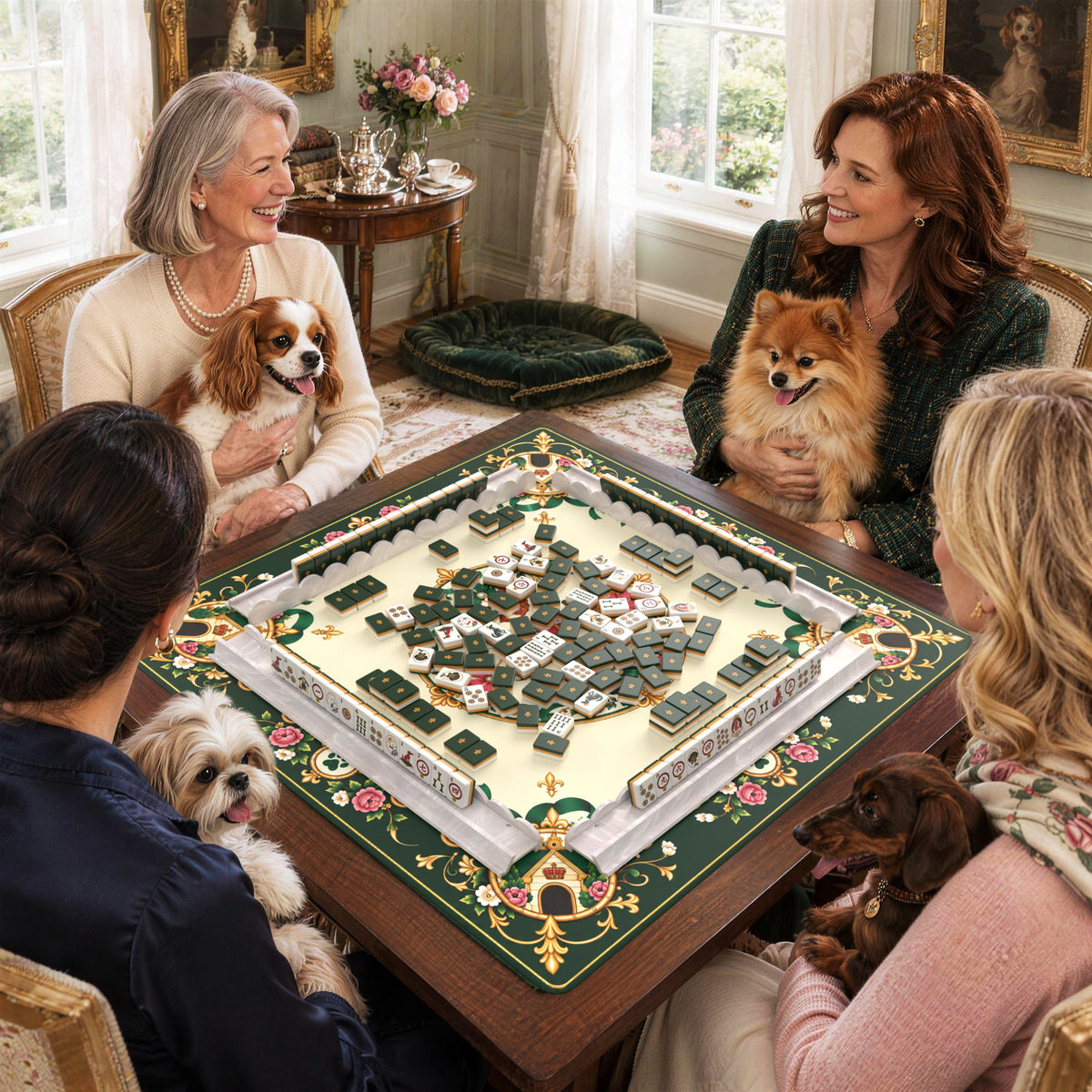
Yes. Tiles dropped on a bare table chip and crack; tiles dropped on a thick mat bounce and recover. Repeated shuffling on hard wood grinds away tile edges and paint. A mat with a rubber backing reduces the impact of draws and tile exchanges—your 160-tile set stays unmarked for years instead of months. Neoprene mats also prevent tiles from scattering when someone accidentally bumps the table. Cotton quilts provide softer landings but less grip, so tiles slide around. If your group is invested in keeping one set in pristine condition (engraved sets, holiday editions, or heirloom tiles), a mat is non-negotiable. If you rotate sets and aren't precious about cosmetic wear, a mat is still worth it for the reduced noise and improved handling during the Charleston.
🎁 See our most-loved mahjong sets & accessories →
What checklist should you use before you buy?
Use this decision framework when comparing mats:
Dimension: Will it fit your table with 2–3 inches of rim left for racks?
Material: Does your group prefer neoprene grip or quilted softness?
Durability concern: Will it survive weekly play, spills, and transport for at least a year?
Setup speed: Do you need pockets to contain racks and dice, or does your group keep them separate?
Storage: Does your mat roll into a bag, or will it stay on one table?
Reversibility: Do you want two designs in one mat, or is single-sided fine?
Grip test: Will the backing stay in place on your table surface (wood, laminate, glass)?
If a mat doesn't check all six boxes, it's probably not right for your group. Many mats look good in a photo but slip during tiles draws or fray after two months. We've chosen designs for our mahjong mats collection based on what groups actually report from weekly use—no decoration is worth a mat that moves under play.
✨ Find your Mahstead set — free US shipping →
Why does grip matter more than thickness?
A thick mat (1/4 inch) sounds protective but slides on a polished table, causing tiles to shift during the Charleston. A thinner mat (1/8 inch) with a textured rubber backing grips immediately and keeps tiles stable. We see groups blame the mat for "wonky draws" when the real problem is that it slides—they end up using a towel underneath, which defeats the purpose. Grip comes from material and backing, not padding. Neoprene with a rubberized underside is the gold standard. Before you order, ask whether the backing is rubber, plastic, or fabric—rubber grips; plastic and bare fabric don't.
What to check before you buy
Measure your table first. Oversized mats bunch; undersized mats expose tiles. No estimate—measure edge to edge.
Ask about the backing. Rubber grip is non-negotiable for weekly play; plastic and fabric slide.
Confirm reversibility if it matters. Two-design mats cost the same as single-sided; if you like options, choose reversible.
Check if pockets are sewn or printed. Sewn pockets hold racks; printed corners are decorative only.
Look for reinforced edges. Mats with stitched or taped hems last longer than serged edges that fray.
FAQ
Can I use a regular tablecloth instead of a mahjong mat?
Tablecloths are too slippery and too thin—tiles slide during the Charleston and draws are uncontrolled. Mahjong mats have gripping backs and padding specifically designed for tile play. A mat is a small investment that makes every game safer and more enjoyable.
What's the difference between a mat and a table cover?
A mat is portable, designed for tile play, and usually 27–36 inches. A table cover is larger, wraps fully around furniture, and is meant for storage or decoration. For an active game group, you want a mat, not a cover.
How do I clean a neoprene mat?
Wipe spills immediately with a damp cloth. For stubborn stains, use mild soap and water. Air-dry flat—don't machine wash or dry. Neoprene resists permanent staining better than cotton.
Do I need a mat if I have a felt-top table?
A felt-top slows tiles slightly but still allows sliding. A mat still improves comfort, reduces noise, and protects both the table and tiles. It's especially helpful if your felt-top is an older or borrowed table you want to keep in good condition.
Will a mat fit in a mahjong travel bag?
Most mats roll to about 6–8 inches in diameter and 34–36 inches long. Check your mahjong bags and cases guide to compare bag dimensions. A travel bag designed for mats includes a strap to secure the roll.
Can you use a mat on a glass table?
Yes, but glass is slippery and the mat may slide. Place a thin rubber shelf liner under the mat to improve grip. Glass tables are riskier because if the mat shifts, tiles scatter—not ideal for a structured game.


View More
View More
View More
