
Mahjong Lessons in Louisville: Where to Learn & What to Play
Last updated: Nov 23, 2026
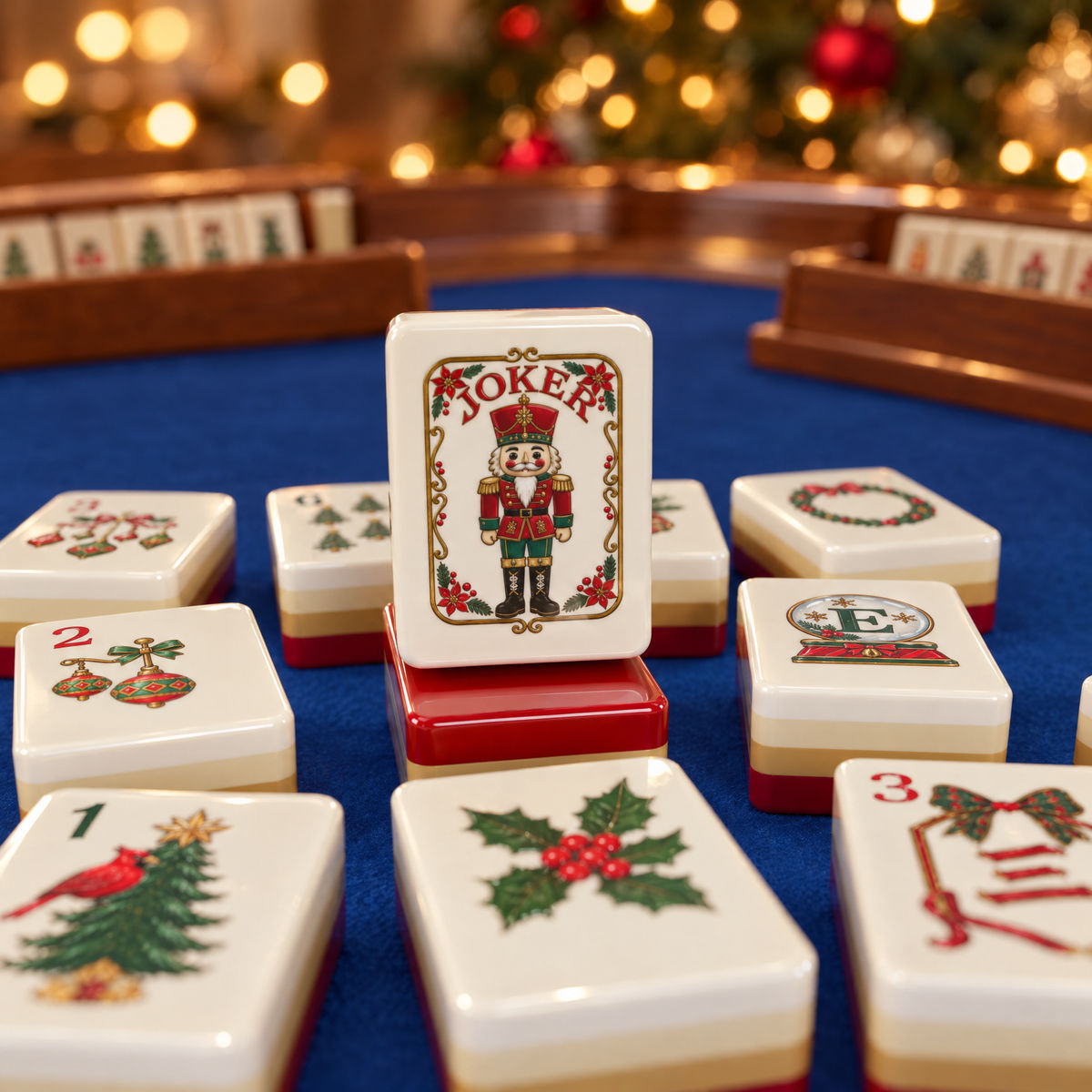
Mahjong lessons in Louisville aren't advertised on every corner, but they exist through community centers, libraries, synagogues, country clubs, and private instructors—search local meetup boards, community recreation departments, and senior centers to find current offerings. Most beginner classes run 6–12 weeks and teach American mahjong (the tile-passing Charleston, the annual National Mah Jongg League card, and standard hand patterns). Expect to spend 2–3 hours per session. Many players also learn through friend-led weekly games once they grasp tile recognition, basic hand structure, and scoring. Mahstead's best-selling mahjong sets come with instruction guides, and purchasing your own set accelerates learning because you see tiles in action outside the classroom. The National Mah Jongg League card (released each spring) is the rulebook for American play—no instructor worth their wind tiles will teach without it.
Where do Louisville players actually find lessons?
Louisville's mahjong instruction lives in three main channels. First, call your local community recreation department, senior center, and public library branches—many run seasonal beginner classes, especially October through March. Second, search Meetup and Facebook community groups using terms like "mahjong Louisville" and "mah-jongg Kentucky"—you'll find weekly game groups that sometimes offer casual coaching. Third, ask at country clubs, Jewish community centers, and women's clubs; mahjong has deep roots in these spaces, and members often recommend private instructors. The Louisville area doesn't have a dedicated mahjong parlor, so most lessons happen in meeting rooms, homes, or community spaces. Call ahead—instructors and group leaders can tell you whether they teach absolute beginners or prefer players with prior tile knowledge.
What does a typical beginner lesson cover in the first four weeks?
A solid beginner class teaches tile recognition, hand structure, the Charleston (the pre-game tile-passing ritual), reading the current National Mah Jongg League card, and exposure rules—the first four weeks focus on not losing money and following the basic flow. Week one: suit identification (Bams, Craks, Dots), wind tiles, dragons, flowers, and how jokers work. Week two: the Charleston step-by-step, including the pass direction and timing. Week three: how to read the card, decode hand notation, and spot a legal hand. Week four: exposure rules (when you can call a pung or kong), basic scoring concepts, and a supervised practice round. Instructors skip the abstract—they play real tiles, use real cards, and let you make mistakes with money off. Most instructors assume you've never played anything similar; they talk slowly through tile names and never rush the Charleston.

How much does instruction typically cost and how long until you're game-ready?
Most Louisville instructors and group hosts charge per session (roughly equivalent to a casual coffee purchase) or ask for a small pot contribution if you're playing for stakes. Class-based lessons through community centers often run 6–10 sessions over 8–12 weeks; private instruction varies widely based on the teacher's experience and group size. You're game-ready when you can recognize tiles without hesitation, complete a Charleston without help, match your hand to the card, and understand why a hand is legal—that takes most new players 4–8 weeks of weekly play. Faster learners crack it in 3 weeks; cautious learners take 10–12. The threshold isn't speed; it's confidence. You're ready when you stop asking "is this a legal hand?" and start asking "how many points is this hand?" Once you have a reliable mahjong set at home, practicing tile recognition while watching TV cuts the timeline by half.
🀄 Shop best-selling mahjong sets →
What equipment do you need to host or join a game after lessons end?
Once you finish a class or join a weekly group, you'll want: a complete American mahjong set (152 playing tiles plus spares), a mat with the card slot and wind markers, a set of racks with pushers for each player, and a dice pair. The set should come with the current National Mah Jongg League card. Mahstead 160-tile sets include everything except the card (which players download free or buy annually from the league). A quality mahjong mat organizes the discard pile, marks the dealer position, and protects your tiles and table. Racks with pushers keep your hand hidden and neat—non-negotiable for serious weekly play. If you're rotating homes, a travel bag or case prevents tile loss and keeps everything organized. Many Louisville players build a small shared inventory: one person owns the set, another owns the mat, a third brings dice.
What you need | Why it matters | Solo or shared? |
160-tile American set | Recognition, tiles for four players | Shared recommended |
Current league card | Defines legal hands; changes every spring | Shared (free download) |
Mahjong mat | Protects table, organizes discard, marks winds | Shared recommended |
Racks with pushers | Hides your hand, prevents cheating | All four players need one |
Dice pair | Determines dealer and draw position | Shared, one pair per game |
Travel bag or case | Prevents loss, enables rotating venues | Shared, one per group |

How does American mahjong differ from what you might see online or in other cities?
American mahjong is a distinct variant played nowhere else—it uses only the current year's National Mah Jongg League card, forbids sequences (chows), limits exposed tiles to pungs (3 identical), kongs (4 identical), and longer melds, and runs the Charleston before every hand. If you learn American rules in Louisville, those rules don't port to Chinese, Hong Kong, or Riichi mahjong, which have different tile counts, hand structures, and win conditions. American play is slower, more rule-bound, and more forgiving for new players because the card constrains options. Online mahjong often defaults to Chinese rules; YouTube tutorials vary wildly. Find a Louisville instructor who explicitly teaches American play, not generic mahjong. The National Mah Jongg League card is your legal anchor—if your instructor doesn't reference it every session, find another class.
🎁 See our most-loved mahjong sets & accessories →
How to assess a class or instructor before signing up
Ask these questions before registering: Does the instructor teach American mahjong, not Chinese or generic variants? Do they use the current National Mah Jongg League card in every lesson? Is the class live (not video-recorded), so you can ask questions? Do they play real hands for real stakes, or just explain rules? Will they tell you when you've made a mistake mid-hand, so you learn why? Do they expect you to bring your own set, or do they provide one? Are absolute beginners welcome, or do they assume prior card-game experience? A quality instructor welcomes beginners, plays hands, corrects mistakes gently, and answers "why is this not a legal hand?" without sighing. Many Louisville groups have a WhatsApp or Facebook thread—join and lurk for a week to see how they communicate. If a group plays fast, skips explanations, or doesn't check winning hands carefully, they're not beginner-friendly; move on.
What to check before you buy your first set to practice at home
Tile size and material. American mahjong tiles come in acrylic or wood; acrylic is lighter, quieter, and travels well. Tile dimensions should allow easy shuffling and stacking without frustration—standard acrylic tiles in a 160-tile set from Mahstead's collection are sized for adult hands and table play.
Set completeness. A 160-tile set contains 152 playing tiles plus spare tiles. Confirm the set includes wind tiles (N/E/W/S), dragons (Red, Green, White), and eight jokers. The card slot and dealer button—sometimes called a wind marker—are usually included; if not, the mat provides them.
Readability. Can you tell Bams from Craks from Dots at arm's length? Older or smaller-print sets strain new eyes. Engraved titles or designs are decorative, but clear, high-contrast tile faces are essential.
Storage and travel. If you're rotating between homes, confirm the set ships in or fits into a travel bag. Loose tiles in a cardboard box invite loss and damage.
Your actual need. If you're playing weekly in one home, a standard set suffices. If you host, consider a mat with reinforced corners that survives repeated shuffling. If you travel, a protective case and racks with pushers are worth the investment.
✨ Find your Mahstead set — free US shipping →
A Louisville mahjong education doesn't end with your first lesson—it unfolds over months as you play real hands and ask experienced players to explain scoring, strategy, and tile memory. Join a class, buy or borrow a set, and show up weekly. The community exists; you just have to ask the right people in the right rooms.

FAQ
Can I learn mahjong online, or do I need an in-person class in Louisville?
In-person instruction is faster because an instructor corrects your Charleston and tile-reading mistakes in real time. Online courses exist but lack immediate feedback. Most Louisville players combine a class with weekly friend-led games; the class builds confidence, and games cement it.
What's the minimum age to take lessons in Louisville?
There's no universal rule. Senior centers and community classes rarely have age floors; country clubs and private groups set their own policies. Call and ask—many instructors welcome players aged 14 and up, and some run family sessions.
Do I need to own a set before I start lessons?
No. Most instructors provide sets for the class. Buy one after you've finished four or five sessions and committed to weekly play; this confirms the investment is worth it and helps you learn tile names faster outside class.
How often should I play to reach the "game-ready" stage?
Once weekly for 6–8 weeks is the standard path. Players who practice or play twice weekly often crack it in 3–4 weeks. Sporadic play (once every two weeks) extends the timeline to 12+ weeks because tile recognition and hand memory fade between sessions.
Is American mahjong played in Louisville differently than in other U.S. cities?
No. American mahjong rules are standardized by the National Mah Jongg League card, which is the same nationwide. What varies is instructor quality, group formality, and local house rules (scoring add-ons, bet amounts). Stick to the card, and your Louisville skills transfer everywhere.
Where can I find other Louisville players once I finish lessons?
Ask your instructor for ongoing group recommendations. Search Meetup and Facebook for "mahjong Louisville." Check community center bulletin boards and library event calendars for drop-in groups. Many players organize standing Thursday or Saturday games in homes; ask at synagogues, country clubs, and senior centers.


View More
View More
View More
