
Mahjong in New York History: From Parlors to Modern Tables
Last updated: Nov 23, 2026
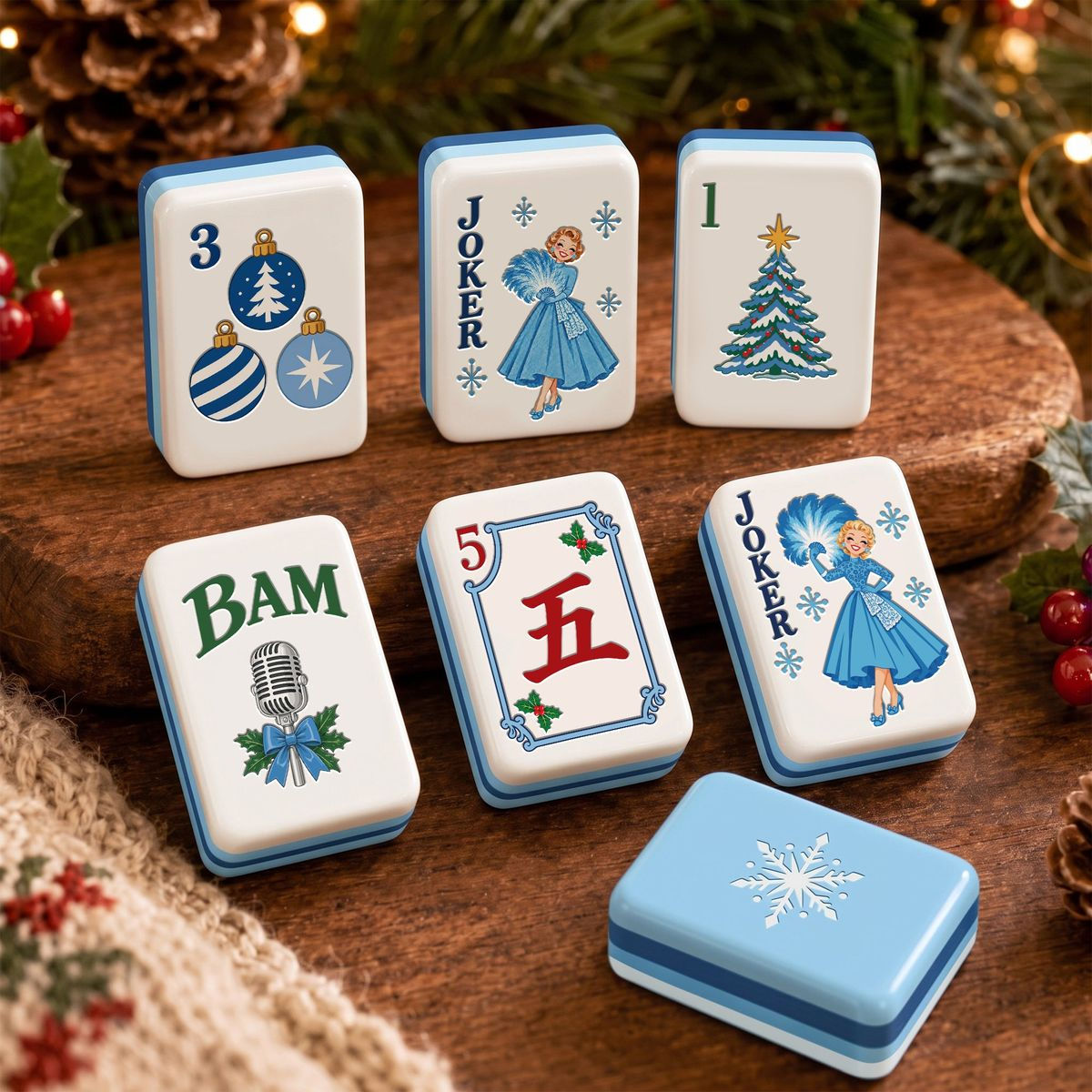
Mahjong entered New York in the early 1920s after the game was imported from China, quickly spreading through Manhattan's elite social circles and Jewish and Italian communities in Brooklyn and the Bronx. By the late 1920s, mahjong parlors operated openly throughout the city; the game filled a void left by Prohibition, offering a legal social gathering that didn't require alcohol. American mahjong, standardized by the National Mah Jongg League in 1937, took hold in New York as the dominant variant, and the city became a stronghold of the game through the mid-20th century. Today, weekly games persist in community centers, synagogues, and private homes across the city. Playing American mahjong requires a 160-tile set with 152 playing tiles plus spares, a mat, racks, and the current year's League card. Our best-selling acrylic sets are designed for players who want durable, engraved tiles that last through seasons of play.
New York's relationship with mahjong runs deeper than most American cities. In the 1920s, when the game arrived from Shanghai aboard ships docking in Manhattan, it found a city hungry for novelty and community—especially one that didn't depend on bootleg liquor. Mahjong fit perfectly into the social fabric of neighborhoods where immigrants and their children were building American lives. The game was democratic: it required no special education, crossed class lines, and offered women a space of their own at the table, which was revolutionary for the era.
How Did Mahjong First Arrive in New York?
Mahjong appeared in New York City around 1920–1921, brought by Chinese merchants and American traders returning from Shanghai. The game exploded into popularity by 1922–1923, particularly among wealthy Manhattan women and uptown social clubs. Department stores and toy shops couldn't stock sets fast enough; mahjong became synonymous with 1920s glamour and modernity. Unlike bridge or golf, mahjong required no aristocratic pedigree—anyone with four people, tiles, and an afternoon could play. Within two years, mahjong parlors opened in basements and storefronts across the city, from the Upper East Side to Chinatown to outer boroughs, each catering to its own neighborhood's players and stakes.

Why Did Mahjong Thrive During Prohibition?
Prohibition (1920–1933) transformed mahjong into the social currency of New York. With speakeasies offering danger and legal uncertainty, mahjong parlors provided an above-board gathering space where women and men could socialize, compete, and form friendships without legal risk. Mahjong clubs became community anchors in neighborhoods where factory workers and shop owners could meet on equal footing. The game didn't serve alcohol, didn't require money to play (though betting occurred), and didn't carry the moral stigma of illegal drinking. For Jewish women in Brooklyn, Italian families in the Bronx, and uptown Manhattan circles, a weekly mahjong game became as routine as bridge elsewhere—a reliable social structure and a form of entertainment during an economically uncertain decade.
When Did American Mahjong Rules Standardize?
The National Mah Jongg League was founded in 1937, the same year it published the first official card of legal American mahjong hands. Before standardization, players followed various rule sets and hand patterns, which created confusion and dispute across the city's competing parlors and clubs. The League's card established a unified, yearly-updated standard that transformed mahjong from a loose social game into a competitive, rule-bound discipline. New York, already mahjong-saturated, embraced the League card immediately. By the 1940s, serious players in Manhattan and Brooklyn belonged to clubs that held tournaments, kept scores across seasons, and studied the card as intently as chess players studied openings. American mahjong became distinctly different from Chinese and Hong Kong variants—no chows (sequences), only pungs, kongs, and quints of identical tiles; jokers integrated into the tile system; and hands drawn exclusively from the annual League card. This American standardization cemented New York's identity as the stronghold of the game in the United States.
🀄 Shop best-selling mahjong sets →
Where Can You Still Find Mahjong Games in New York Today?
New York's mahjong culture remains active, though no longer in commercial parlors. Weekly games operate in synagogues, community centers in Manhattan, Brooklyn, and Queens; senior centers; and private homes in neighborhoods with long mahjong traditions. Libraries and community boards often post information about local clubs and lessons. Senior centers in Forest Hills, Brooklyn Heights, and Forest Hills in Queens remain informal mahjong hubs. The game survives because players are loyal and pass the tradition to their children and grandchildren. To find a game, check community center bulletin boards, contact local synagogues with active social programming, and ask at Jewish centers or cultural organizations. Online meetup platforms sometimes list mahjong groups. Most established games welcome new players with some experience or willingness to learn quickly. The community is tight but inclusive—the key is showing up, learning the League card's current format, and committing to a weekly or twice-weekly schedule.

What Role Did Mahjong Play in New York's Immigrant Communities?
Mahjong became a cornerstone of social cohesion in Jewish, Italian, and Chinese neighborhoods across New York. For Jewish women in Brooklyn and the Bronx, mahjong games were parallel spaces to men's poker or pinochle—a place to maintain friendships, pass time during long winters, and manage household budgets through friendly betting. Italian and Greek communities adopted the game rapidly, and by the 1930s–1940s, mahjong transcended ethnic boundaries, becoming a shared New York experience. The game offered structure to immigrant life: a predictable social calendar, a set of clear rules, and a form of entertainment that didn't require leaving the neighborhood or spending much money. Multigenerational families played together; grandmothers taught daughters and granddaughters the hands and strategy. The game reinforced community identity while also serving as a quiet assertion of modernity and belonging in America. Unlike Old Country traditions that might isolate communities, mahjong was both distinctly Chinese and thoroughly American—it allowed immigrants to honor heritage while embracing American leisure and style.
Era | New York Context | Mahjong's Role | Outcome |
1920–1922 | Post–WWI, Prohibition begins | Urban novelty, legal social gathering | Explosive popularity, parlor boom |
1923–1929 | Peak 1920s, Roaring Twenties, women's liberation momentum | Status symbol, women's social power | Mainstream, cross-class adoption |
1930–1933 | Great Depression begins; Prohibition ends 1933 | Affordable entertainment, community anchor | Transition from parlor to home games |
1937–1945 | NMJL standardization, WWII | Unified American variant, competitive structure | Modern game framework solidified |
1945–1980 | Post-WWII suburban growth, aging player base | Generational continuity, ethnic identity marker | Games spread to suburbs; tradition maintained |
1980–present | Demographic shifts, Chinese immigration wave, senior centers | Cultural heritage, aging players; newcomers rediscover | Steady niche; renaissance in some neighborhoods |
How Has New York's Mahjong Culture Changed Since the 1920s?
The visible, commercial mahjong culture of the 1920s–1930s has faded—no more mahjong parlors, no newspaper headlines about mahjong scandals. What remains is quieter but more durable: home games, club tournaments, and deep tradition in specific neighborhoods and families. Older players—now in their 70s, 80s, and 90s—represent the living continuity with the game's mid-20th-century heyday. Their children and grandchildren sometimes return to the table as adults, drawn by nostalgia or family obligation, and discover the game's genuine appeal. New players, particularly younger professionals and Asian Americans rediscovering heritage, are finding mahjong through social media, streaming, and word-of-mouth in urban communities. New York remains a stronghold, but the game is no longer ubiquitous; it occupies a cherished niche in the city's cultural landscape. The shift from parlor to home game meant the end of commercial stakes and public visibility, but also the end of the predatory betting and fraud that plagued early New York mahjong. Today's New York games are sustained by genuine affection for the game, not economic necessity or status-seeking.
🎁 See our most-loved mahjong sets & accessories →
What to Check Before You Buy Your First Set
If you're starting a game in New York or reviving a family tradition, a quality American mahjong set is essential. Look for durable acrylic tiles that won't chip after years of play—this matters in a city with year-round games. Check that the set includes exactly 152 playing tiles plus spares, a mat with clear grid lines for dealing, and racks with pushers that let players shield their hands. Verify the tile markings are clear and large enough to read across a table. If you're ordering from outside New York, confirm the set ships complete and ready to play—don't assemble tiles yourself. A complete set arrives ready to host a game within the week, and you should have the current year's National Mah Jongg League card before your first session.
How Should You Set Up Your First New York Game?
Arrange four players, ideally with one experienced person to teach. Set up a table large enough for all four to sit comfortably, place the engraved mat at the center, and have each player use a rack with pushers to hold their tiles. Shuffle and organize tiles according to the League's dealing rules. Start with simpler hands from the current year's card, avoid complex quint patterns, and focus on learning suit order (Craks, Bams, Dots) and the basic Charleston (the tile-passing ritual). If someone in your circle played in the 1980s or 1990s, they can mentor the first few sessions. Community centers and libraries in New York neighborhoods sometimes offer beginner lessons; check the boards or call ahead. The game's rhythm—dealing, the Charleston, the building of hand strategy—is what hooks new players into the tradition. After one or two games, most people understand why New Yorkers have played weekly for over a century.
✨ Find your Mahstead set — free US shipping →

FAQ
Did mahjong parlors operate openly in New York during Prohibition?
Yes. Unlike speakeasies, mahjong parlors were legal social venues where players gathered to play without alcohol. They flourished because they offered a safe, respectable alternative to illegal drinking. However, some parlors did tolerate betting, which occasionally attracted mob enforcement or police raids, particularly in less regulated neighborhoods.
What's the difference between American mahjong and the Chinese game New York players originally encountered?
American mahjong (standardized in 1937) eliminated sequences (chows) and simplified the hand structure to pungs, kongs, and quints of identical tiles. The National Mah Jongg League card dictates legal hands yearly. Chinese and Hong Kong variants allow sequences, different tile combinations, and scoring systems. American mahjong is the game still played in New York today.
Where can I find a mahjong game in New York right now?
Check community center bulletin boards in your neighborhood, call local synagogues or Jewish centers about social programs, and ask at senior centers. Many neighborhoods in Brooklyn, Queens, and Manhattan maintain weekly games. Online meetup platforms sometimes list groups. Building a game with friends is also common—start with four people and the current League card.
Do I need the current year's National Mah Jongg League card to play in New York?
Yes. The card changes every spring and is mandatory for competitive and casual play in New York. Players study it to memorize hand patterns. You can purchase the card from the National Mah Jongg League or buy sets that include it.
What's a Charleston, and is it still part of New York games?
The Charleston is the tile-passing ritual at the start of each hand, unique to American mahjong. Three exchanges of tiles (right, across, left) allow players to adjust their starting hands strategically. All New York games follow this protocol—it's part of the standard American rules the League established in 1937.
Can I play mahjong with just two or three people in New York?
Standard American mahjong requires four players. Two- or three-player variants exist but are uncommon in New York's established game culture. If you need a variant, find a group willing to learn modified rules, though most players prefer the traditional four-player format.


View More
View More
View More
