
Is an Expensive Mahjong Bag Worth It? Choosing the Right Case
Last updated: Nov 23, 2026
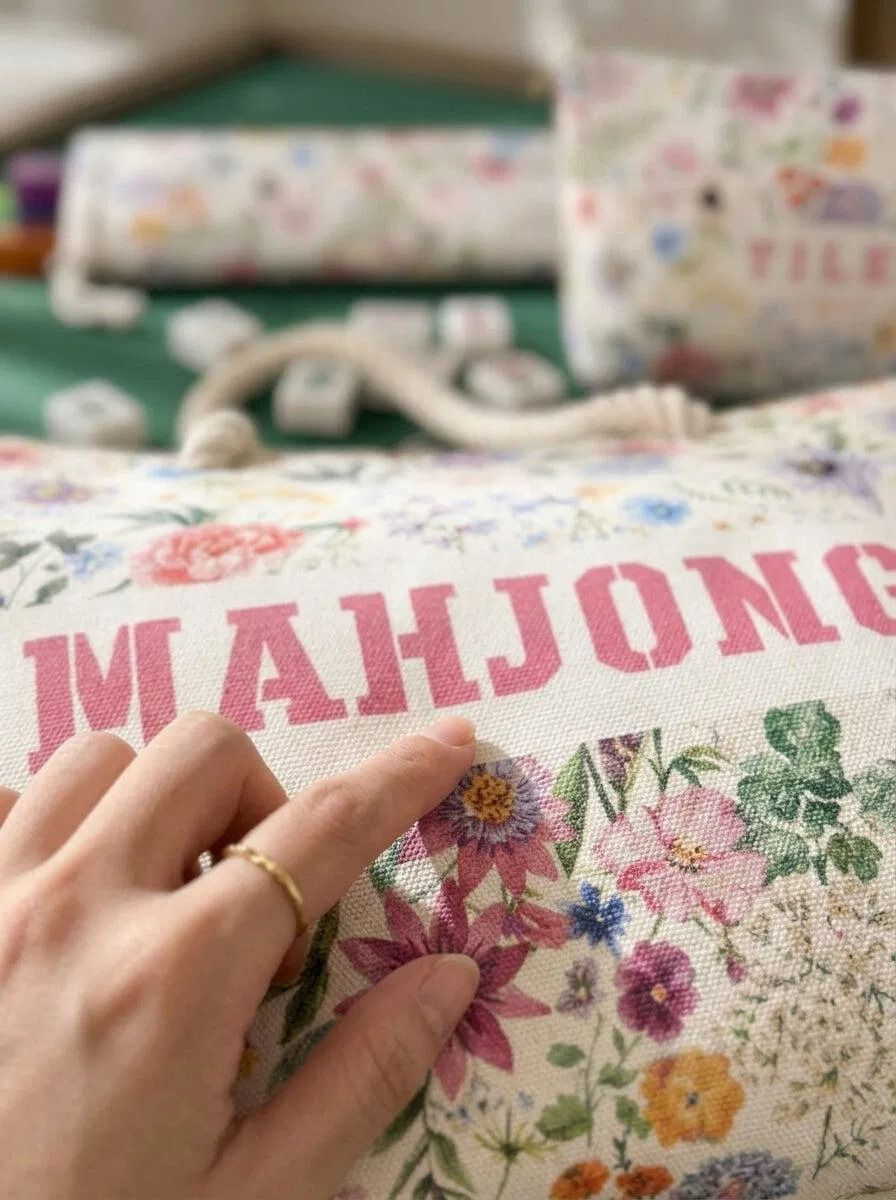
We buy and carry mahjong sets weekly, and the answer hinges on use: casual players who host one game per month at home rarely need more than a basic padded bag, while players who travel to tournaments, multiple venues, or bring full setups monthly justify mid-range or premium cases. A quality mahjong bag protects your 160-tile acrylic set, racks with pushers, mats, and dice from cracking, scratching, and water damage—damage that costs far more to replace. Entry-level bags cost less but hold fewer items and wear faster; mid-range cases add organization and durability; premium cases distribute weight evenly, use thicker materials, and last years longer. Start by asking: Do I transport a full setup weekly? Will I fly with it? If yes to either, a quality case pays for itself in tile longevity. If you play at one home table, a basic bag may suffice—but buying cheap twice costs more than buying right once.
A good mahjong bag protects your tiles, racks, and mat during transport. Whether a premium case is worth the cost depends on how often you travel, what you're carrying, and how long you want it to last.
We buy and carry mahjong sets weekly, and the answer hinges on use: casual players who host one game per month at home rarely need more than a basic padded bag, while players who travel to tournaments, multiple venues, or bring full setups monthly justify mid-range or premium cases. A quality mahjong bag protects your 160-tile acrylic set, racks with pushers, mats, and dice from cracking, scratching, and water damage—damage that costs far more to replace. Entry-level bags cost less but hold fewer items and wear faster; mid-range cases add organization and durability; premium cases distribute weight evenly, use thicker materials, and last years longer. Start by asking: Do I transport a full setup weekly? Will I fly with it? If yes to either, a quality case pays for itself in tile longevity. If you play at one home table, a basic bag may suffice—but buying cheap twice costs more than buying right once.
🀄 Shop best-selling mahjong sets →
What's actually inside a mahjong travel bag?
A mahjong bag holds your entire game setup: a 160-tile acrylic set in its wooden case (or loose in tile compartments), one or two racks with pushers, a mat (rolled or folded), dice, and the current-year card. Most quality bags include padded dividers and elastic straps to prevent tiles from shifting during transport. Premium bags add rigid tile trays that sit flat and separate tiles by type. Bags designed for full setups weigh more but save you from making multiple trips; compact bags fit a set and mat only. Check the interior dimensions before ordering—a set's wooden case measures roughly 9 inches wide, and a rolled mat adds another 4–6 inches in length. We recommend measuring your existing gear first, because a bag that's too small defeats the purpose.

Entry-level vs. mid-range vs. premium: what's the real difference?
Feature | Entry-Level | Mid-Range | Premium |
Material | Nylon or canvas | Reinforced nylon + padding | Heavy-duty nylon, ballistic fabric, or leather trim |
Tile protection | Basic compartments | Padded dividers, elastic straps | Rigid tile trays, custom slots |
Handles/straps | Single handle or thin strap | Reinforced handles + shoulder strap | Ergonomic dual handles, padded shoulder strap, carry wheels option |
Zipper quality | Standard | Reinforced | Heavy-duty YKK or equivalent |
Organization pockets | 1–2 | 3–5 | 5+ with labeled slots |
Durability (years) | 1–2 with weekly use | 3–5 with weekly use | 5+ with heavy weekly/tournament use |
Repairability | Difficult | Possible (handle, zipper) | Easy (parts available) |
Entry-level bags work if you carry only a set and mat. Mid-range bags fit a full setup (set, two racks, mat, card) and include padding. Premium bags add durability, weight distribution, and repairability—they cost more upfront but hold up during air travel, tournament circuits, and years of weekly games.
How often do you actually need to move your setup?
Your answer to this question determines ROI. If you host one game per week at your own table and never transport tiles, a basic drawstring bag or a set's own carry case suffices. If you travel to tournaments, play at multiple venues, or host in different locations monthly, you move your setup 10+ times per month—and that's where bag quality saves you money. Acrylic tiles crack if the bag compresses unevenly during travel; racks splinter if bounced loose inside flimsy fabric. We've seen players repair cracked tiles (costly and rare) or buy a new set after one year of budget-bag travel. Calculate your transport frequency: weekly games at one location = lower priority; tournament travel or two-venue rotation = high priority. Use that number to decide which tier makes sense.
What you'll pay: realistic cost comparison
Prices vary based on size, material, and features—see our travel bag collection for current options. Entry-level bags start lower; mid-range cases represent the sweet spot for most players moving a full setup 1–4 times monthly. Premium bags carry a higher price tag but spread across 5+ years of weekly use, they cost less per transport. A best-selling mahjong set with acrylic tiles costs significantly more to replace than the bag that protects it, so investing in padding and rigid structure is insurance. If you're buying your first quality set, buy a bag worthy of it at the same time; bundling often offers better value than buying separately.
🎁 See our most-loved mahjong sets & accessories →

Common bag mistakes to avoid before you order
Wrong size. Measure your set, mat (rolled), racks, and card together before ordering. A bag too small forces tiles to compress; too large lets them shift during movement. Choosing by price alone. The cheapest bag fails fastest—you'll spend twice as much replacing tiles or buying a second bag. Ignoring carry options. If you walk or use public transit, test the handles or strap yourself; a heavy bag hurts your shoulder. Skipping organization pockets. Without slots for dice, card, and spare jokers, you lose pieces and slow down setup. Not checking zipper quality. Budget zippers jam or split after 20–30 cycles; reinforced zippers last years. Assuming all bags fit two racks. Many compact bags hold only one rack plus the set; measure your rack dimensions (roughly 9" × 3" × 2") and verify clearance.
Is a luxury bag worth it if you're a casual player?
No, unless you travel regularly. A casual player who hosts once monthly at home benefits from a mid-range bag with padding and one or two interior pockets—it protects the set and lasts 3–5 years, which is reasonable. You don't need premium features like leather trim, custom tile trays, or wheel handles if the bag sits at home 30 days per month. Spend the extra money on a quality engraved set or a durable mat instead; those improve every game, not just travel. Conversely, if you're a tournament player moving your setup weekly or flying cross-country quarterly, the premium bag pays dividends in time, tile longevity, and peace of mind.
✨ Find your Mahstead set — free US shipping →
What to check before you buy
Capacity: Does it fit your set case (or loose tiles), two racks, a mat, dice, and the card? Measure all items first.
Zippers and seams: Are they reinforced? Can you feel thick padding when you press the bag?
Handles and straps: Are they padded, dual, or adjustable? Try a loaded bag (or similar weight) to test comfort.
Interior organization: Are there labeled pockets for dice, card, and jokers? Can you access them without unpacking tiles?
Material: Does it feel water-resistant? Check for fabric weight (heavier = more durable) and protective padding at corners.
Warranty or return policy: Can you return or exchange if the bag doesn't fit your setup? (Always check before ordering.)
Reviews from regular players: If available, read feedback from people who move their setup weekly, not just once.
A mahjong bag is worth its cost if it saves you tile damage, reduces setup time, and lasts years. For weekly players, mid-range usually wins; for casual hosts, basic suffices; for tournament circuits, premium justifies itself. Measure, decide your transport frequency, and buy the tier that matches your game—not your neighbor's.

FAQ
Can I use a regular luggage bag or backpack instead of a mahjong-specific case?
You can, but it's risky. Mahjong tile compartments are sized to prevent shifting and protect tiles from pressure. A loose set in a backpack gets crushed if you set it down or lean against it. Regular luggage works for light travel (short drives, one set only) but fails for tournament circuits or multi-setup moves.
How much weight should a mahjong bag handle before it breaks?
A full setup—set, two racks, mat, dice, card—weighs roughly 8–12 pounds. Quality mid-range and premium bags are reinforced for 15+ pounds safely. Budget bags fail around 10 pounds after 50+ cycles of use. Choose a bag rated for at least 20% more than your loaded setup's weight.
Should I buy a bag now or wait to see which set I get?
Measure a standard 160-tile acrylic set in its typical wooden case (roughly 9" × 9" × 4") and a rolled mat (roughly 26" long × 5" diameter) first, then buy the bag. Most quality bags accommodate standard cases and mats. Waiting often means the setup you want sells out; buy a properly sized bag with your first set.
What's the difference between a bag and a case for mahjong?
Bags are soft-sided (fabric), portable, and hold multiple items (set, racks, mat). Cases are hard-sided (plastic or wood), rigid, and often store only the tile set. Bags suit players who move their full setup; cases suit those who store one item or display at home. For travel, bags are better.
Can I return a mahjong bag if it doesn't fit my setup?
Yes—check the return policy before ordering. We recommend measuring your gear and the bag's interior dimensions first to avoid returns. If the bag doesn't fit after arrival, most retailers offer exchanges for a larger model within a set timeframe.
Do expensive bags really last longer, or is it just branding?
Quality materials and construction genuinely extend life. Premium bags use thicker fabric, reinforced zippers, and better padding—these resist wear, tear, and zipper failure. A budget bag with standard zippers fails around year 2 with weekly use; a quality bag lasts 5+ years. The price difference often equals one replacement cycle, so premium bags save money long-term.


View More
View More
View More
