
Hong Kong Mahjong vs. Mahjong Solitaire: Which Game Suits You
Last updated: Nov 23, 2026
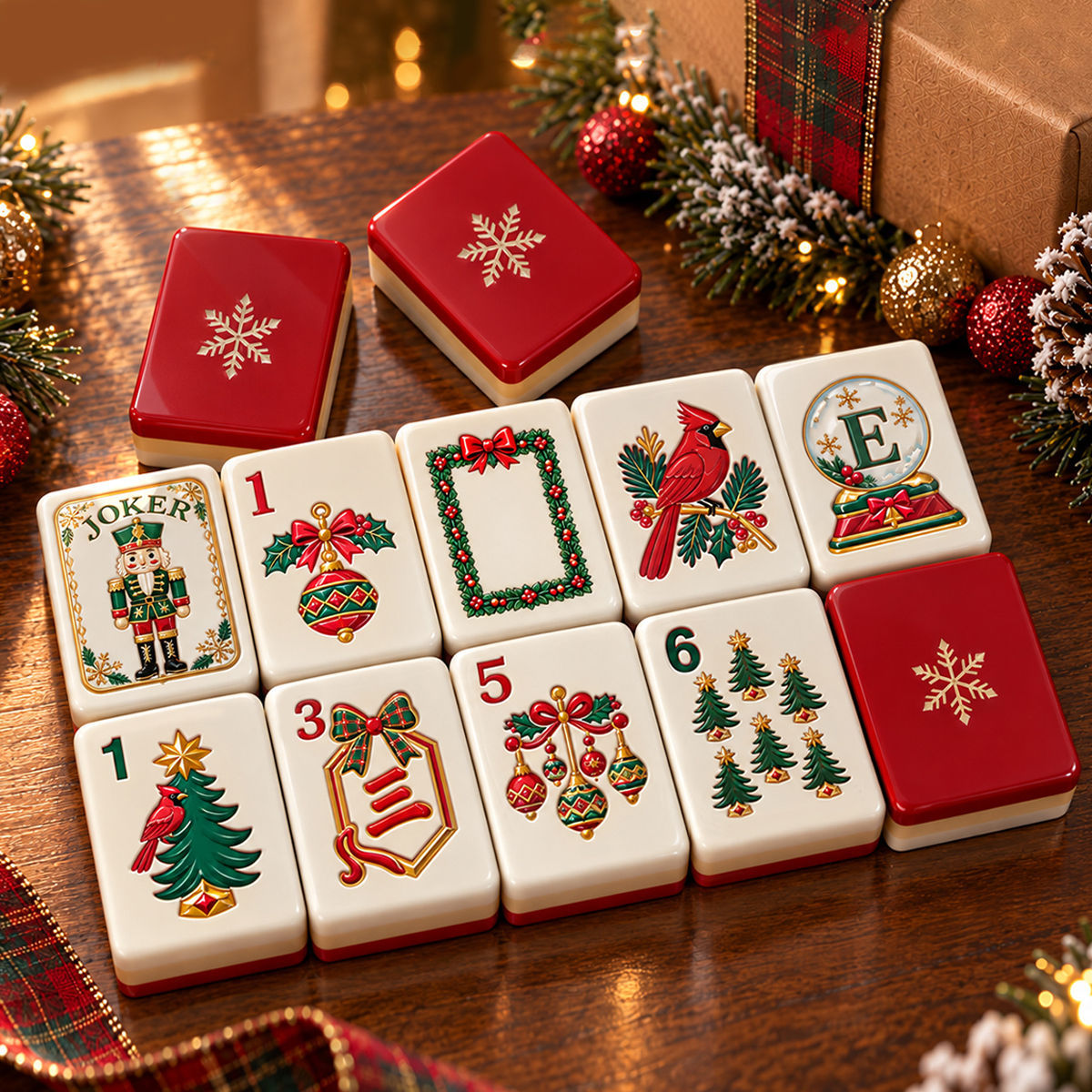
Hong Kong mahjong is a fast-paced four-player gambling game played with 136 tiles (one fewer suit than American mahjong, which uses 152). Players compete simultaneously to form winning hand patterns by drawing and discarding tiles, with rounds lasting 10–15 minutes. Mahjong solitaire is a single-player puzzle game using 144 tiles arranged in a stacked layout; you match pairs of identical tiles to clear the board—no opponent, no real-time play, no luck. Hong Kong mahjong requires strategy and speed; solitaire requires pattern recognition and patience. If you host weekly games with friends, Hong Kong mahjong suits you. If you want a solo brain-teaser on your phone or tabletop, solitaire is the answer. Mahstead makes American mahjong sets; if you're learning Hong Kong rules, you'll need a different tile inventory than ours supplies, but understanding both games deepens your appreciation for the entire mahjong family.
What makes Hong Kong mahjong different from solitaire?
Hong Kong mahjong is a real-time, four-player competitive game with strict tile inventories and winning hand patterns published on seasonal cards. Players draw one tile, discard another, and call tiles from opponents' discards to build melds. Mahjong solitaire is a computer-style puzzle: you see all 144 tiles on screen or board from the start, match identical pairs that are adjacent and unblocked, and win by clearing the layout. Hong Kong mahjong has luck (tile draw order) and skill (tile reading, discard strategy). Solitaire is almost pure skill—you know all tiles and must solve the geometry. The games share the mahjong tile aesthetic but no actual rules.

How many tiles does each game use?
Hong Kong mahjong uses 136 tiles: three suits (Bamboo, Character, Dot) numbered 1–9, four copies each (108 tiles) plus 28 honor tiles—four each of four winds, four each of three dragons, and four flowers. Mahjong solitaire traditionally uses 144 tiles for the standard layout, arranged as a closed set with no spares. American mahjong, by comparison, uses 152 playing tiles (108 from three suits, 16 winds, 12 dragons, 8 flowers, 8 jokers). If you own a best-selling American mahjong set, you have too many tiles and the wrong honor mix for Hong Kong rules. The tile count alone makes switching between variants non-trivial—you cannot play Hong Kong mahjong with an American set.
Can you play solitaire on the same tiles as competitive mahjong?
Yes, but with caveats. Standard solitaire layouts use 144 identical tiles (one full set per tile face). Hong Kong mahjong sets (136 tiles) can be used if you add eight blanks or jokers as filler, but this is not authentic play. Conversely, an American mahjong set has redundant jokers and wrong honors for solitaire's paired-tile matching. In practice, competitive mahjong players who also enjoy solitaire keep two separate collections. If you play weekly mahjong nights with a fixed group, investing in tiles suited to your primary game—whether Hong Kong, American, or Chinese—is smarter than trying to adapt one set across variants. The tile composition, art style, and thickness matter for shuffle feel and speed, which directly affect game quality during live play.
How do rules differ between these two games?
Rule comparison: Hong Kong mahjong vs. mahjong solitaire
Aspect | Hong Kong Mahjong | Mahjong Solitaire |
Players | Four (simultaneous play) | One (no opponent) |
Tiles drawn | 13 + 1 draw = 14 total in hand | All 144 visible; you select matches |
Win condition | First to complete legal hand pattern | Clear all tiles by pair-matching |
Hand patterns | Defined by seasonal card (chow, pung, kong) | No pattern requirement—just matching |
Luck factor | High (draw order, discard flow) | Very low (pure pattern recognition) |
Timing | Real-time; rounds 10–15 min | Self-paced; 5–30 min per puzzle |
Jokers/blanks | Rare or none used | Never—exact pair matching required |
Strategy depth | Reading opponents, bluff discarding | Spatial memory, lookahead |
Hong Kong mahjong demands moment-to-moment decisions under mild time pressure. Solitaire rewards patience and methodical analysis. Neither is "easier"; they exercise different cognitive skills.

What do beginners choose, and why does it matter?
New mahjong learners often ask: should I start with solitaire or competitive play? Solitaire teaches tile recognition and calms the mind, but it doesn't prepare you for live-game speed or social dynamics. If you want to join a weekly mahjong circle—Hong Kong, American, or Chinese—jump directly into competitive play with experienced players who can guide you. Solitaire is a fun warmup or break-time activity, not a training ground. If you're drawn to mahjong for meditative solo play, solitaire is your answer. If you crave social play and mental challenge, choose the competitive variant your local community plays (American mahjong dominates in the US; Hong Kong mahjong is strong in coastal cities and Asia-focused groups). Your first set should match your actual play style, not an imagined one.
🎁 See our most-loved mahjong sets & accessories →
What should you check before buying a set for your game?
Before purchasing, clarify three things: (1) What game will you actually play? Ask your group directly; do not assume. (2) What tile count and suits does that game require? American mahjong needs 152 tiles with specific wind and dragon allocations. Hong Kong needs 136 with different honors. Solitaire typically uses 144 identical tiles. (3) Will you play live or solo? Live play demands durable acrylic or bamboo tiles that shuffle well and stack neatly on racks. Solo play can use cheaper plastic or digital versions. If you're hosting weekly American mahjong games, a set with a quality mat and pushable racks transforms the table and speeds up play—players can track their hand without fumbling. If you're a solitaire enthusiast, tile aesthetics and layout clarity matter more than shuffleability. Mahstead's best-selling American mahjong sets come as 160-tile sets (152 playing tiles plus spares) and are engineered for weekly group play, not solitaire.
What to check before you buy
Tile count: Does it match your chosen game's requirement (American 152, Hong Kong 136, solitaire 144)?
Suit composition: Hong Kong uses three suits; American adds winds, dragons, flowers, and jokers—confirm your set has them.
Thickness and weight: Competitive play needs tiles that shuffle smoothly and stack without warping. Solitaire can use lighter stock.
Layout and stacking: If playing live, verify the set includes a mat and racks with pushers—they're not luxuries, they're functional necessities.
Storage: Competitive sets need sturdy bags or cases. Solitaire sets can use smaller containers.
✨ Find your Mahstead set — free US shipping →
The deepest lesson: Hong Kong mahjong and mahjong solitaire are distinct games, not variants of the same ruleset. Calling them both "mahjong" is like calling poker and solitaire "card games"—technically true but misleading. Knowing which one you want before you invest in tiles, mats, and racks saves money and frustration. Visit your local community center, library, or synagogue to watch a live game, or download a solitaire app to test the feel. Once you've felt the rhythm of your chosen game, invest in a set built for that purpose.

FAQ
Can I play Hong Kong mahjong with an American mahjong set?
No. Hong Kong mahjong uses 136 tiles with a specific honor mix (four each wind, three dragons, four flowers). American sets have 152 tiles including jokers and a different wind-to-dragon ratio. The tile counts don't align, and jokers cannot substitute for missing honors in Hong Kong rules. You'd need a dedicated Hong Kong or Chinese set.
Is mahjong solitaire good practice for competitive mahjong?
Solitaire teaches tile recognition and pattern spotting, which helps slightly, but it doesn't build game intuition. Competitive mahjong demands speed, opponent reading, and discard strategy—none of which solitaire trains. Play live with a group to learn fast; use solitaire as a break, not a tutor.
How long does a typical Hong Kong mahjong game take?
One round (one hand) takes 10–15 minutes. A session of eight rounds (one full game) takes 90–120 minutes, depending on player speed and conversation. American mahjong rounds are similar, though expert players move faster.
What's the learning curve for each game?
Mahjong solitaire is learnable in 5–10 minutes—match tiles, avoid blocking yourself, clear the board. Hong Kong mahjong takes 4–8 weeks of weekly play to feel confident with hand patterns, discarding, and calling. American mahjong requires learning the seasonal card and specific hand patterns, typically 6–12 weeks. Competitive play always takes longer than solitaire.
Can I teach my kids mahjong solitaire before competitive mahjong?
Yes. Solitaire is age-appropriate from about age 6 and builds tile familiarity without gambling or social pressure. Teach competitive mahjong (Hong Kong or American) once they've practiced pattern recognition and have patience for a 15-minute round. Most kids enjoy solitaire as a digital or tabletop puzzle first.


View More
View More
View More
