
Hong Kong Mahjong Dice and Wall Breaking: Rules and Setup
Last updated: Nov 23, 2026
In Hong Kong mahjong, the dealer rolls two dice after the wall is built. The sum determines which player receives the first tile and which wall section is "broken." The dealer counts around the table—traditionally East, South, West, North—and then counts the breaker's wall (built in stacks of two tiles, 34 stacks per player) from right to left. The count lands on a stack; the dealer draws from that point and passes tiles counterclockwise. The ritual takes 10–20 seconds and anchors the fairness of the draw. American mahjong skips dice entirely—one player simply designates where to break the wall. Hong Kong variants (including Riichi and Taiwanese) use dice, and the ceremony signals respect for chance and equal odds. If you host Hong Kong games, quality dice from acrylic or resin sets ensure they roll true on any playing surface.
Hong Kong mahjong breaks the wall using two dice rolled by the dealer after the wall is built. The sum determines which player receives the first tile and which wall section is "broken." The dealer counts around the table—traditionally East, South, West, North—then counts the breaker's wall (built in stacks of two tiles, 34 stacks per player) from right to left. The count lands on a stack; the dealer draws from that point and passes tiles counterclockwise. The ritual takes 10–20 seconds and anchors the fairness of the draw. American mahjong skips dice entirely—one player designates where to break the wall by hand or eye. Hong Kong variants (including Riichi and Taiwanese) use dice as law, and the ceremony signals respect for chance and equal odds.
🀄 Shop best-selling mahjong sets →
Why does Hong Kong mahjong use dice for the wall break?
In the mid-20th century, dice became the standard method to remove human bias from wall selection. Dice are impartial, visible, and fast—everyone at the table trusts the roll. American mahjong players, by contrast, evolved without a strong dice tradition; they use hand-eye or verbal designation. Hong Kong's method ensures fairness across hundreds of thousands of games played simultaneously in clubs, homes, and gambling halls. The ritual persists because it works.

How do you roll and count the dice correctly?
The dealer (usually East) rolls two six-sided dice into the center of the wall or onto the mat. Add the pips: a roll of 3 and 5 = 8. Count eight players around the table starting with the dealer and moving clockwise (East → South → West → North → East…). Whoever lands on eight becomes the breaker. Next, count eight stacks along the breaker's wall from the right end, moving toward the left. The stack where your count lands is the break point. Draw the two tiles above that stack—that is your first hand tile. Pass the next two tiles to the left, and continue around. Common mistake: counting wall stacks counterclockwise when you should count right-to-left. Another: forgetting that stacks contain two tiles per stack, not one.
What's the difference between Hong Kong and American wall breaks?
Aspect | Hong Kong | American |
Dice roll | Required; dealer rolls 2d6 before draw | Not used; wall stands unrolled |
Wall unit | 34 stacks per player, 2 tiles per stack | 152 tiles, 38 per player, typically dealt in pairs |
Who breaks | Counted via dice sum | Designated by player choice or count |
Fairness signal | Dice = impartial chance, visible ritual | Hand/eye = faster, less formal |
Game length | 13–16 turns typical | 13–14 turns typical |
Tile order | Sequence driven by die roll, east-to-south flow | Often determined by card-based hand list |
American mahjong players value speed and card-based hands; Hong Kong players honor the dice roll. Both ensure no one cheats by pre-selecting their wall. If you host both variants, you'll need dice for Hong Kong and a clear wall-break method for American play.
What happens if the dice roll gives an impossible count?
If two dice sum to a number larger than four (the number of players), count modulo four: a roll of 6 means player 2 (since 6 mod 4 = 2). Some houses rule that rolls of 1 or 2 are rerolled because they seem unlucky; others accept them without question. If your count lands on the dealer themselves, the dealer becomes the breaker and draws first. If the count lands exactly on the break point's edge (rare), use the stack immediately to the left as the break. The key: agree on your house rule before the first hand. Write it down if you play weekly, or reference a printed Hong Kong ruleset. Confusion here stops the game cold.

How do dice affect strategy and play flow?
Unlike American mahjong (where hands come from a fixed card released each spring), Hong Kong dice rolls distribute tiles pseudo-randomly throughout the year. This variability rewards adaptability: you must read your hand quickly and pivot from initial draws. The dice also elongate setup—5 to 10 seconds of ritual before tiles are dealt—which gives nervous players a moment to breathe and re-focus. Expert players use that pause to observe the wall's remaining height and other players' faces. Beginners often rush the dice ritual; slowing down lets you absorb table mood and tile flow.
🎁 See our most-loved mahjong sets & accessories →
What dice should you use, and does the set matter?
Use two standard six-sided dice with faces 1–6, typically included in Hong Kong or Asian mahjong sets from our best-selling collection. Quality dice should be:
Evenly weighted – roll from any angle without bias toward 1, 6, or a corner.
Readable at arm's length – pips must be clear under indoor light; acrylic or resin dice work best.
Sturdy – survive thousands of rolls over months without chipping or fading.
Paired – use the same two dice every session so players get familiar with their feel and roll pattern.
Cheap dice from discount sets often favor certain numbers; after 50 rolls, players notice and trust evaporates. If you host weekly games, treat dice as part of your core ritual and inspect them every few months.
How do you teach a beginner the dice-and-wall sequence?
Step-by-step checklist for first-time Hong Kong players:
Build the wall – each player stacks 34 sets of two tiles in front of them (68 tiles per player).
Agree on dealer – often East sits designated before play, or you draw tiles to choose.
Position the wall – arrange the four walls in a square at the table center, with a 4-inch gap at dealer's right (where discard pile goes).
Roll the dice – dealer tosses two dice toward the center; announce the sum aloud.
Count players – start at dealer (East = 1) and count clockwise around the table.
Identify the breaker – whoever you land on becomes the wall-breaker.
Count the breaker's wall – from the breaker's right end, count stacks left; stop at the sum you rolled.
Break at that point – the two tiles above the break point are the dealer's first draw; pass subsequent pairs counterclockwise.
Continue play – follow your house ruleset for discards, calls, and scoring.
Teach this once with your hand guiding; walk a beginner through steps 4–8 aloud on their first hand. After three hands, they'll do it alone.
✨ Find your Mahstead set — free US shipping →
What to check before you buy dice for Hong Kong mahjong:
Included in your set? – Our best-selling mahjong sets include two dice; verify before purchase if you're buying a tray-only or partial set.
Standard 1–6 faces – some decorative dice show symbols; ensure yours show Arabic numerals or clear pip dots.
Tested roll – if buying separate dice, roll each 20 times on a flat surface and note if one number appears more than twice as often as others.
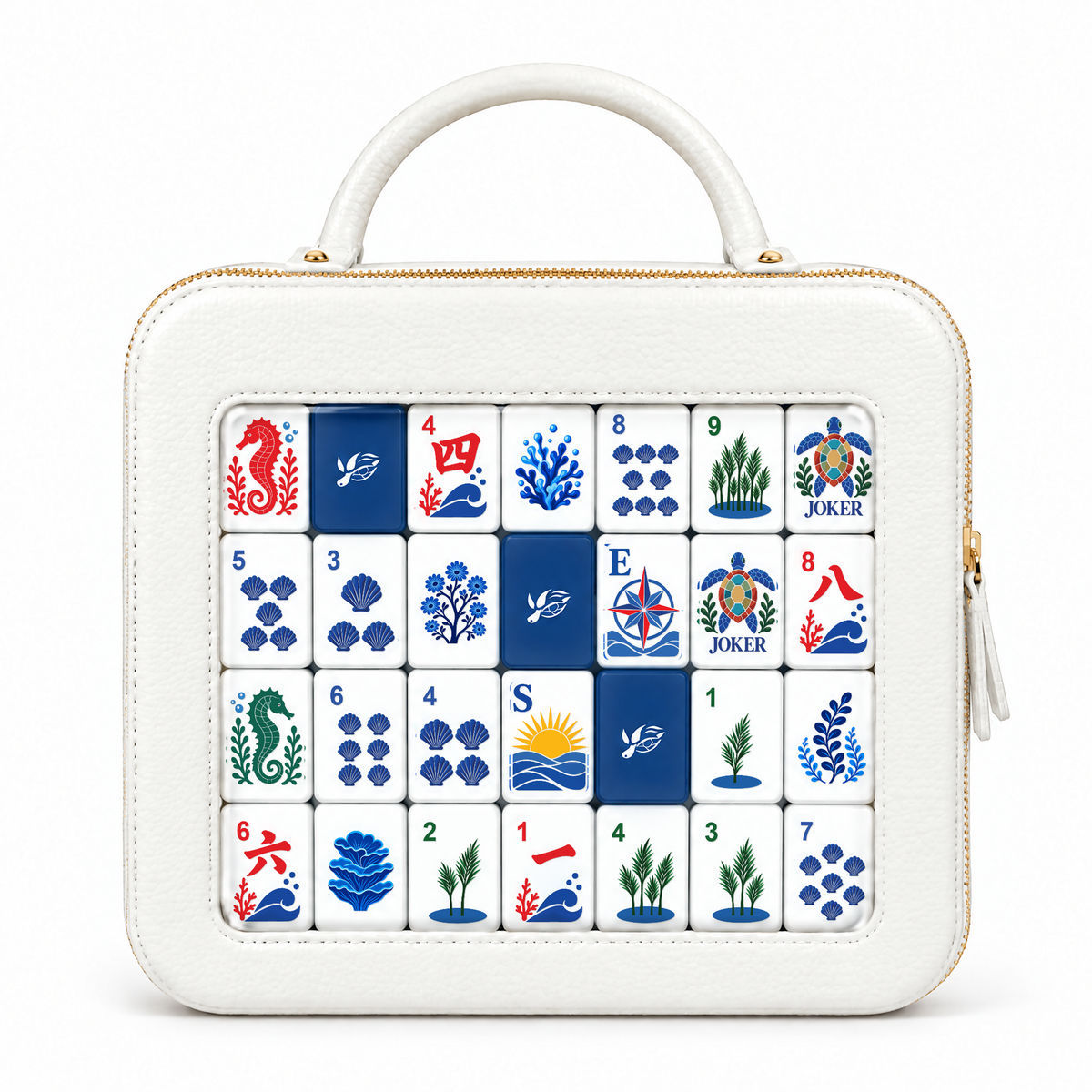
Storage – keep dice in a small pouch or compartment of your mahjong bag to prevent loss and protect against wear.
Backup pair – if one die cracks or is suspected of bias, have a spare ready so play doesn't pause.

FAQ
Can you reroll dice if you don't like the result?
No. In Hong Kong mahjong, once the dice are rolled and the sum called aloud, the result stands. Rerolling on dislike invites suspicion of collusion. If a die bounces off the table, the standard rule is to reroll both dice.
Do dice rolls affect which player wins more often?
No. Dice determine only tile sequence and wall break point, not hand strength or discard order. Skill, memory, and card reading drive winning. Over hundreds of hands, dice variance cancels out.
What if someone claims the dice are weighted?
Stop play, test the suspect die by rolling it 50 times on a flat surface and tracking results. If one face appears 15+ times in 50 rolls, replace it. Keep a control die handy for comparison.
Is there a "lucky" way to roll the dice?
Superstition, not rule. Some players blow on the dice, roll underhand, or use ritual words. None affect outcome. House rules don't forbid ritual; they just forbid interference with the roll after release.
Can you use digital dice or a random number app instead?
Technically yes, but no. The physical dice roll is part of Hong Kong mahjong's ritual and trust. Using an app removes transparency and table engagement. Stick to two six-sided dice every time.


View More
View More
View More
