
Easiest Mahjong Rules for Expats: Learn American Mahjong Fast
Last updated: Nov 23, 2026
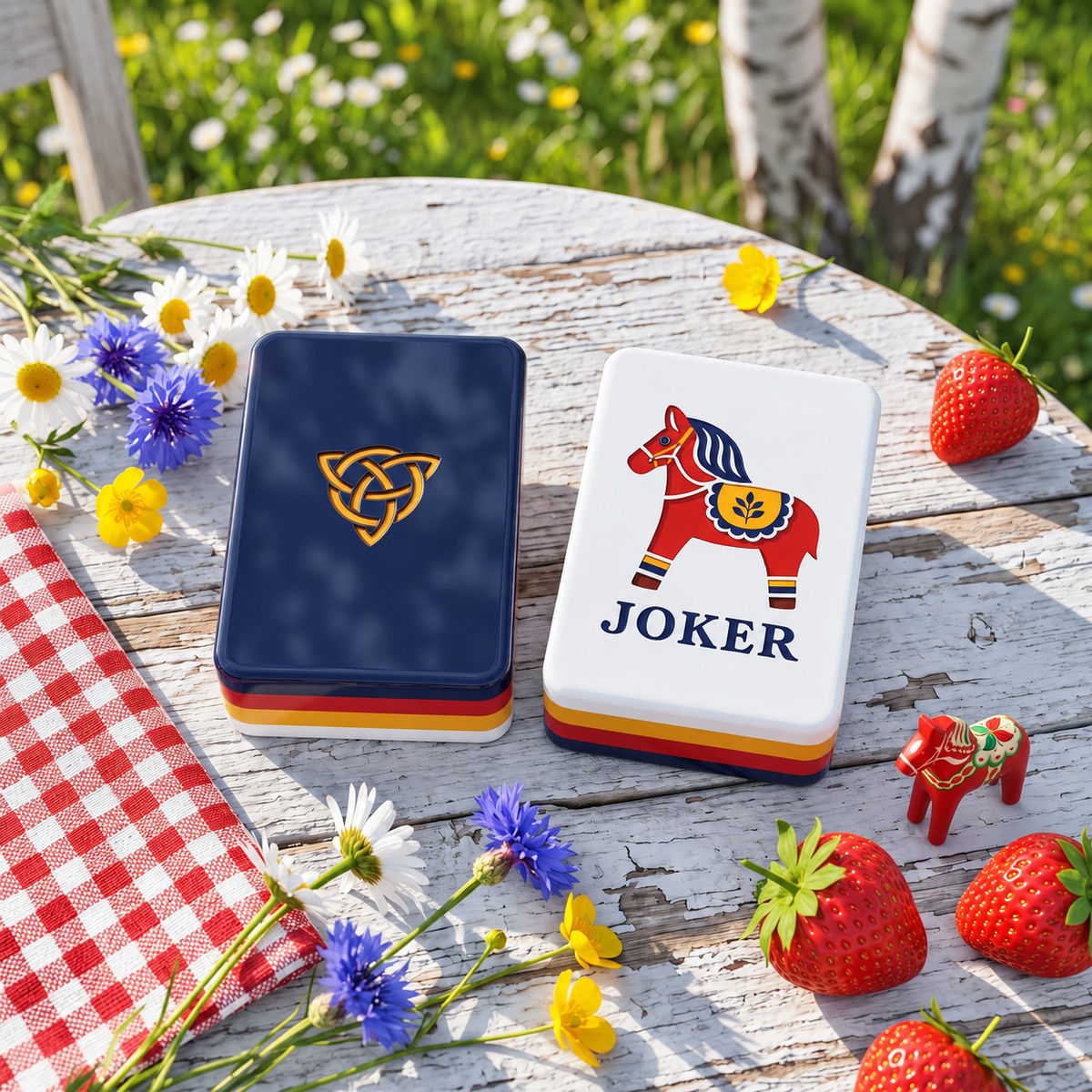
American mahjong is easier than Chinese, Hong Kong, or Riichi variants because it eliminates sequences (chows), relies on one printed card for all valid hands, and requires only 13–14 tiles to win. You play four players, 152 tiles, and 8 jokers—one round lasts 10–20 minutes. Unlike variants where you memorize hundreds of hand patterns, American mahjong gives you a National Mah Jongg League card (updated every spring) listing all winning combinations for that year. The core rule: match your 14 tiles to any pattern on the current card, expose your melds as you draw, and call "mahjong" when you win. Most expats master the basics in one sitting and play competitively within a month. We recommend our best-selling acrylic sets because the tile size and bright colors help newcomers spot suits and honor tiles instantly.
What is American mahjong, and why is it simpler than other versions?
American mahjong strips away memory and improvisation. Chinese and Hong Kong games require you to remember discards and invent winning hands; you play until someone forms a legal pattern. American mahjong hands come only from one printed card—the National Mah Jongg League card, issued every spring. The card shows roughly 200 valid hands, and your goal is to match your tiles to one of them. This means no sequences (called chows)—only identical sets called pungs (three tiles), kongs (four), quints (five), and sextets (six)—plus pairs. Because the card changes every year, the game stays fresh, but the ruleset itself never changes.

How do you actually win a hand in American mahjong?
To win, you must hold exactly 14 tiles and match them to a pattern on that year's card. The pattern must include a pair (two identical tiles) plus four other melds—each meld is identical tiles: pung, kong, quint, or sextet. For example, a hand might be "pair of Souths + pung of 5 Craks + kong of 1 Bams + quint of Red Dragons + sextet of 9 Dots." You draw one tile each turn, discard one, and expose melds when you form them. When your hand matches the card exactly, you announce "mahjong" and stop play. The key rule: jokers can never appear in a pair or a single tile—only in melds. If you play American mahjong regularly, you'll recognize the common hand structures (like "Like Number" or "All Honors") within weeks.
🀄 Shop best-selling mahjong sets →
What equipment do you need to start playing this week?
A standard game requires one 160-tile American mahjong set (152 playing tiles plus spares), a card for the current year, and a mat or table. The mat keeps tiles upright and organized; pushing small tiles around a bare table is slow and frustrating. You'll also want a rack to hold your tiles neatly—expats especially appreciate racks because they take the guesswork out of organizing your hand. A cloth bag protects your set during transport. Unlike Chinese mahjong, you don't need score sheets or a betting framework; American mahjong scoring is simple (first to win a hand wins the round; play eight rounds). Most expats buy a set once and reuse it for years.
Equipment | What it is | Why expats need it |
Tile set | 152 tiles + 8 spares in acrylic or bone | Clear colors, easy to read suits and numbers |
Mahjong mat | Padded fabric mat with rack slots | Keeps tiles upright, prevents sliding on bare tables |
Rack with pushers | Wooden or bamboo holder + small sticks | Organizes your hand, speeds up play, reduces hand fatigue |
Card (current year) | Printed or laminated winning patterns | Legal proof of your hand; updated each spring |
Bag or case | Protective carry bag or hard case | Keeps tiles together if you travel or move |
🎁 See our most-loved mahjong sets & accessories →
What mistakes do beginners and expats make most often?
Misreading the card. New players call a hand that doesn't match—double-check the suit order and joker placement before announcing. Using jokers in pairs. Jokers are wildcards only in melds, never in the pair or as single tiles. If you try this, experienced players will stop you. Forgetting which player discarded. In American mahjong, unlike some variants, you cannot call a discard from three turns ago—you must call immediately. Exposing melds too early. You don't have to expose a pung until you're forced to; holding it hidden keeps your hand harder to read. Confusing the Flower tiles. There are eight Flowers (two each of Plum, Orchid, Bamboo, Chrysanthemum). They're not part of most hands; if drawn, you set them aside and replace them with spare tiles. Expats often miscount these in early games.

How do the Charleston and turn order work?
Before the first hand, players pass tiles in a ritual called the Charleston. Each player passes three tiles to their right, then three to their left, then three across (over the center). This shuffle randomizes your draw and is part of the game's social magic. After the Charleston, the East player (usually determined by dice) draws 14 tiles, and South, West, and North draw 13 each. On your turn, you draw one tile, then discard one. If another player needs your discard for an exposed meld, they call it immediately and take it; you then draw from the wall again. Play continues until someone wins or the wall runs out (a draw). The round resets with a new East player; most games play eight rounds.
✨ Find your Mahstead set — free US shipping →
Where do expats in your area usually learn and play?
Most cities have mahjong groups in community centers, libraries, synagogues, or country clubs—search your local Meetup board, community center bulletin board, or synagogue events calendar. Expats often join Chinese cultural associations, retirement communities, or university alumni clubs that host regular games. Ask your neighbors or coworkers; mahjong groups love welcoming newcomers. Many groups provide sets and teach the rules during the first visit. If you can't find a group, hosting a game at home is fast and inexpensive: gather three friends, learn the rules from our beginner guide, and play for fun. One tip: tell newcomers to the group that American mahjong is "no memory required—everything's on the card"—this attracts expats who were intimidated by other variants.
What to check before you buy a set
Tile size. Standard tiles are roughly 1⅛″ × ¾″ (30mm × 21mm). If you have aging vision, test a set in person before buying; acrylic tiles at this size are readable from arm's length. Color clarity. Ensure the three suits (Bams, Craks, Dots) are visually distinct—green for Bams, red for Craks, white for Dots. Avoid sets where suits blur together. Joker count. American play uses 8 jokers, always. A 160-tile set includes spares (extra jokers and/or blanks) beyond the 152 playing tiles; never add spares to the game. Bag or case fit. Measure your set box before ordering a bag; an oversized bag wastes space; an undersized one won't close. Card year. Confirm you have the current year's National Mah Jongg League card—the card changes every spring and hands from old cards are invalid.
FAQ
Can I learn American mahjong without a group or teacher?
Yes. Read a beginner guide, watch one YouTube tutorial round, and play with friends who each have the current card. Most players master basics in one session of 4–6 hands, then refine strategy over weeks.
Is American mahjong very different from Chinese mahjong?
Yes—no memory of discards, no sequences, no improvised hands, and all valid hands are printed on one card. Chinese mahjong is harder for expats because you must memorize hundreds of hand patterns and remember each discard.
What does "expose" mean, and when do I do it?
Expose means lay a completed meld (pung, kong, quint, sextet) face-up on the table. You must expose when you form a meld from another player's discard; you may expose a meld drawn from the wall whenever you choose.
Can I use the same mahjong set with my family if we play both American and Chinese mahjong?
No. Chinese mahjong sets have 144 tiles and no jokers; American sets have 152 tiles plus 8 jokers. You'll need both sets for both games.
How long does one game (eight rounds) actually take?
One complete game is usually 60–90 minutes, including chatter and learning. Each round lasts 10–20 minutes; fast players finish in under 10 minutes.
Do I need to buy an expensive set, or will a cheap one work?
A durable acrylic set lasts for years and costs less than a bone-bamboo set; cheap plastic sets wear out and tiles crack. Buy a mid-range acrylic set once and use it for decades.


View More
View More
View More
