
Chinoiserie Mahjong Tote: Style & Protection Combined
Last updated: Nov 23, 2026
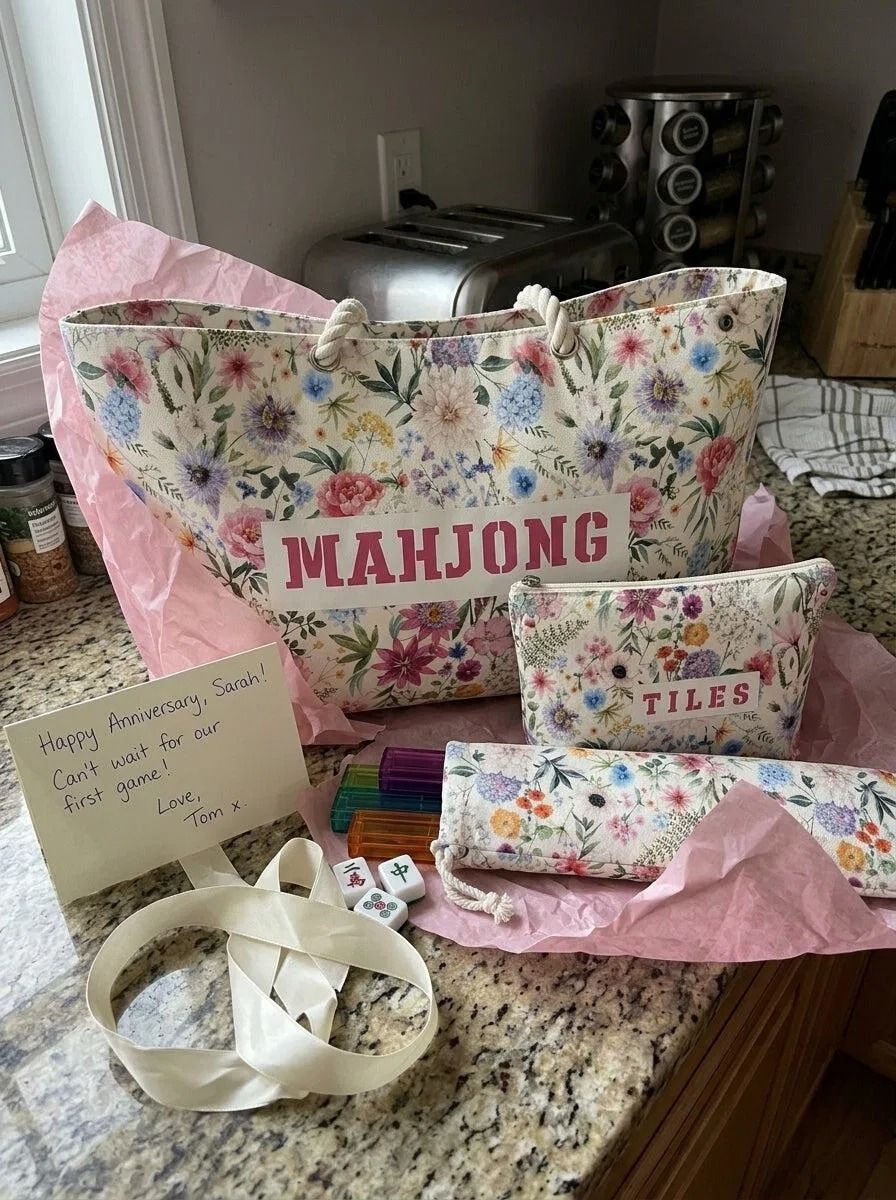
A chinoiserie mahjong tote is a decorative fabric bag featuring traditional East Asian motifs—dragons, birds, florals, pagodas—sized to hold a full 160-tile acrylic mahjong set with room for a mat and racks. These bags typically measure 12–16 inches wide and 10–14 inches tall, with padded interior or reinforced handles to protect tiles during transport. They're sold as standalone accessories or bundled with sets; pricing varies by design and material based on embroidery detail and lining quality. A quality tote prevents tile chips during car rides or between homes, and the chinoiserie aesthetic signals to your mahjong circle that you take the game seriously. Avoid unpadded canvas totes for regular play—tiles need cushioning. Choose one with a zippered top and interior pockets for jokers, racks, and the annual National Mah Jongg League card.
What size tote fits a full American mahjong set?
A standard American mahjong set contains 152 playing tiles plus 8 jokers—roughly 160 pieces total in acrylic, which adds weight and bulk. Your tote needs to hold that set plus a mat (typically 27×27 inches folded), a pair of wooden racks with pushers, and a few small items like the card and dice. Look for bags measuring at least 13×13×6 inches internally; anything smaller will force tiles into a hard squeeze, risking corner cracks. Chinoiserie totes in our travel bag collection are designed with mahjong dimensions in mind, so you won't waste time testing fit.
🀄 Shop best-selling mahjong sets →

How do you protect tiles from damage during transport?
Acrylic tiles chip easily when they knock together or press against hard corners during a car ride. A quality chinoiserie tote should have at least one inch of padding on the base and sides—felt, foam, or quilted cotton absorbs shock. Keep tiles in their original bamboo or wooden racks inside the tote; don't pile loose tiles in the bag bottom. Store the mat separately if the tote is small, or fold it gently around the racks to create a buffer layer. Zip the bag fully and place it on a flat car seat rather than the trunk, where rattling occurs. A 160-tile set represents real money—invest in a tote designed for tile protection, not just fashion.
What design details matter in a chinoiserie mahjong tote?
Chinoiserie motifs vary widely: some totes feature hand-embroidered dragons or cranes, others printed florals or pagoda scenes. Hand embroidery is durable and ages beautifully but costs more; screen-printed designs are lighter on the wallet but may fade after years of weekly games. Check the handle attachment—double-stitched or riveted handles resist tearing under the weight of tiles and racks. Interior pockets are a genuine quality-of-life feature: one slim pocket for the mahjong card, one deeper pocket for jokers and dice keeps everything findable. Zippers should be sturdy plastic or metal, not cheap nylon. The bag's exterior fabric matters too—dense cotton canvas outlasts thin polyester, and natural dyes in chinoiserie patterns often age more gracefully than synthetic colors.
Which mahjong players need a chinoiserie tote?
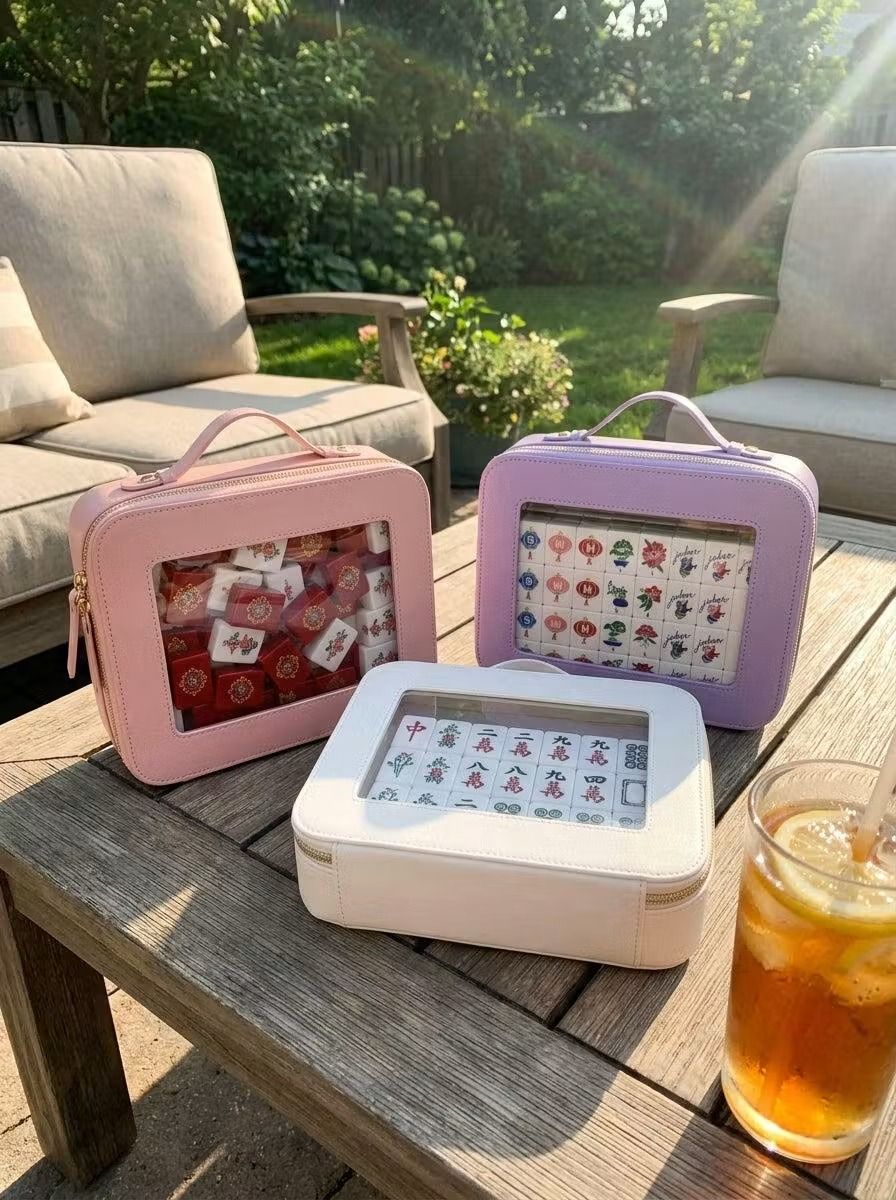
If you host or attend weekly games, a dedicated tote keeps your set safe and sends a clear signal that mahjong is a valued ritual, not a casual thing. Players who travel to tournaments, play at multiple locations, or move sets between home and a club storage cabinet absolutely need one. Collectors and gift-givers use chinoiserie totes to elevate a mahjong set purchase—it's the equivalent of gift-wrapping done right. Beginners just learning the game may not need one immediately, but anyone committed to playing year-round benefits from tile protection and organized storage. If you own one of our best-selling mahjong sets, a matching tote turns your investment into a portable ritual.
🎁 See our most-loved mahjong sets & accessories →
How do you choose between chinoiserie tote styles?
Style | Best For | Key Feature | Check Before Buying |
Hand-embroidered dragons | Collectors, gift-givers | Durable, ages beautifully | Verify thread count; confirm interior padding |
Printed florals | Weekly players | Lightweight, easy care | Test zipper smooth operation; check seams |
Padded quilted | Frequent travelers | Shock absorption | Measure interior width; confirm tile fit |
Dual-handle structured | High-traffic games | Weight distribution | Confirm handle stitching; test weight capacity |
The decision hinges on three factors: frequency (weekly play → padded tote; occasional → printed is fine), budget (hand-embroidery costs more; printing is economical), and durability (natural fibers outperform synthetics over 3+ years). Don't buy based on color alone—a tote you use every Thursday matters more as a functional tool than as décor.
What to check before you buy a chinoiserie mahjong tote
Interior dimensions: Measure your acrylic set's footprint (roughly 13×5 inches when racked) and verify the tote offers at least 2 inches of headroom and side clearance.
Material & lining: Dense cotton canvas or linen exterior; felt, quilted cotton, or foam padding inside (at least 0.5 inches).
Closure: Full zipper preferred over snap or magnetic closure; easier to secure and less likely to pop open in transit.
Handles: Double-stitched or riveted attachment; test handle strength by lifting fully loaded bag in the store.
Pockets: Interior zippered pocket for card and jokers; exterior pocket optional but handy for mats.
Seams: Inspect all seams for loose threads or gaps before purchase—a tote with weak seaming won't survive a season.
Weight of tote itself: A 160-tile acrylic set is heavy; pair it with a lightweight tote (under 2 pounds empty) to avoid hand fatigue.
✨ Find your Mahstead set — free US shipping →
Chinoiserie design speaks the language of mahjong—it honors the game's roots and makes your set a conversation piece at the table. When you invest in an acrylic mahjong set and a quality tote, you're building a kit that lasts, travels, and looks intentional. Pair your tote choice with the right set: browse our travel bag collection for options that match your game schedule and aesthetic, and ensure every Thursday feels like a small ceremony, not a chore.

FAQ
Can you fit a mahjong mat inside a chinoiserie tote with the tiles?
Yes, if the tote is 14+ inches wide. Fold the mat (usually 27×27 inches) in thirds or quarters, place it at the bag's base, then layer racks and tiles on top. A mat roughly adds 1 inch of bulk when neatly folded. Test fit before committing.
What's the difference between a chinoiserie tote and a generic mahjong bag?
Chinoiserie totes feature hand-embroidered or printed East Asian motifs—dragons, birds, pagodas, florals. Generic mahjong bags are often plain canvas or nylon with minimal design. Chinoiserie is cultural homage; generic prioritizes function. Both can be well-padded.
How long does a chinoiserie mahjong tote last with weekly play?
A well-made tote with natural fiber exterior and sturdy stitching lasts 5–8 years of weekly transport. Handles may fray slightly; zippers stay functional. Screen-printed designs fade faster than embroidered ones. Quality construction matters more than design durability.
Can I use a regular purse or tote instead of a mahjong-specific bag?
Only if it's at least 14 inches wide, padded, and has a rigid base to prevent tiles from sliding. Most handbags lack the interior space or cushioning mahjong tiles need. A mahjong-sized tote costs less than replacing a chipped set.
Do you need a tote if you play mahjong at home only?
No. Home-only players can store sets in their boxes or a dedicated cabinet. A tote is essential for players who transport sets to clubs, tournaments, or other homes, or who want elegant storage outside the game closet.
Are there chinoiserie totes that fit both a mahjong set and a mahjong mat together?
Yes—larger totes (15–18 inches wide) hold both. Look for reinforced base and dual-handle designs to distribute weight. Confirm interior depth is 10+ inches and test fit with your specific mat folded before purchase.


View More
View More
View More
