
Chinese Mahjong Quick Start: Rules, Tiles & How to Play
Last updated: Nov 23, 2026
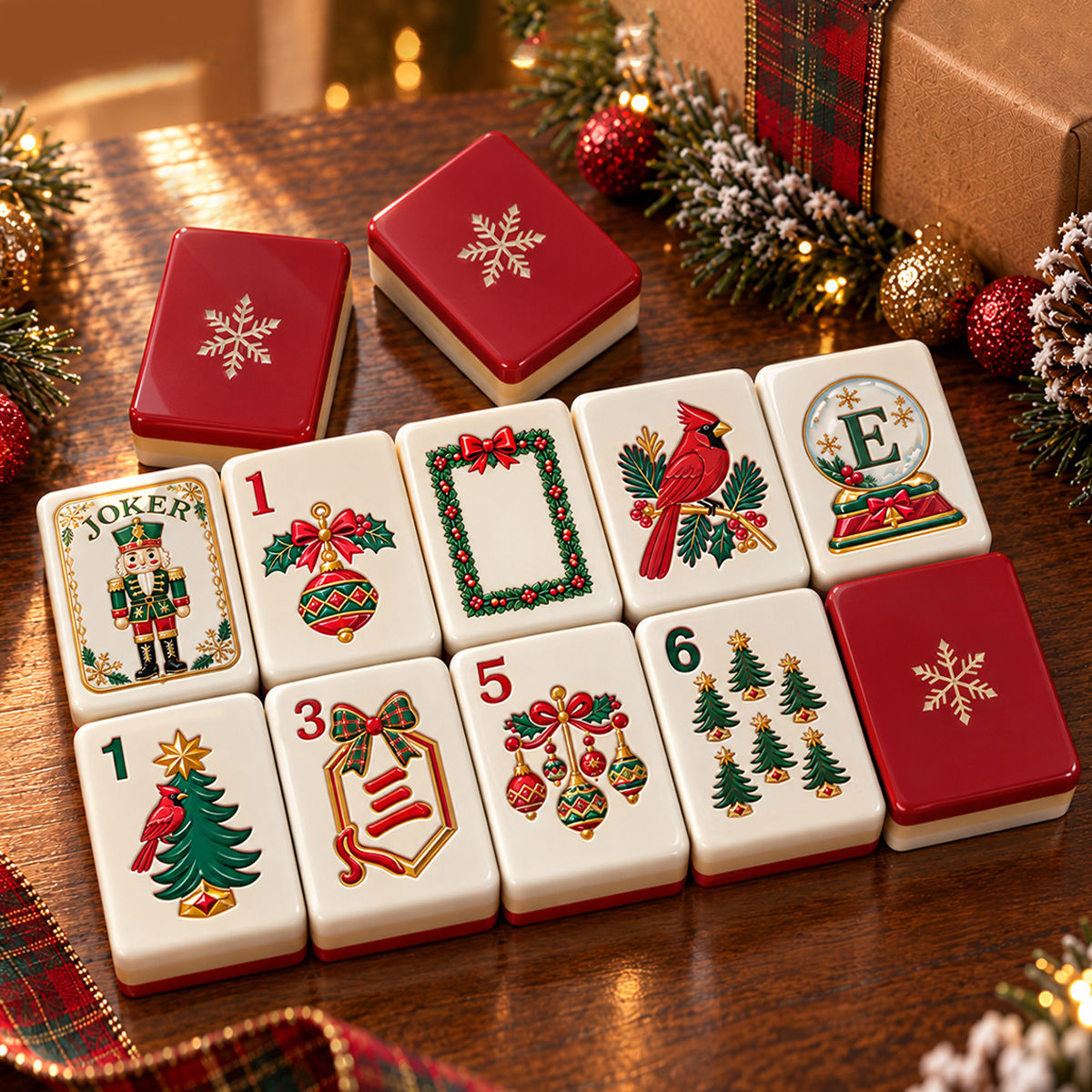
Chinese mahjong uses 144 tiles: three suits (Bams, Craks, Dots numbered 1–9, four of each), winds, dragons, and flowers. Unlike American mahjong, which draws only from an annual card and forbids sequences, Chinese play allows chows (1-2-3, 2-3-4, etc.)—three consecutive tiles in one suit—alongside pungs (three identical), kongs (four identical), and eyes (a pair). Games draw from a 144-tile wall, not a League-published hand list. The goal: build a winning 14-tile hand (13 tiles plus a drawn 14th, or win on the 14th draw). Scoring varies by region. Setup takes minutes; a full game runs 30–90 minutes depending on group pace. You'll find best-selling mahjong sets designed for American play; for pure Chinese, verify the set includes all four seasons and flowers without jokers, then adapt the rules for your preferred variant.
What tiles are in a Chinese mahjong set?
A standard 144-tile Chinese mahjong set contains: 36 Bams (1–9, four each), 36 Craks (1–9, four each), 36 Dots (1–9, four each), 16 winds (four each: North, East, South, West), 12 dragons (four each: Red, Green, White), and eight flowers/seasons (one each: four flowers, four seasons, though some sets use duplicates). Each suit is distinguished by its symbol: Bams show a bamboo bundle, Craks a circle or character, Dots a raised nodule pattern. The 1 Bam usually depicts a bird. This 144-tile base differs from American sets, which add eight jokers for a 152-tile play-count; Chinese sets do not include jokers in standard play.

How do you win a hand in Chinese mahjong?
In Chinese mahjong, you win when your hand contains a valid combination of melds plus a pair. A complete winning hand holds 14 tiles arranged as: three or four melds (each a pung, kong, or chow) plus one pair (two identical tiles). A pung is three identical tiles; a kong is four identical tiles; a chow is three consecutive tiles in the same suit (for example, 4 Craks, 5 Craks, 6 Craks). The pair cannot be formed by a meld; it stands alone. You win either by drawing a tile from the wall that completes your hand, or—depending on the variant—by claiming a tile another player just discarded. Many regional variants add winning conditions: for instance, requiring the winning tile to be the last one on the wall, or restricting certain melds in your hand. Always agree on variant rules before play begins.
What's the difference between Chinese and American mahjong?
Feature | Chinese Mahjong | American Mahjong |
Tile count | 144 tiles (no jokers) | 152 tiles (includes 8 jokers) |
Hand source | Player-built from any valid combination | Must match National Mah Jongg League card (current year only) |
Sequences allowed | Yes—chows (1-2-3, 2-3-4, etc.) are core | No—only pungs, kongs, quints, sextets |
Joker use | None in standard play | 8 jokers per game; can substitute for any tile except in pairs or as a single tile |
Winning hand size | 14 tiles (13 + draw) | 13 tiles (after claiming the winning tile) |
Scoring system | Point-based, varies by region and variant | Fixed hand value on the League card |
Draw mechanism | From a wall; players rotate dealer position | From a wall; follows Charleston pass and current-year card |
Chinese play emphasizes learning a few core rules and building flexibility; American play rewards memorizing the annual card and mastering the League's specific hand patterns. Both are engaging, but the learning curve and social rhythm differ. Choose based on whether you prefer discovering winning hands or studying a fixed reference.
How do you set up and begin a Chinese mahjong game?
Setup (10 minutes for four players):
Arrange seats: Seat players at a table. One player is the dealer (East); others sit North, South, West in counterclockwise order.
Build the wall: Shuffle all 144 tiles facedown. Each player arranges their stack into a wall two tiles high and 18 tiles long, then pushes these stacks together to form a square wall.
Deal: The dealer draws two tiles from their wall. Each other player draws two tiles from their own wall in turn. This repeats until everyone holds 12 tiles. The dealer then draws one more tile (13 total); other players hold 13 tiles each, waiting for a draw.
Agree on rules: Confirm your variant: Cantonese, Hong Kong, Taiwan, or house rules (e.g., whether limits apply, how many kongs before a draw limit is reached).
Begin: The dealer discards a tile faceup in the center. Play proceeds clockwise or counterclockwise (agree beforehand). The next player in turn either draws from the wall or claims the discarded tile if it completes a meld or wins the hand.
Each player's turn consists of: draw a tile (from wall or claim a discard), then discard one tile. Play continues until someone wins or the wall runs out.
What are the most common mistakes beginners make?
Mistake 1: Exposing melds too early. New players want to show their progress, but exposing (declaring and laying down) a meld removes flexibility—you can no longer use those tiles to form different combinations. Expose melds only when you're building toward your winning hand.
Mistake 2: Discarding dangerous tiles. If an opponent has exposed melds, avoid tiles that complete their likely hand. For example, if another player has exposed pungs of 4 Craks and 5 Dots, avoid discarding 6 Craks, 3 Craks, 6 Dots, or 4 Dots; they might be holding complementary tiles.
Mistake 3: Forgetting the rules of your variant. Cantonese, Hong Kong, Taiwan, and house rules differ on limits, kongs, and scoring. Clarify the variant before dealing. If rules are unclear mid-hand, pause and agree, then continue.
Mistake 4: Miscounting melds. Count your exposed melds and your hidden tiles before claiming a win. A winning hand must total 14 tiles with the correct structure: four melds (pung/kong/chow) plus one pair, or the variant-specific equivalent.
Mistake 5: Drawing from the wrong end of the wall. In some variants, players draw from specific positions on the wall (e.g., after a kong, the dealer draws from the live end; after a kong, the next player draws from the dead end). Know your draw rules beforehand.
To avoid these, play slowly your first few games, keep a scoresheet visible, and ask experienced players to review your hand after each round.

How do scoring and wins work in different Chinese variants?
Scoring is the most variable aspect of Chinese mahjong—each variant has its own point system. Here's an overview:
Cantonese (most common in North America): Wins are assigned a "fan" (multiplier, 1–8 fan) based on the hand's difficulty and combination type. Scoring often uses a formula: base points × fan count × multiplier. Common winning conditions include: all pungs, all chows, mixed colors, dragons, or specific pair requirements.
Hong Kong: Similar to Cantonese but with different limit hand values and additional bonuses for kongs, draw wins, or wall-end wins. Limits cap payouts to prevent one hand bankrupting all players.
Taiwan (Ma-Jiang): Uses a different tile system (includes blanks instead of some flowers), and scoring is typically simpler—often a fixed point value per win, plus bonuses.
Shanghai: Emphasizes speed and rapid rounds; scoring is lower to allow more games in a session.
Before you play, agree on the scoring method and limits. Write them down. Many groups laminate a house rules sheet. If no variant is named, ask: "Are we playing Cantonese, Hong Kong, or house rules?" and settle it before the first hand.
What equipment do you need to play Chinese mahjong?
Beyond the 144-tile set itself, you'll benefit from:
A mahjong mat: Protects tiles and the table, provides a center area for the discard pile. A mahjong mat sized for four players (typically 32–36 inches square or larger) keeps play organized and tiles visible.
Racks with pushers (optional but helpful): Hold your tiles upright and hidden from opponents. A mahjong rack with pushers lets you sort tiles quickly and avoids accidental reveals.
Dice: Some variants use dice to determine the starting position on the wall or to break ties. Standard six-sided dice work fine.
A notebook or scoresheet: Track wins, penalties, and final scores.
A bag or case (for portability): If you travel to games, a mahjong bag or case protects tiles and keeps everything together.
For your first games at home, tiles, a mat, and a notebook suffice. Add racks and a case once you host regularly or travel to games.
🀄 Shop best-selling mahjong sets →
What to check before you buy a Chinese mahjong set
Tile count: Confirm it's 144 tiles (not 152 American set tiles or 136 Japanese). Check that flowers and seasons are included, not jokers.
Material: Acrylic, bone, or bamboo. Acrylic is durable, lightweight, and dishwasher-safe. Bone and bamboo have traditional appeal but require gentler care.
Tile size: Standard is 1 × 1.25 inches. Smaller tiles pack easier; larger ones are easier to read and handle, especially for older players.
Clarity and readability: Open the set if possible or read photos. Can you distinguish suits and numbers clearly? Poor stamping creates frustration during play.
Case quality: If a case is included, check that it closes securely and has compartments to prevent tile damage in transit.
Set composition: Some sets marketed as Chinese mahjong still include jokers (designed for hybrid or American play). If you want pure Chinese mahjong, verify no jokers are present.
If buying online, read product descriptions carefully. Returns and exchanges should be straightforward—check the policy before purchase.
🎁 See our most-loved mahjong sets & accessories →
Why choose a quality set for regular play?
A well-made mahjong set withstands years of weekly games. Tiles on budget sets often crack, splinter, or develop unclear markings after a few months of regular shuffling. A best-selling quality set costs more upfront but lasts decades. Acrylic tiles are lightweight, stack cleanly, and don't absorb stains or odors. Heavy bone or bamboo sets feel traditional and luxury but require climate-controlled storage and careful handling to prevent splitting. For a group that plays 1–2 times a week, invest in acrylic. For occasional players or collectors, bone or bamboo can be rewarding if you have the space and patience.
Your tiles also affect gameplay: smooth, uniform tiles shuffle and draw predictably; rough or uneven tiles lead to misdeals and frustration. A quality mat and racks make organization easier, reducing disputes over which tile was played when.
✨ Find your Mahstead set — free US shipping →
#

FAQ
Can you play Chinese mahjong with an American mahjong set?
Yes, with adaptation. An American 152-tile set includes jokers and extra blanks not used in Chinese play. Remove the jokers and adjust your hand-building rules to allow chows (sequences), which American sets don't use in their card-based system. It works, but a true 144-tile Chinese set is cleaner. Verify your set has four seasons and flowers before play.
How long does a typical Chinese mahjong game take?
One hand (single round) takes 5–20 minutes depending on group pace and experience. A full game (typically 4–8 rounds) ranges from 30–90 minutes. Beginners play slower; experienced players move quickly. Some groups play timed rounds (5–10 minutes per hand) to keep energy high.
What is a "kong" and how does it affect play?
A kong is four identical tiles. When you declare a kong (either from your hand or by claiming a discard after exposing a pung), you remove it from the board and draw an extra tile from the wall. This keeps your hand at 13 tiles and speeds up draws. Multiple kongs can occur in one hand; after four kongs total (across all players), play may end or limits apply, depending on your variant.
Do you always need to claim a discard, or can you pass?
In most variants, you may choose not to claim a discard. However, if another player declares a win or a meld using that discard, you've lost the opportunity. Strategy involves deciding whether claiming a tile speeds your win more than drawing from the wall. Some variants allow only certain players to claim discards in certain situations; check your rules.
How is a dealer chosen, and does it matter?
Typically, one player is elected as the first dealer (East); after a win, the dealer position rotates (or stays if a variant allows the winner to deal again). Being dealer is an advantage in some variants (you draw first, or you pay/receive slightly different point values). Decide rotation rules before play. Some groups roll dice; others draw tiles. Fairness comes from rotating roughly equally over a session.
What do I do if two players claim the same discard?
Priority usually follows play order: a player who can form a winning hand has priority over someone forming a meld. If both are claiming for a win, the player whose turn it is wins; if it's a meld, the player closest to the dealer's left wins. Clarify priority rules before play. If a dispute arises, pause and agree, then continue without anger—friendly play is the goal.
Can I take back a discard once I've released it?
No. Once a tile is faceup and released from your hand, it's committed. Some groups allow a brief "touch-back" if you haven't moved your hand away, but once the next player acts, the discard is locked. This prevents collusion and keeps play fair.
Are there apps or online versions to learn before I play in person?
Yes. Several mobile and web apps simulate Chinese mahjong (search "Mahjong Solitaire" or "Mahjong Connect" for single-player, or "Mahjong online multiplayer" for four-player versions). These teach tile recognition and basic rules but cannot fully replicate the social and strategic depth of in-person play. Use apps to familiarize yourself with tiles and sequence logic; then play at a table with patient players who will coach you. #


View More
View More
View More
