
Chinese Mahjong Lessons Online: Where to Learn & How to Start
Last updated: Nov 23, 2026
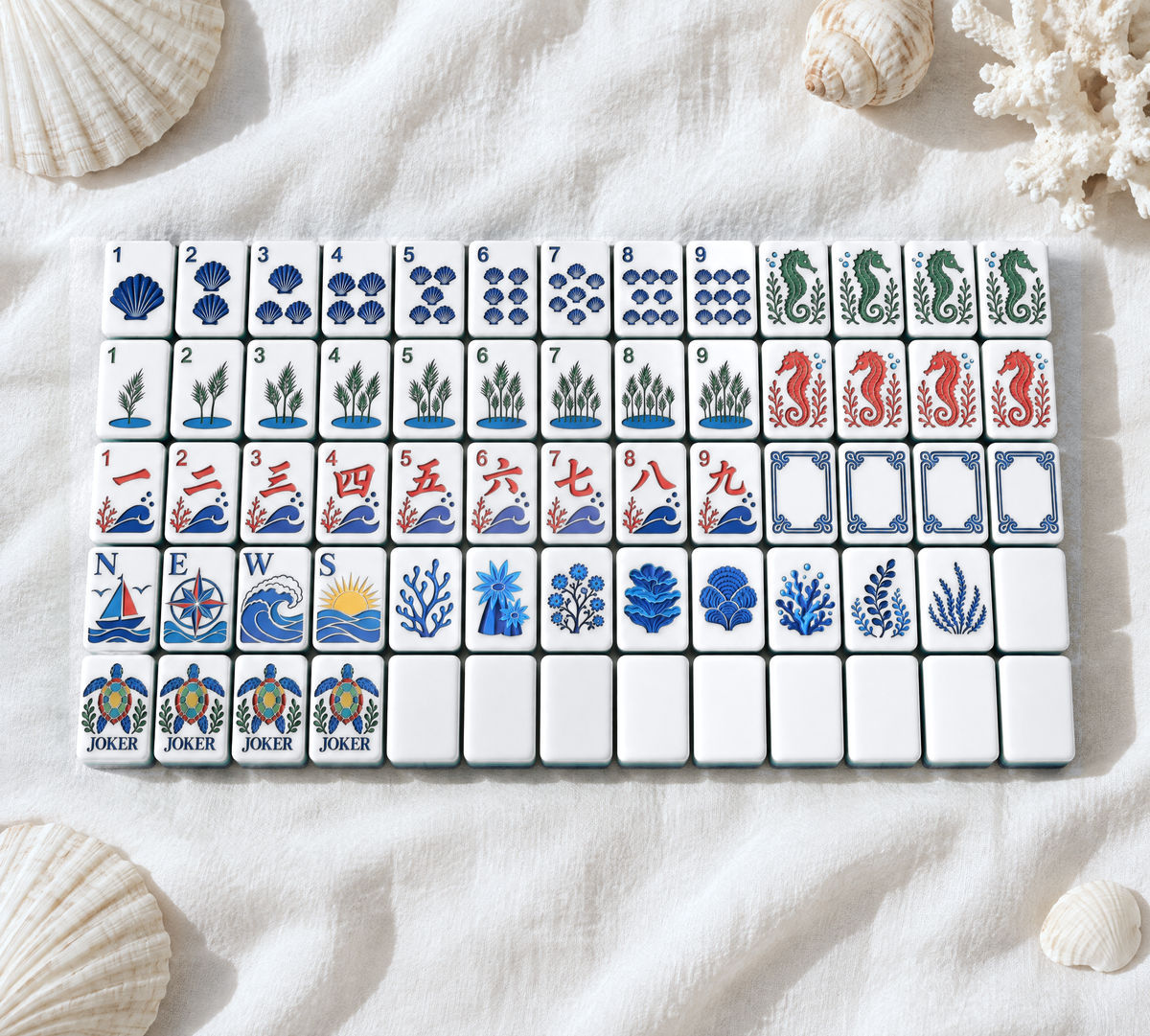
Chinese mahjong lessons are available through livestream platforms (Zoom, YouTube), specialized mahjong schools offering virtual classes, and self-paced video courses on sites like Udemy or creator portfolios. Sessions typically run 60–90 minutes and cost anywhere from free community teaching to hourly rates for private tutors; most courses teach Hong Kong or Cantonese mahjong (13 tiles per hand, 144 tiles total, sequences called "chows" can be melded and exposed, and discards matter strategically). You'll need a 144-tile Chinese set (not American 152-tile), a quiet space, stable internet, and ideally a mat to protect tiles and muffle noise. Before enrolling, confirm the instructor teaches your target dialect (Hong Kong, Cantonese, Shanghai, Taiwanese, or Riichi/Japanese), ask whether the course assumes prior card-reading ability, and check if lessons include hand-played practice or theory only.
Which Chinese Mahjong Variant Should You Choose?
Chinese mahjong has five major playable dialects, each with different hand structures, scoring, and tile handling. Hong Kong mahjong (the most taught online) uses 144 tiles, requires exactly 13 tiles to start, and wins on the 14th tile; Cantonese mahjong resembles it but has subtly different hand patterns and melds. Taiwanese mahjong allows tied wins and uses a different scoring system. Shanghai mahjong is purely pairs-based. Riichi (Japanese) mahjong emphasizes betting and requires calling sequences as you draw. Most beginner courses teach Hong Kong because it balances complexity and teachability, but verify the course title or description before enrolling—mixing variants mid-learning causes confusion and frustration.

How Do Online Lessons Differ from In-Person Teaching?
Live Zoom or video-call lessons let an instructor see your hand in real time and correct tile placement, meld errors, and hand-reading mistakes on the spot. Pre-recorded courses let you rewind and pause tricky concepts but offer no feedback. Community Facebook groups and Discord servers provide peer learning and hand reviews but less structure. Hybrid models (recorded lessons + weekly live Q&A) offer flexibility and accountability. Assess your learning style: if you need immediate correction and motivation, live weekly classes are worth seeking out; if you're self-directed and learn by repetition, recorded courses work well. Most learners benefit from starting with live classes (even one or two) to build confidence, then switching to recorded practice once fundamentals stick.
🀄 Shop best-selling mahjong sets →
Where Can You Find Reputable Chinese Mahjong Instructors Online?
Livestream platforms like YouTube and Twitch host creators who teach Chinese mahjong for free or as channel members; search "Hong Kong mahjong tutorial" or "Cantonese mahjong lessons" to sample multiple teaching styles. Specialized sites (some instructor-run portfolios, mahjong clubs with Zoom offerings) advertise on community boards, Facebook groups, and Meetup; look in your city's mahjong or Asian cultural groups for referrals. Udemy and similar course platforms offer pre-recorded sequences; read reviews carefully to confirm the course matches your dialect choice and skill level. University continuing-education programs occasionally offer mahjong classes that migrated online post-2020. Start by watching free clips to assess whether the instructor's pace and accent work for you, then invest in paid courses or lessons.
What Equipment Do You Actually Need at Home?
A proper 144-tile Chinese mahjong set (bamboo or acrylic, sourced from retailers specializing in Chinese mahjong) is essential—American sets won't work because they contain 152 tiles, wind and dragon tiles marked differently, and jokers that don't exist in Chinese play. A padded mahjong mat (typically 2–3 feet square) protects tiles, dampens noise for neighbors, and helps tiles slide smoothly during draws and discards. A stable table (approximately 3 × 3 feet minimum) lets all four players sit comfortably without crowding. Dice (two standard six-sided) determine who deals and draw order. Good lighting prevents errors in reading tile faces. Tile racks or holders (if your set includes them) keep your hand organized but aren't mandatory. Start minimal—set, mat, table, dice—and add comfort items (racks, trays) as you practice. Our best-selling collection showcases acrylic tile care, and while we specialize in American mahjong equipment, the principles of mat durability and organization apply across variants.
🎁 See our most-loved mahjong sets & accessories →

How Long Does It Realistically Take to Play Competently?
Most learners grasp basic hand patterns and meld recognition within 4–6 weeks of 90-minute weekly lessons, assuming 2–3 hours of solo practice per week (playing with apps or friends, reviewing card sheets). Reading the discard pile strategically and managing your own strategy takes another 8–12 weeks. Becoming a strong player—anticipating other players' hands and optimizing your own tiles—demands 3–6 months of consistent play. Dialect-specific nuances (scoring, complex hand patterns, regional rule variations) extend learning by another 2–3 months. If you take a single lesson weekly with no practice, expect to plateau after 2 months because mahjong is a memory and pattern-recognition game; the tiles must become familiar. Commit to weekly lessons plus two practice sessions per week if your goal is social play; commit to daily play if you want competitive skill. Honest timeline: basic competence in 8–12 weeks, genuine enjoyment in 6 months.
What Common Mistakes Should You Avoid in Your First Lessons?
Mistake 1: Mixing variants mid-learning. Cantonese and Hong Kong hands look similar but score differently; switching between them confuses your pattern memory. Pick one dialect and stick with it for at least 12 weeks.
Mistake 2: Neglecting hand card memorization. The "winning hand list" (analogous to American mahjong's yearly card) is your guide. Many learners ignore it and try to win on intuition, which fails against experienced players. Spend 15 minutes per practice session reviewing hands relevant to your current game.
Mistake 3: Discarding without thinking ahead. Unlike American mahjong (where you play only hands from the published card), Chinese mahjong gives you strategic freedom. New players discard randomly and lose tiles needed later. Always track what others have discarded and what you might need.
Mistake 4: Not practicing between lessons. Watching an instructor play is passive. Playing against apps, AI opponents, or friends (even with a guide open) forces you to make decisions and learn from mistakes.
Mistake 5: Choosing a course that assumes advanced knowledge. Many online classes skip foundational rules (tile names, the wall draw, how melds lock) and jump into strategy. If you're a complete beginner, confirm the course starts from day one.
Aspect | Live Lessons | Self-Paced Courses | Community Play | Hybrid (Live + Recorded) |
Feedback Speed | Real-time | None | Delayed (peer review) | Weekly live + on-demand |
Cost Basis | Variable hourly | Flat fee | Free to low cost | Membership or bundle |
Best For | Structured learners | Self-directed learners | Social motivation | Balanced practice |
Time Commitment | 1.5 hrs/week scheduled | Self-paced | Flexible | 2–3 hrs/week |
Mistake Correction | Immediate | Watch replays yourself | Peer feedback | Live + recorded |
What to Check Before You Buy or Sign Up
Dialect match: Does the course teach Hong Kong, Cantonese, Taiwanese, Shanghai, or Riichi? Verify in the syllabus or ask the instructor.
Prerequisite assumptions: Does it assume you can read mahjong tiles or know suit names? Beginner courses should explain tile faces and names from scratch.
Live vs. recorded: Are you signing up for livestream access, forever-access video, or both? Check expiration and replay availability.
Tile sourcing: Does the course recommend where to buy a 144-tile set? If not, ask the instructor or search specialized retailers.
Refund or trial policy: Can you attend one class or watch a sample before committing money?
Class size: Does the live lesson cap at 4–10 people (interactive) or accept 100+ (lecture-style)? Smaller groups offer more correction.
Practice assignments: Does the course include homework, hand-review worksheets, or app recommendations to fill gaps between lessons?
✨ Find your Mahstead set — free US shipping →
How Does Chinese Mahjong Actually Differ from American Mahjong?
If you've played American mahjong, Chinese mahjong feels like a different game despite the same core mechanic (draw, discard, form melds, win). American mahjong plays only hands published on the year's National Mah Jongg League card; every legal win is printed. Chinese mahjong lets you form any valid combination of sets and pairs—more creative freedom but also more complexity. American sets contain 152 tiles plus jokers; Chinese sets have exactly 144 tiles with no jokers or blank tiles. American mahjong's primary melded sets are pungs (3 identical) and kongs (4 identical)—no sequences allowed; Chinese mahjong requires at least one "chow" (sequence: 1-2-3, 2-3-4, etc.) in most winning hands, and all sequences can be exposed (shown to the table) once melded. American uses winds (North, East, South, West) and dragons; Chinese uses winds the same way but dragons are simpler (Red, Green, White) and suit-independent. Scoring in American is memorized from the card; Chinese scoring is calculated tile-by-tile based on sets formed and bonus tiles. Learning one variant doesn't prepare you for the other; treat them as separate games.

FAQ
Can I learn Chinese mahjong if I only know American mahjong?
Yes, but unlearn one key rule first: in American mahjong, sequences (chows) cannot be called or exposed; in Chinese mahjong, they're mandatory in most hands and fully exposed. Also, Chinese uses 144 tiles (not 152) and lets you win on any legal combination (not just published hands). Expect 3–4 weeks of retraining to stop defaulting to American patterns.
Is it worth paying for an instructor, or can I learn from YouTube alone?
Free YouTube videos teach theory well but won't correct your live play mistakes or answer edge-case questions. Consider one or two paid live lessons to build confidence and get real-time feedback, then use free videos and apps for practice. Many learners do best with a hybrid: one monthly live lesson plus weekly self-study.
What's the cheapest way to start?
Join a free community Facebook group or Meetup for beginners, watch free introductory YouTube videos, and borrow or buy a budget 144-tile acrylic set (far cheaper than bamboo). Ask the group for a friendly game with hand cards open; many players teach informally. Once you're hooked, invest in lessons or a better set.
How do I know which dialect to learn if I don't have a family background in mahjong?
Hong Kong mahjong is the most widely taught online and has the most published learning resources in English. If you want to play with specific family or friends, ask them which dialect they play and take a course in that one. Switching later is frustrating but not impossible.
Can I practice online mahjong without a physical set?
Yes—many free apps (Mahjong Solitaire variants, AI opponents, and some multiplayer platforms) simulate Chinese mahjong. Apps are excellent for learning hand patterns and tile names but don't teach you the social rhythm, speed, and psychology of table play. Use apps during the week; play with physical tiles and humans weekly to cement real-world skill.
Do online courses teach you the etiquette and social rules, or just the mechanical rules?
Most courses teach mechanical rules (what's a legal hand, how to meld, scoring). Etiquette (when to speak, how to handle disputes, respecting the dealer) is often assumed or taught briefly. Ask the instructor in advance if etiquette is covered; if not, watch a YouTube video of a live Hong Kong mahjong game to see social norms in action.


View More
View More
View More
