
Blue Mahjong Card Holder: What to Buy for Weekly Games
Last updated: Nov 23, 2026
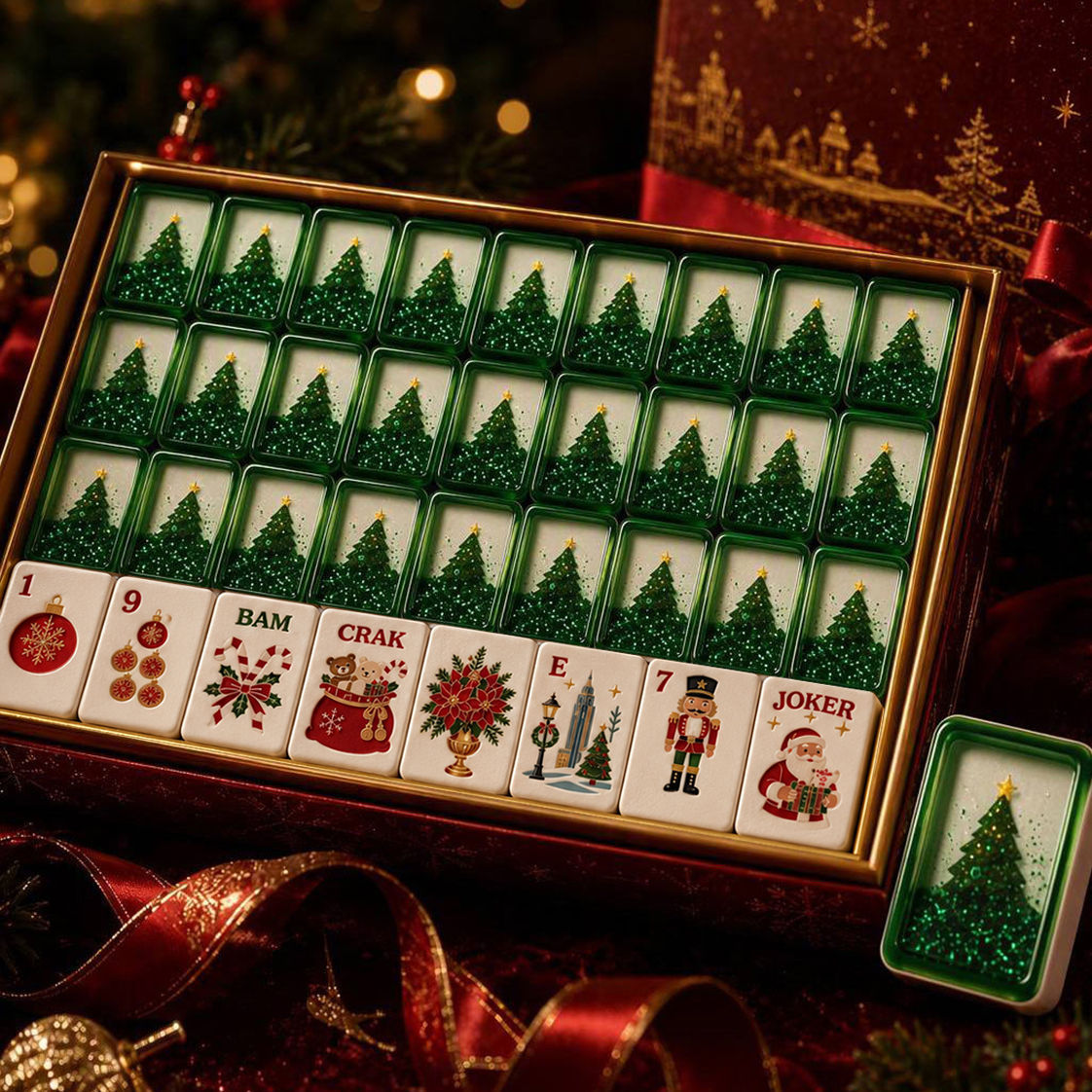
A blue mahjong card holder is a practical accessory that props or clips your National Mah Jongg League card at an angle during play, letting you scan hand patterns without bending or handling the card constantly. Most holders are acrylic or plastic, tilt to multiple angles, and fit standard card sizes. They come in solid colors—blue is popular for visibility against tile colors—and usually cost in the range of general mahjong accessories. A good holder prevents card creasing, water damage, and wear from weekly shuffles. Avoid holders that slide too easily on smooth mats, obstruct sight lines, or don't adjust for left- and right-handed players. Mahstead offers best-selling mahjong sets paired with matching accessories that integrate seamlessly into your game setup. --- 🀄 Shop best-selling mahjong sets →
Why Do You Need a Card Holder at All?
The annual reference card is the rulebook for American mahjong—it's your only guide to which hand combinations are legal in that year's game. Without a holder, you're either memorizing hands (nearly impossible for casual players), asking someone else to check, or repeatedly picking the card up and putting it down. A dedicated holder keeps the card at eye level, in the same spot every game, so your brain knows where to look and your hands stay on your tiles and rack. Over a season of weekly games, a holder protects the card from spills, bent corners, and fading from repeated handling.

What's the Difference Between Acrylic and Plastic Holders?
Acrylic holders—solid, clear or tinted (like blue)—are rigid and don't wobble. They weigh enough to stay put on mats with texture, angle precisely, and last for years without warping. Plastic holders are lighter, cheaper to produce, and portable, but they can flex, tip if bumped, and sometimes yellow over time. Acrylic blue holders match engraved American mahjong sets and coordinating mahjong mats visually. For weekly games in a home or club setting, acrylic is the table-tested choice: it doesn't slide, looks intentional, and feels sturdy when you lean over to check a pattern.
How Do You Choose the Right Angle and Size?
A card holder's tilt and footprint matter more than you'd think. If the angle is too steep, glare washes out the card text under bright lights. Too shallow, and you have to lean down to read. Most serious players prefer 30–45 degrees. Size depends on your mat: a large mat (typically 36–48 inches on a side) can accommodate a holder with a 4–6 inch base without blocking anyone's view. Small holders work for individual racks or travel setups. A mahjong mat guide walks through mat dimensions; match your holder footprint to that space. If you're left-handed and hold tiles on the left, position the holder to the right or center so your arm doesn't collide when you lean in.
How Do Clip vs. Stand Holders Differ?
Clip holders grip the card's edge and sit on the table or prop directly against a rack edge. They free up table space and let you adjust height on the fly. Stand holders are freestanding—usually a base with a backing plate or slot. Stands are more stable if your table vibrates (common in group settings), and they keep the card farther from tile-shuffling action. Stands work better if your mahjong racks with pushers are tall (4–6 inches); clips are ideal if you prefer a minimal footprint or play on a soft fabric mat where a weighted stand is needed to stay put. Most frequent players own one of each: a stand for home tables and a clip for travel or smaller setups.

What Color Really Matters—and Why Blue?
Holder Color | Best For | Table Contrast | Common Pitfall |
Blue | Bams, Dots, Craks suits; any mat | High contrast (tiles are ivory/cream) | Can reflect light if glossy—choose matte finish |
Clear | Neutral, shows card clearly | Depends on card stock | Disappears visually; can be hard to locate quickly |
Black | Formal tables, dark mats | Medium (can blend with shadows) | Makes card text harder to read in dim rooms |
Green | Traditional (honors Green dragon) | Good on cream mats | Niche aesthetic—harder to find |
Colored acrylic (various) | Matching personalized sets | Depends on design | May be special-order—plan ahead |
Blue holders stand out without overwhelming the table. They don't create glare like white or clear acrylic, and they're neutral enough to work with any tile color or mat pattern. If your group plays under recessed or pendant lighting, matte blue is safer than glossy—it diffuses light instead of bouncing it back into your eyes.
🎁 See our most-loved mahjong sets & accessories →
How to Set Up a Holder for Maximum Visibility
Position the holder where all four players can see the card without craning. Typically, that's center-table or slightly off to one side. If you're using a travel bag or case, bring the holder in a soft pouch so it doesn't slide around and crack during transport. At the start of each game, place the current year's card in the holder before the Charleston begins—don't wait until hands are drawn. If the card is already positioned and angled, you'll reference it faster and less frequently, reducing table talk and speeding up play. Tape or small friction pads on the base of a stand holder prevent it from sliding on polished wood; for a mat, a simple weighted base (or even a sandbag underneath) anchors it during play.
What to Check Before You Buy
Card size compatibility: American mahjong reference cards are standard (roughly 8.5 × 11 inches). Confirm the holder's slot or clip opens wide enough—never force a card into a too-tight holder. Angle range: Check that the holder tilts to at least three positions (low, medium, high). Weight and base: Acrylic holders should weigh at least 6–8 ounces so they don't tip when you bump the table. Material finish: Matte finishes resist glare; glossy finishes look polished but can reflect overhead lights. Left/right orientation: If you're left-handed, test that the holder doesn't interfere with your arm reach or block your neighbor's view. Spill resistance: A holder with raised edges or a backing plate protects the card if someone sets a drink nearby.
✨ Find your Mahstead set — free US shipping →
The Real-World Test: Weekly Game Observations
Over a full season of Thursday-night games, we've noticed that tables with dedicated card holders finish faster and argue less. When the card is always visible and at a consistent angle, players reference it once instead of asking repeatedly. Holders in high-traffic areas (near the kitchen or entrance) get bumped occasionally, so weighted acrylic stands outperform lightweight plastic clips there. On mats (vs. bare tables), a slight friction pad prevents sliding; many players add a thin rubber mat or adhesive-backed felt to the base. If your group plays with multiple sets—perhaps one for the regular game and one for teaching beginners—consider matching card holders so the setup looks intentional and pros know which card goes with which set.
Pair your blue holder with new mahjong arrivals or a full coordinated setup. Free US shipping on all orders makes upgrading your table gear simple and affordable.

FAQ
Can a blue card holder work with any mahjong set?
Yes. Card holders are universal accessories compatible with all American mahjong sets, regardless of tile material or color. The card is the same size every year, and the holder simply displays it—there's no tile-specific function.
How do I keep the card from sliding out of a clip holder?
Most clip holders have soft rubber pads inside the jaws. If yours slides, check that the card is fully inserted and the clips are tightened. If the card is damaged or worn, try a slightly thicker backup card underneath, or upgrade to a stand holder for more security.
Do I need to remove the card from the holder during the Charleston?
No. Keep the card in the holder throughout the Charleston and into play. The card isn't used during the tile-passing ritual, but it's easier to leave it in place than to risk losing or bending it. Just ensure it's positioned where it won't get in anyone's way during the pass.
Can a blue holder work under bright fluorescent lights?
Matte-finish blue holders work better than glossy. Gloss reflects fluorescent tubes directly into your eyes. If glare is an issue, angle the holder slightly away from the light source, or consider a frosted or satin finish that diffuses light more evenly.
What's the typical footprint of a mahjong card holder?
Stand holders usually have a 4–6 inch base (front to back) and 2–3 inches wide. Clip holders take almost no space once secured. On a standard 36–48 inch mat, a stand holder fits comfortably in one corner or slightly off-center without blocking anyone's tiles or view of the center.
Should I buy a holder if I only play occasionally?
If you play more than once a month, a holder pays for itself in card protection and convenience. Even casual players benefit from having the reference card always visible and in one safe place. Travel-size or clip holders work well for occasional players.
Can I use a card holder for a non-annual reference card or cheat sheet?
Absolutely. Some groups use supplemental hand guides or scoring reminders. A holder works with any standard-sized card or laminated sheet. Just confirm the holder's jaws or slot fit your material thickness—thick lamination may not fit tight clips.


View More
View More
View More
