
4 Crak Tile in Chinese Mahjong: What It Is and Why It Matters
Last updated: Nov 23, 2026
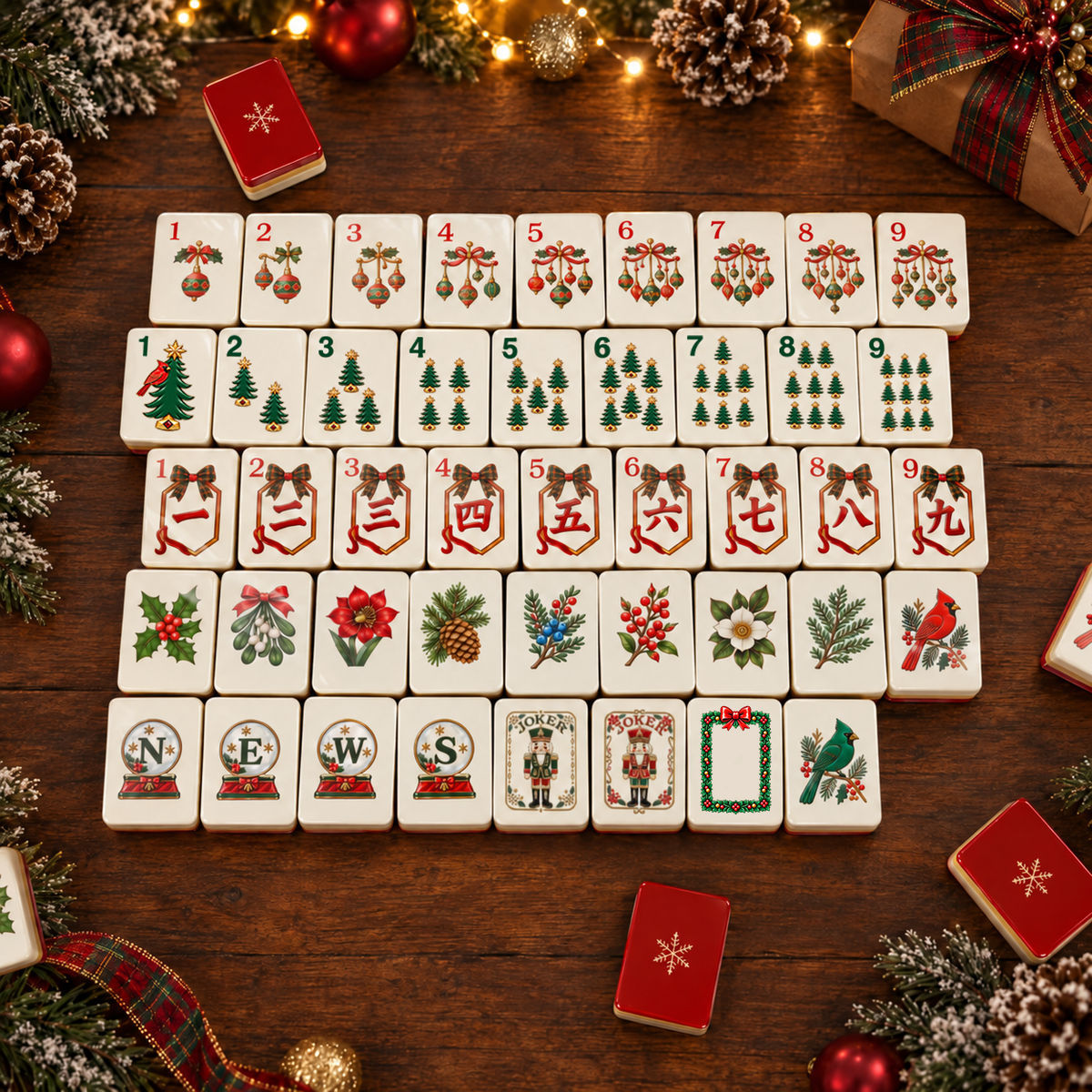
The 4 Crak (also called 4 Character) is the fourth tile in the Crak suit—one of three numbered suits that form the backbone of mahjong. In American mahjong, you receive exactly four copies of every number tile; the 4 Crak appears alongside three identical copies in the 152-tile deck. In Chinese mahjong variants (Standard, Cantonese, Sichuanese), the 4 Crak follows the same rank but scoring differs by region. The tile itself shows the Chinese character for "four" and historically represents silver coins. In both games, it combines into sequences (1-2-3, 4-5-6, etc.), pungs (three identical 4 Craks), and kongs (all four). American players never call sequences exposed; Chinese players do. The 4 Crak holds no inherent luck or penalty—superstitions vary by family and region. Its value depends entirely on the hand you're building and your variant's scoring rules.
The 4 Crak tile is one of 36 tiles in the Crak suit, paired with the Bam and Dot suits to create what's in an American mahjong set. When you open a standard 160-tile Mahstead set, you'll find all three number suits numbered 1–9, with four copies of each. The 4 Crak is neither rare nor special—it's simply one of the numbered building blocks. But its role in winning hands, its movement through the game, and the small superstitions that grow around it make it worth understanding clearly.
What Does the 4 Crak Look Like?
The 4 Crak displays the Chinese character 索 (or sometimes a stylized "4") on acrylic, bone, bamboo, or resin tiles. The character represents the number four and historically linked to silver coins in classical Chinese culture. On modern American mahjong sets, acrylic 4 Craks are typically white with black engraving, green, or blue text, depending on the set design. If you've bought a best-selling mahjong set, all tiles—including the 4 Crak—are uniform in size and weight, so no tile favors itself in the draw.

How Does the 4 Crak Function in American Mahjong?
In American mahjong, the 4 Crak is a numbered tile (not a wind, dragon, flower, or joker). It combines into three types of melds: sequences (chows), pungs, or kongs. Sequences in American play are concealed only—you cannot expose 3-4-5 Craks or 4-5-6 Craks at the table. However, you can expose a pung (three 4 Craks) or a kong (four 4 Craks), and you may use jokers to substitute for missing tiles in these exposed melds. On the current year's National Mah Jongg League card, dozens of winning hands include one or more 4 Craks. When deciding whether to claim a discard, you check the card to confirm your hand matches that year's printed patterns—a 4 Crak in your hand might complete an exposed pung, trigger your win, or block an opponent's win. The tile's power lies entirely in the hand structure and scoring pattern you're pursuing.
Is There a Superstition Around the 4 Crak?
In Cantonese, Mandarin, and some Taiwanese mahjong circles, the number four sounds like the word for "death" (四 = sì; 死 = sǐ). This phonetic coincidence has spawned regional superstitions: some players avoid discarding the 4 Crak early, others refuse to claim it as their winning tile for symbolic reasons, and a few households ban it entirely. However, in American mahjong culture, the 4 Crak carries no inherent superstition—it's a neutral tile, legally played like any other number. Superstitions are personal or family-based, never enforced by league rules. If you're hosting a weekly game with friends from different backgrounds, it's worth asking whether anyone holds a personal preference about the 4 Crak; respecting that costs nothing and builds goodwill at the table.
How Does the 4 Crak Differ Across Mahjong Variants?
Variant | How 4 Crak Is Played | Superstition Level | Scoring Impact ---|---|---|--- American | Numbered tile, no sequences exposed, pungs/kongs only | None (league rules) | Depends on current year's card Standard Chinese | Numbered tile, sequences exposed (chows), pungs, kongs | Medium–high (phonetic taboo) | Scoring varies by region Cantonese | Numbered tile, sequences/pairs exposed, free joker substitution | High (local tradition) | Points tied to hand rank Riichi (Japanese) | Numbered tile, sequences/pungs exposed, no free jokers | None (neutral number) | Complex fan/meld system Hong Kong | Numbered tile, sequences/concealed melds, strategic discards | Medium (family preference) | Points based on hand type
The 4 Crak behaves most similarly across all variants as a numbered tile. The real difference lies in exposure rules (what you can show), superstition weight (cultural vs. rule-based), and scoring systems (how many points it's worth in a given hand).

How to Handle the 4 Crak When Drawing Tiles
When you draw tiles during the deal or off the wall, the 4 Crak comes to you as a regular tile—no special handling needed. During the Charleston (the tile-passing ritual before American mahjong play begins), you may include 4 Craks in your pass without worry; there is no taboo in the passing phase. If you discard the 4 Crak early in the game and an opponent claims it for an exposed pung, that's a legal play—claiming a tile is a public declaration of your meld and your progress toward a win. If you're nervous about reading the game state, watch which tiles your opponents claim and which they pass. A player who repeatedly passes the 4 Crak might be building a different suit; a player who claims it immediately is likely building a pung or needs it for a sequence. These small observations help you adjust your own strategy.
🀄 Shop best-selling mahjong sets →
When Should You Claim or Discard the 4 Crak?
Strategy depends on three factors: your target hand (the pattern on the current year's card), the discard order around the table, and your position (East, South, West, North). If your winning hand pattern includes a 4 Crak pung, claiming it is often correct—you're one step closer to your win. If your target hand needs a concealed 4-5-6 Crak sequence, discard a safe 4 Crak to keep the sequence hidden and avoid telegraphing your intent. If you hold duplicate 4 Craks and your hand doesn't need them, discard the oldest one first—the tile you drew earliest is usually the safest discard because fewer players have seen you hold it long. Never hold a 4 Crak solely out of superstition if it blocks your actual winning strategy; that's the fastest way to lose. The card, not emotion, guides play.
What to Check Before You Buy a Mahjong Set
When purchasing a new acrylic mahjong set, verify that all four copies of the 4 Crak are present and identical. Inspect the tile face for clear, readable engraving—a smudged 4 might be confused with a 9 in dim light. If you're buying a set for a group that includes players who hold superstitions around the number four, acknowledge it openly and decide together whether your table follows a house rule (e.g., "no one claims a 4 Crak as their winning tile" or "we play the 4 Crak normally"). Write any house rules down and review them at the start of each game. Acrylic tiles are durable and standard; check that your set includes racks with pushers or a protective mat to keep tiles organized and prevent accidental mixing of suits.
Real Mistakes Players Make with the 4 Crak
Mistake | Why It Happens | How to Avoid It ---|---|--- Discarding the 4 Crak too early out of superstition | Fear of "bad luck" overshadows strategy | Check your target hand card; discard strategically, not emotionally Confusing the 4 Crak with the 4 Bam or 4 Dot | Poor lighting or worn tiles | Use a bright table lamp; buy a new set if tiles are faded Claiming the 4 Crak when it doesn't fit any part of your winning hand | Excitement or misreading the card | Study the current card before play; confirm your meld before claiming a discard Passing the 4 Crak during Charleston without strategy | Passing tiles randomly | Keep numbered tiles close together; pass duplicates you don't need for your target hand
The 4 Crak is straightforward. Treat it as a tile, not a symbol, and you'll play with confidence.
🎁 See our most-loved mahjong sets & accessories →

FAQ
Is the 4 Crak considered unlucky in American mahjong?
No. American mahjong follows league rules, not cultural superstitions. The 4 Crak is a standard numbered tile with no inherent luck or penalty. Superstitions are personal or regional, never enforced by play rules.
Can I use a joker to replace the 4 Crak in an exposed pung?
Yes. If you expose three 4 Craks and one tile is missing, you may place a joker as the fourth tile to complete a kong. However, in an American mahjong hand, you first draw the meld; jokers substitute only for missing tiles in exposed melds, not concealed ones.
How many 4 Craks are in a standard American mahjong set?
Exactly four. A complete 152-tile American mahjong set contains four copies of every numbered tile (1–9 in each suit). The 4 Crak is not rare or special—it's one of 36 tiles in the Crak suit.
What's the difference between the 4 Crak and the 4 Bam or 4 Dot?
All three are numbered tiles worth the same strategically, but they belong to different suits and look different. The 4 Crak displays the Chinese character for four on a traditional coin-themed face; the 4 Bam shows four bamboo sticks; the 4 Dot shows four circles. Only one suit fits into any given winning hand pattern on the current year's card.
Why do some players avoid the 4 Crak as their winning tile?
In Chinese-speaking regions, the number four sounds similar to the word for "death." This phonetic superstition, though absent from American league rules, persists in some family games. Respectfully acknowledging personal superstitions strengthens your table community, even if you don't share them.
Can the 4 Crak be part of a sequence in American mahjong?
Yes, but only concealed. You can build the 3-4-5 Crak or 4-5-6 Crak sequence in your hand, but you cannot expose (show) it at the table. You can only expose pungs (three identical) and kongs (four identical) in American play.


View More
View More
View More
